Skoda Auto India steps in
This approach comes as the ongoing conflict in West Asia is affecting supply chains and demand sentiment. “So far, our production has not been affected. But every day the situation drags on, it risks delaying shipments,” Gupta said. He said that rising crude oil prices can also affect consumer sentiments.
He identified energy availability and logistics disruptions as major concerns if the crisis continues, noting that costs could increase if components need to be transported by air instead of ship.
2025 was a record year for the automobile (auto) company, with sales more than doubling to 72,665 units from 35,166 units in 2024, mainly driven by strong demand for the Kyalq sub-4-metre sport utility vehicle (SUV). Gupta acknowledged that sustaining such rapid growth would be difficult. Reiterating the company’s goal of staying ahead of industry developments, he said, “Last year was a blockbuster year for us with almost 100 percent growth… I know it’s not possible to sustain that kind of growth.”
For the broader industry, Gupta expects more moderate expansion in 2026. PV sales in India are projected to reach about 4.55 million units in 2025, and early indicators for 2026 remain strong, with January and February recording nearly 10 percent year-on-year growth. However, he expects the pace to return to normal as the year progresses. “On a very high basis of 2025, with 4-5 per cent growth I expect the industry to end this year,” he said, cautioning that geopolitical uncertainties could change the outlook.
On the proposed India-EU Free Trade Agreement (FTA), Gupta said the benefits for carmakers will be gradual and limited in terms of volume. The duty cut will be made over five years and will be applicable only to vehicles above the minimum cost, insurance and freight value of €15,000, which translates to ₹16-18 lakh. “Beyond that price point, the Indian market starts weakening in terms of volumes anyway,” he said, adding that although sales of premium cars may pick up from current levels, they are unlikely to see rapid growth.
He also stressed that FTA should be seen as a two-way opportunity. While this may allow automakers to bring in global models, it may also make exports from India to Europe more viable if regulatory standards become similar over time. “This is a two-way trade that will help both economies,” Gupta said, though he added that the company has yet to conduct a detailed analysis of export feasibility to Europe.
Currently, Skoda Auto India exports complete knock-down kits to Vietnam for local assembly and also ships vehicles to West Asia markets. He said the company is exploring more opportunities in neighboring South Asian Association for Regional Cooperation countries like Nepal and Sri Lanka.
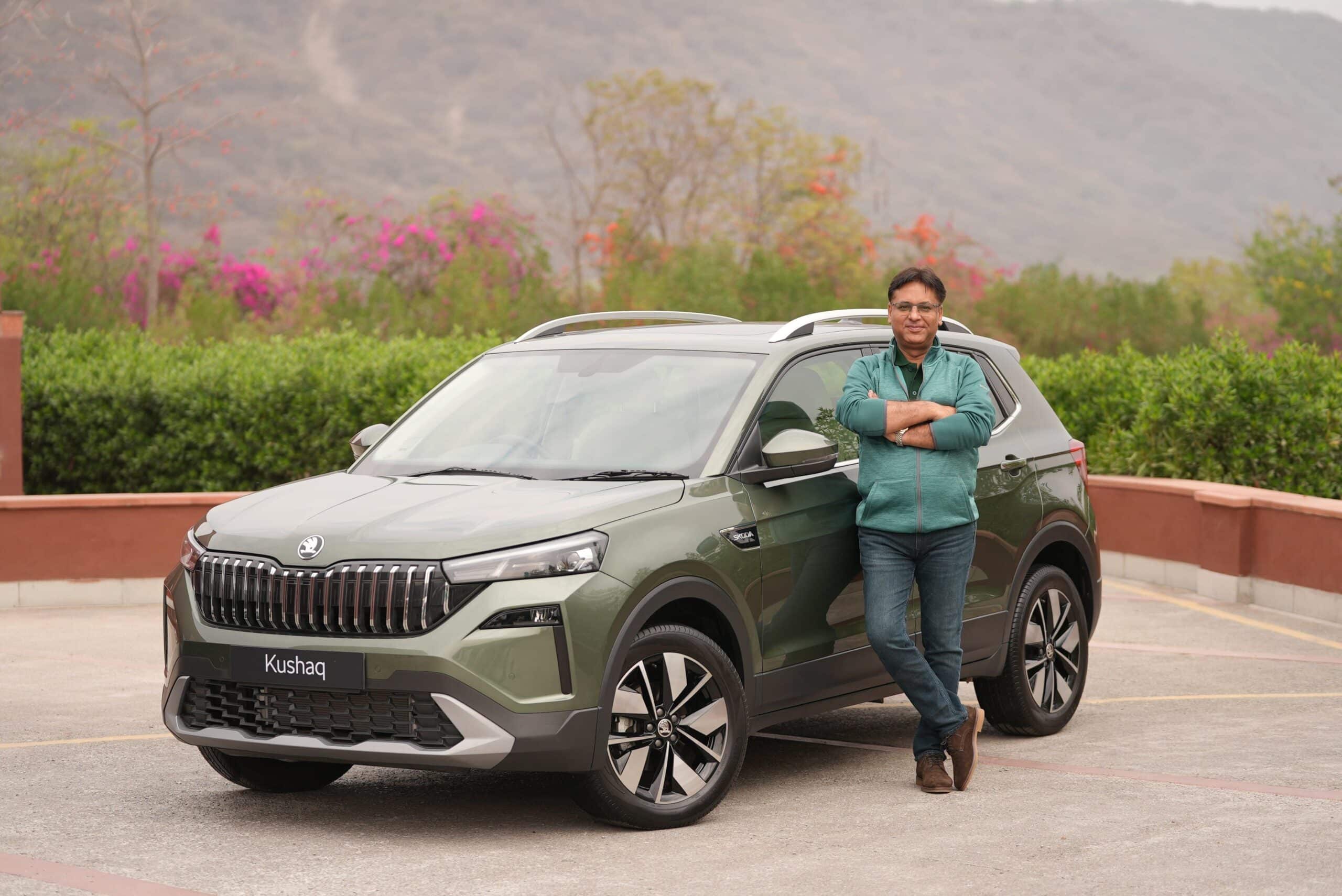
Skoda Auto India unveiled the facelifted Kushaq in January, the first major mid-cycle update since the SUV’s debut. The model falls in the mid-size (C-segment) SUV category in India and competes with rivals like Hyundai Creta, Kia Seltos and Volkswagen Taigun in the highly competitive segment.
Skoda continues to expand its retail business in India. It also expanded its network from 240 touchpoints in 140-145 cities at the beginning of 2025 to 325 touchpoints in 183 cities by the end of the year, covering 82-83 percent of the market.
In 2026, it plans to expand its presence to 200 cities with around 350 touchpoints, aiming for incremental penetration in smaller markets.
On February 28, Israel and the US launched military attacks on Iran, triggering a wider conflict in West Asia. Iran responded with missile and drone attacks. The conflict has disrupted key shipping routes, forced the closure of a large portion of regional airspace, driven up oil prices, and posed risks to global trade and supply chains.