Purvanchal is moving towards development
Coming out of its image of being the bad land of Uttar Pradesh (UP), Purvanchal (eastern region) is emerging as the state’s growth hub due to massive infrastructure push, better law and order and ease of doing business, top ministers of the state government said at Business Standard’s “Ubharata Purvanchal”, or Rising Purvanchal conference here on Tuesday.
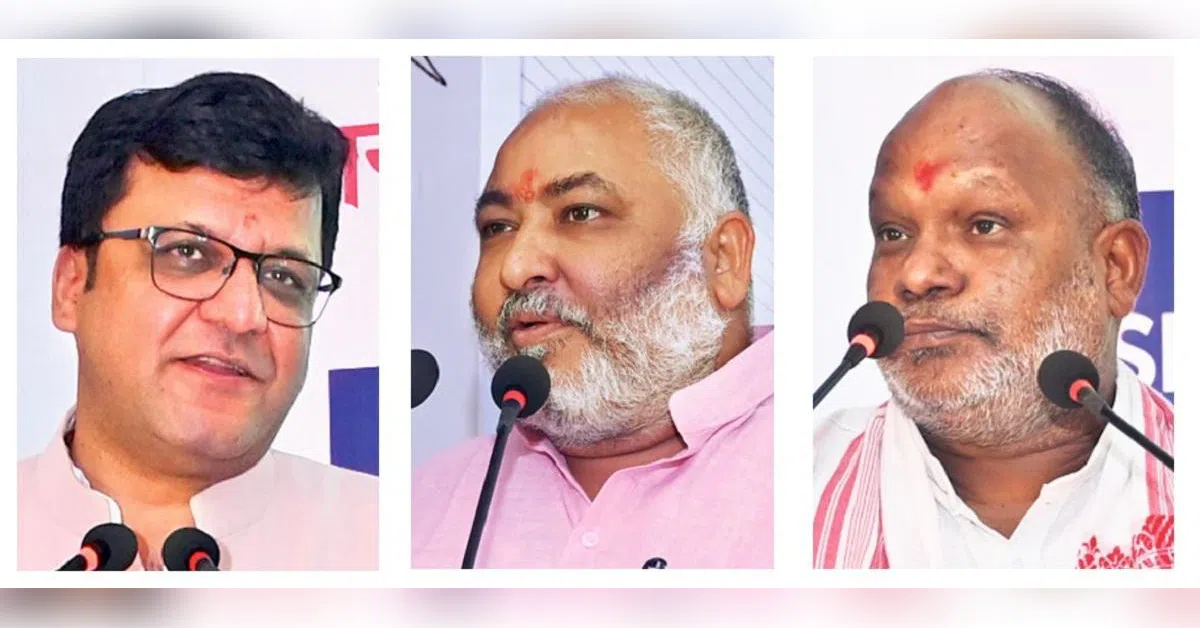
Delivering his inaugural address, chief guest, UP Excise Minister Nitin Agarwal said that Eastern UP has turned its back on the past to become a significant contributor to the development of the state.
He said this change has been brought about by sustained public investment in roads, industrial infrastructure, tourism, education and health care.
The fact that both Prime Minister Narendra Modi and Chief Minister Yogi Adityanath have their base in eastern UP gives additional focus and advantage to the region, Agarwal said.
He said Varanasi, where the conference was being held and which is located in the center of the region, has become the focal point of this change. He described the city as a model of balancing heritage conservation with modern urban development.
Over the past 12 years, the city has seen improvements in physical infrastructure, public services and tourism while retaining its cultural and religious character, Agarwal said.
According to him, better connectivity has been the biggest catalyst for economic activity in the region.
He cited the 341-km-long Purvanchal Expressway, which connects Lucknow to Ghazipur, as one of the major infrastructure projects in the state.
Apart from reducing travel time between eastern UP and the National Capital Region, the six-lane expressway has improved accessibility for businesses.
The project includes an emergency airstrip at Sultanpur. He also highlighted the 91 km long Gorakhpur Link Expressway, which connects Gorakhpur to Purvanchal Expressway, reducing the travel time to Lucknow by about three to three and a half hours.
The minister said aviation infrastructure has also been expanded with the operationalization of Kushinagar International Airport, which is expected to strengthen the Buddhist tourism circuit and improve international connectivity for pilgrims and visitors.
Industrial infrastructure is also being strengthened.
Agarwal said Purvanchal’s first flatted factory complex is functional at Gorakhpur Industrial Development Authority, providing ready manufacturing space for micro, small and medium enterprises (MSMEs). He said that around 80 industrial units have been set up in this facility.
Looking to the future, the state government is developing an industrial corridor along the Purvanchal Expressway, covering 12 districts.
The corridor will have apparel parks, plastics parks, food-processing units, warehouses, logistics hubs and MSME clusters. The objective, Agarwal said, is to attract private investment, generate employment and convert the expressway into an economic corridor.
With the completion of several mega projects and development of new industrial and logistics hubs, Purvanchal is expected to play an increasingly important role in UP’s goal of becoming a $1 trillion economy.
Aggarwal said that the development of Varanasi has demonstrated that economic expansion and preservation of cultural heritage can go hand in hand. He said the city has emerged as an example of how investment in connectivity, tourism and industry can create hubs of economic activity while maintaining historical and religious significance.
While giving the concluding speech, State Transport Minister Dayashankar Singh said that today a person walking from Meerut can reach Prayagraj in five and a half to six hours. Earlier, it used to take almost the same amount of time just to go to Delhi to catch a flight.
“Under the leadership of the Prime Minister and the Chief Minister, such improvement in connectivity in Purvanchal has been possible that it has opened up the market for the products of the region,” Singh said.
He said that Banarasi sarees now have access to wider markets and stronger platforms. Every district is creating its own identity through its unique products.
“Talking about my own district, Ballia, we initially got recognition for bindi under the ‘One District One Product’ (ODOP) scheme. However, we felt that sattu (fine gram flour) was a more suitable product because Ballia, situated between the Ganga and Saryu rivers, is known for gram cultivation. Since most of the area is flood-prone, farmers can often grow only one crop instead of two. We asked the Chief Minister to introduce gram and sattu. “Requested for inclusion in the ODOP programme, and the proposal was accepted,” Singh said.
As a result, the area under gram cultivation in Ballia has increased from about 4,300 hectares to about 5,800 hectares, he said.
UP Minister of State for MSME Hansraj Vishwakarma said the biggest hurdle earlier was poor law and order and the menace of goons and extortion, which the current UP government has successfully managed to reduce over time.
Vishwakarma said, “Today anyone is free to set up a business without any fear or interference, be it a big industrial unit or a small enterprise. There is no question of anyone receiving threatening calls.”
Experts talked about the industrial, agricultural and tourism potential of Purvanchal and what needs to be done.
He said though the eastern part of the state has immense potential and is emerging as a growth engine, problems in implementing policies and corruption in some areas are creating hurdles in the way.