
Human activities push vermin
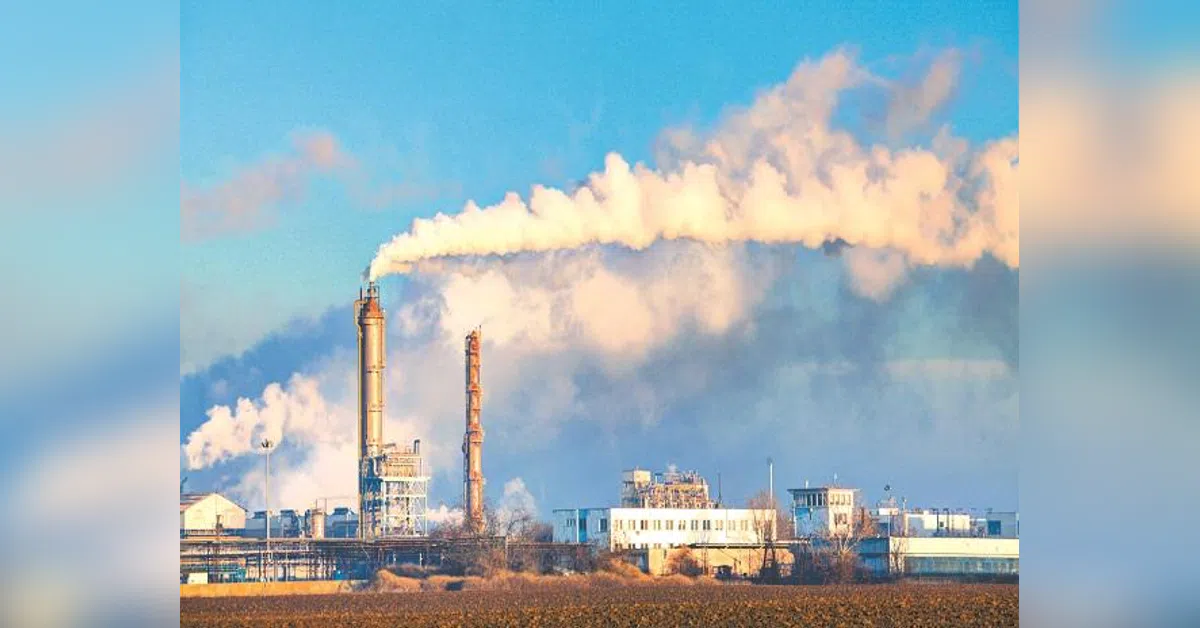
According to the latest Indicators of Global Climate Change (IGCC) report, human-induced warming could reach a record 1.37 degrees Celsius above pre-industrial levels in 2025 and exceed the Paris Agreement’s 1.5 degrees Celsius benchmark within about four years.
The report updates climate indicators to 2025 using more than 40 global datasets. The findings come as countries prepare for the next round of climate talks and extreme weather events continue to increase around the world.
What did the study find?
The report said 2025 was the third hottest year on record globally, continuing a string of exceptionally warm years.
The report found that average global greenhouse gas emissions remained at record levels over the past decade, reaching 54.6 gigatonnes of carbon dioxide (CO₂) equivalent annually.
The report highlights increasing signs of climate stress in the oceans. The number of days affected by marine heat waves has more than tripled since 1991, raising concerns about impacts on marine ecosystems, fisheries and weather patterns.
The report also indicated that the growth of CO₂ emissions is slowing, although global emissions remain near record highs.
Why do human contributions matter?
One of the most important findings of the report is that human influence now explains almost all of the long-term warming observed globally.
Scientists estimate that of the 1.26 °C temperature rise recorded over 2016–2025, about 1.24 °C was caused by human activities such as burning fossil fuels, deforestation and industrial emissions.
This finding leaves little room for natural factors such as solar activity, volcanic eruptions or ocean cycles to explain long-term increases in global temperatures.
Researchers say this is important because it strengthens confidence in climate projections. If human activities are the major driver of warming, future temperature trends will depend largely on how quickly greenhouse gas emissions can be reduced.
Why does La Niña matter?
The findings are noteworthy because 2025 developed under the influence of La Niña conditions during part of the year.
La Niña typically cools global temperatures by strengthening ocean-atmosphere patterns in the Pacific Ocean. Yet despite this natural cooling effect, 2025 is still set to be one of the hottest years ever recorded.
What is Earth’s energy imbalance?
One of the most important indicators of the report is the Earth’s Energy Imbalance (EEI). In simple terms, EEI measures whether the Earth is absorbing more energy from the Sun than it is sending back to space. If more energy comes in than goes out, the excess heat is stored in the oceans, atmosphere, and land.
The report found that Earth’s energy imbalance has more than doubled compared to the period 1976–1995.
Scientists consider EEI an important measure because it shows how much additional warming has been “locked in” before it shows up in the temperature record.
According to Piers Forster, director of the Priestley Center for Climate Futures at the University of Leeds and lead author of the report, Earth’s energy imbalance is a key indicator of how fast heat is being accumulated in the climate system, offering an important measure of the speed of climate change.
“Without human influence, it (EEI) should be close to zero, but it has been rising since the 1970s and is now at record highs, having doubled in recent decades,” Phys.org quoted him as saying.
What about a 1.5°C limit?
The report does not mean that the Paris Agreement’s 1.5°C limit has officially been breached.
The Paris target refers to long-term average global warming over several decades, rather than temperatures in a single year.
How do scientists know this?
Researchers use climate models and observational data to separate human influence from natural climate factors.
The models simulate what temperatures would look like under natural influences alone, such as volcanic eruptions and changes in solar activity, and compare those results to scenarios that include greenhouse gas emissions from human activities.
The increasing difference between the two allows scientists to estimate how much of the warming is attributable to human actions.
Why does this matter for India?
These findings are of particular importance for India, one of the countries most vulnerable to climate impacts.
Higher levels of global warming increase the likelihood of more frequent and intense heatwaves, erratic monsoon behaviour, extreme rainfall events, glacier melting in the Himalayas and increased urban heat stress.
According to the report, marine heat wave days have more than tripled since 1991, a trend that could impact the Arabian Sea and the Bay of Bengal, with implications for cyclones, fisheries and coastal communities.
For India, where average temperatures are rising faster than the global average in some regions, the findings highlight growing risks to agriculture, water security and public health.