How does Qatar’s World Cup change?
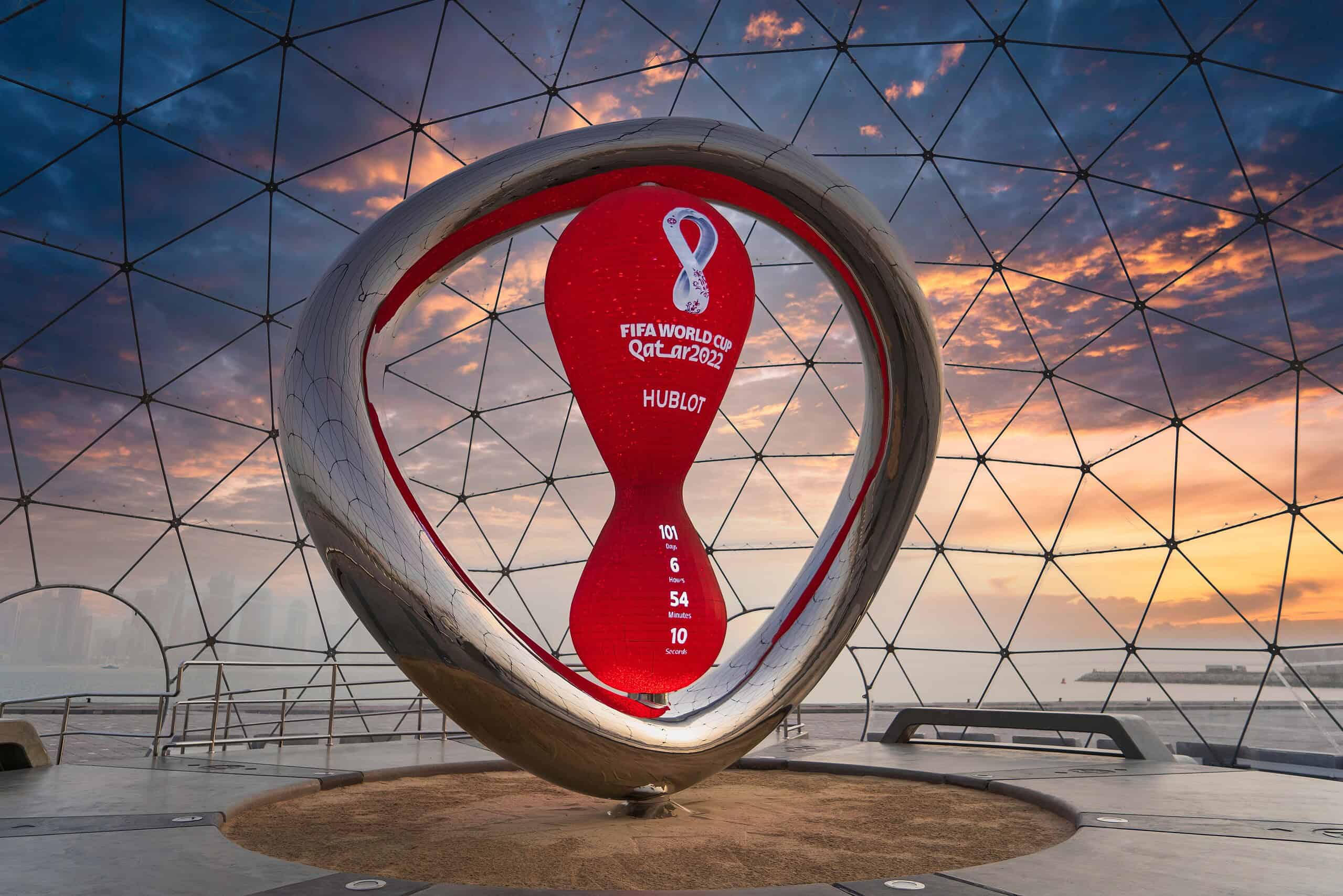
As the world’s biggest sporting event comes to an end, a look at the billion-dollar legacy left in Doha.
This article is published in the July/August 2026 issue Global Finance Journal.
Three and a half years ago, the FIFA World Cup kicked off in Doha in a stadium inspired by traditional Bedouin tents. The opening ceremony featured archival footage of the young Sheikh Hamad bin Khalifa Al Thani, former Emir of Qatar, playing football in the desert, a reminder of how rapidly the small Gulf state has changed over the past decades.
Today Qatar is one of the richest countries in the world in terms of per capita GDP. Its vast natural gas reserves have made it a leader in the liquefied natural gas (LNG) industry and a major sovereign investor. Hosting the world’s most popular sporting event was the ultimate achievement.
“What the world saw was not just a successful sporting event, but the visible result of decades of investment in infrastructure, connectivity and institutional development,” said Yousef Mahmoud Al-Naima, Group Chief Business Officer of Qatar National Bank (QNB). -The country’s largest bank with assets of more than $381 billion. “As a result, investor perceptions have evolved. Qatar is increasingly being viewed not just through the lens of its natural resources, but as a diverse, globally connected economy with the ambition and capacity to compete in multiple sectors.”
Sheikh Abdulrahman bin Fahd bin Faisal Al Thani, Group CEO of Doha Bank, said the 2022 World Cup was “a turning point for Qatar”. “Ever since then, Qatar’s global position continues to strengthen, driven by growing investor interest, improved international rankings and sustained economic activity.”

The scale of the event was unprecedented. Qatar reportedly spent approximately $220 billion preparing for the tournament, making it the most expensive World Cup ever in history. Looking more closely, the new stadiums cost only $6.5 billion: a fraction of the total expense. The overwhelming majority of investment went into long-term infrastructure such as the Doha Metro, airport and upgrades to roads and utilities, which continue to contribute to the country’s non-hydrocarbon economy.
However, financial returns were modest when measured by direct revenues. According to Qatar’s Government Communications Office, the tournament generated approximately $2.2 billion in direct income, and long-term economic benefits should reach $2.7 billion by 2035. The International Monetary Fund (IMF) estimates that tourism spending by visitors and World Cup-related broadcasting revenues total $2.3 billion to $4.1 billion, or about 1% of GDP.
International critics have accused Qatar of spending lavishly on the event, but local banks view the investment differently. Asked whether he saw meaningful returns on capital deployed before 2022, Al Thani said clearly.
“The short answer is yes, and the numbers support it. Qatar’s banking sector entered the World Cup cycle from a strong position and emerged stronger from there,” Al Thani said. He said total assets of Qatar-listed banks were expected to grow from $554 billion in 2022 to $645 billion in 2025, while net profit increased from $7.2 billion to $8.1 billion over the same period.
“What is important is not just the scale of this growth, but its sustainability. The wealth and profits sustained throughout the four-year period demonstrate that the growth is real and sustainable. The capital deployed before 2022 was never purely transactional. It built the infrastructure for a permanently larger, more diverse and more digitally enabled economy.”
While the World Cup accelerated diversification, fossil fuels remain the backbone of Qatar’s economy, accounting for 85% of exports. They are also at the heart of its future growth strategy, driven by the expansion of the North Field, huge offshore reserves it shares with Iran, which is set to increase LNG production from 77 million to 142 million metric tons per year.
However, conflicts in the Middle East have disrupted those plans. Following Iranian attacks on LNG facilities at Ras Laffan in March, state-owned oil company QatarEnergy announced a one-year delay in the project. In April, the IMF predicted an 8.6% contraction in 2026 GDP: a stunning reversal from its earlier projections, which had projected growth of more than 5% this year.
Beyond traditional hotels
Hospitality was one of the sectors that saw the most change in the lead up to the 2022 World Cup. More than 1 million visitors traveled to Doha for the Games: an extraordinary influx for a country of less than 3 million people. Qatar looked beyond traditional hotels to welcome them. Local investors were encouraged to build accommodation, which the government leased and then handed over to French hospitality group Accor, the world’s sixth-largest hotel operator, for management.
Alauddin Saleh, then managing director of Accor in Qatar, oversaw the conversion of 370 residential buildings into 67,000 hotel-standard rooms. After the competition, the flats were returned to their owners. “It was a brilliant idea and a big challenge, but the Qataris had the courage to do it, and we wanted to succeed with them.”
The demands for equipment were very high. To outfit the rooms, Accor imported 950 containers of equipment ranging from towels and linens to kitchenware. Temporary reception areas and laundry facilities also had to be set up. Building a workforce of 13,000 people was another challenge.
The World Cup prompted a major change in Qatar’s labor laws, amid international scrutiny of working conditions. In 2018, the country introduced a minimum wage, limited working hours and established a fund to cover unpaid wages. It also eased restrictions on job mobility and created labor courts.
Tourism has since become a pillar of economic diversification. In 2025, Qatar welcomed 5.1 million international visitors, up 3.7% from the previous year, with a target of 6 million by 2030.
financial sector transformation
The World Cup also left its mark on the country’s financial sector, prompting banks to modernize their products and services.
“On the payments side, the tournament has accelerated expectations for seamless, digital and high-volume transaction infrastructure,” said QNB’s Al-Naima. “That momentum continues today as Qatar advances digital banking, fintech, open banking and cashless payments capabilities.”
The Qatar Central Bank has supported the transformation to digital through initiatives such as the Qatar FinTech Hub and regulations, including the 2024 framework for licensing digital banks. According to Switzerland Global Enterprise, by that time 94% of the country’s population was using online banking. According to Qatar Development Bank, digital payments are projected to reach $50 billion by 2028, rising to $30 billion in 2022.
The Iran war shocked all industries including banking. Nevertheless, the Qatari financial sector remains resilient supported by strong buffers and strong capitalization. For financial institutions, this environment presents both challenges and opportunities. “On the one hand, regional uncertainty has increased the importance of strong balance sheets, diversified funding bases, strong risk management and cross-border connectivity,” Al-Naima said. “On the other hand, it is accelerating demand for financial services that support economic transformation: transaction banking, trade finance, supply-chain finance, treasury solutions, infrastructure financing and capital markets activity.” He sees these developments as underscoring the need for a more integrated GCC with a common approach to investment in supply chains, food and energy security and digital infrastructure.
So far, the country’s banks have weathered the latest Gulf war relatively well. Nevertheless, rating agencies continue to characterize Qatari lenders’ exposure to real estate and reliance on foreign funding as structural weaknesses. At the end of last year, non-resident assets accounted for 45% of total funding to the banking sector, leaving banks potentially facing liquidity pressure if foreign depositors decide to withdraw.
While it may take several years to measure the full economic returns on Qatar’s World Cup gamble, the 2022 tournament proved to be a turning point. The infrastructure and reputation it helped build have strengthened the country’s ability to navigate today’s realities, and left a legacy that extends beyond the final whistle.
Chloe Dommat is a contributing writer covering the Middle East and North Africa.