Estonia will become the gateway to India
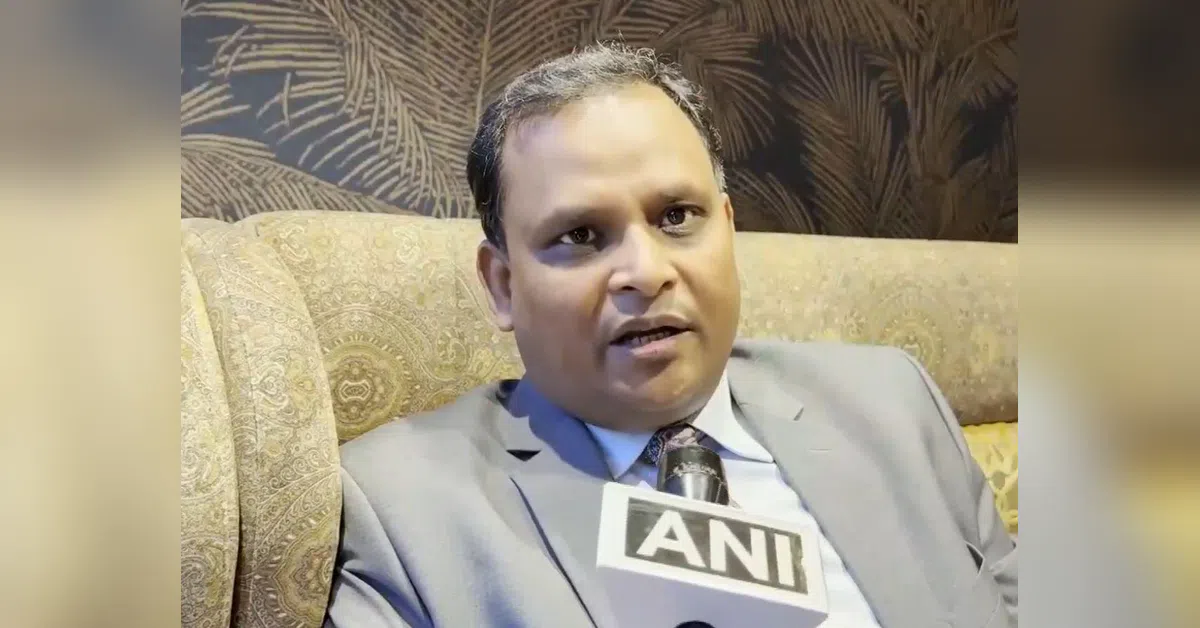
Estonia could become a gateway for India to northern European markets after the implementation of the FTA with the EU, Indian Ambassador Ashish Sinha has said, adding that bilateral relations are on the rise.
In an interview with PTI, Sinha said a strong base of existing trade would be used as a “springboard” for further engagement between India and Estonia when the India-EU Free Trade Agreement is implemented.
The Indian Ambassador to Estonia stressed that the overall bilateral relations are growing stronger and stronger.
“Going forward, with the India-EU FTA, there will be far greater participation of small and medium-sized industries, and Estonian dairy and agricultural products will find their market in India. For India, we will have Estonia as a gateway to Northern Europe,” Sinha told PTI.
Noting that Estonia also offers e-residency, Sinha said many Indian businessmen and high-value industrialists have taken up Estonian e-residency, and around 5,000 Indians are part of the Estonian initiative.
“More than 1,000 Indian companies are registered under the Estonian e-Residency programme,” he said.
The Indian envoy said, “So, there are elements that provide the basis to use the India-EU FTA as a springboard for further engagement once it is implemented. I must tell you that Indian exports to Estonia have not only grown but it has even surpassed its target in the last financial year.”
New and emerging technologies are going to become a bigger part of the business, he said.
“Digital technologies, IT, AI-enabled technologies, software as a service, there is huge potential in all these areas. Estonia is leading the world and so is India.
“Our digital public infrastructure and our ability to implement digital innovations at population scale, and Estonia’s proven ability to harness the digital transformation of its citizen services, both have great potential to learn and grow from each other,” Sinha said.
Asked about India’s view on regional security in the context of the Ukraine-Russia conflict, he said both India and Estonia are democratic countries, have democratic, pluralistic values, respect international law and want to grow, and for this “we support international peace and security”.
“In that context, Prime Minister Narendra Modi visited both Moscow and Kiev in 2024 and was one of the first leaders to say that this is not an era of war, this is an era of dialogue and diplomacy. I am sure that Estonia also wants peace in its neighbourhood, and we both have common objectives there,” Sinha said.
“My job as ambassador is to clarify India’s position in Estonia and report to India on the situation in Estonia,” he said.
Talking about the growing India-Estonia relations, Sinha pointed out that India was one of the first countries to recognize and establish diplomatic relations with Estonia after its independence in 1991.
Sinha said, “The Estonian Embassy in Delhi has been functioning since 2011, and we were functioning from Helsinki and in 2021, we established our mission here. Relations are on the rise, and in almost every area of engagement, we have fared better and gone from strength to strength.”
He pointed out that in February this year, Estonian President Alar Karis had visited India for the AI summit and last year, around the same time, Prime Minister Modi and President Karis had met on the sidelines of the AI summit in Paris.
During his visit, President Carrey met Prime Minister Modi and President Draupadi Murmu to discuss bilateral cooperation, he said.
“In addition to the talks at the highest level, we also held the latest round of political consultations between the Foreign Ministries of the two countries, led by Secretary West Siby George from the Indian side, and enabled a comprehensive review of relations in every area of the partnership,” the Indian envoy said.
“We have also recently installed a Gandhi statue in Tallin. There are 2,000 Indians living here and working in the digital and technology sector and doing very well for themselves, many of them have become entrepreneurs and have also come into the startup sector,” he said.
Therefore, the overall relationship is getting stronger and stronger, Sinha said.
He said his message to Indian businesses would be not to look at the small size of Estonia, as it may be a small country with a population of 1.3 million, but being a member of the European Union, it offers a wider EU market for Indian products.
“It has a very good system, strong ports and from here they can provide services to neighboring countries, and we have been able to convince some businessmen to start their businesses here,” he said.
He said businesses are coming, especially in the tech sector and even in the commodity sector; A look at the attractive Northern European market through Estonia has only recently begun.
On January 27 this year, India and the EU announced the conclusion of negotiations for a free trade agreement, dubbed the ‘mother of all deals’, under which 93 per cent of Indian shipments will enjoy duty-free access to the 27-nation bloc, while imports of luxury cars and wines from the EU will become less expensive.
This deal, concluded after negotiations lasting almost two decades, will create a market of approximately 2 billion people.