Pentagon says Iran war cost $2
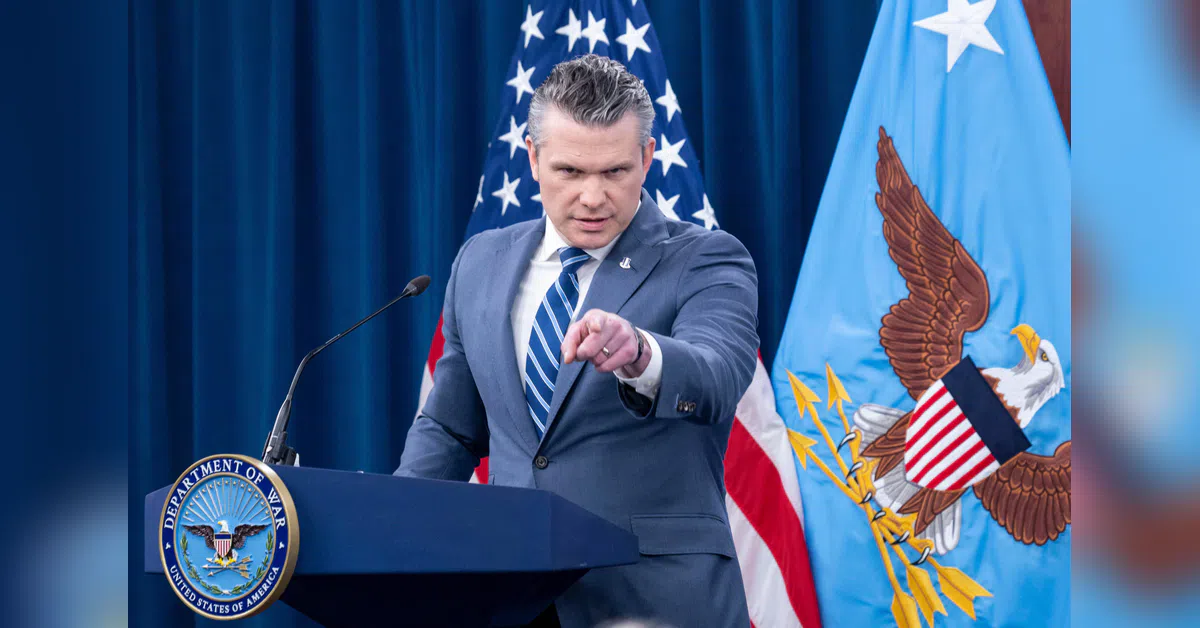
The Iran war has cost $25 billion so far, Pentagon officials said, presenting the estimate at a contentious congressional hearing in which Defense Secretary Pete Hegseth locked horns with Democrats over the administration’s handling of the conflict.
Hegseth told the House Armed Services Committee that the cost was justified to ensure Iran did not get nuclear weapons, even as Democrats said the figure underestimated the enormous cost to American taxpayers.
The hearing — aimed at discussing the administration’s unprecedented $1.5 trillion defense budget request, a 44% increase — provided the first public opportunity for lawmakers to question Pentagon leaders on the Feb. 28 conflict launched by the U.S. and Israel against Iran.
Democratic lawmakers called the conflict a costly war of choice, which President Donald Trump made the mistake of waging without a clear plan. Hegseth attacked the questioning before it began and spoke in a defiant tone towards the MPs whose support he would need to approve the budget request.
“The biggest challenge, the biggest adversary we face at this point is the reckless, negligent and defeatist words of congressional Democrats and some Republicans,” Hegseth said.
California Democrat John Garamendi called Trump’s “war of choice” against Iran a “geostrategic disaster” and a “strategic blunder.” Hegseth hit back, saying that “your hatred of President Trump blinds you to the reality of the success of this mission.”
“What are you pulling for?” Hegseth asked.
The conflict has closed the Persian Gulf’s vital waterway to oil and gas tankers, raised global energy prices and weakened the US alliance in Europe, with Trump now trying to pressure Iran to negotiate an end to the war with a US naval blockade.
The $25 billion figure presented by the Pentagon has been questioned given the enormous cost of missiles and bombs expended in Iran, the ongoing naval blockade, as well as damage to US installations and destruction of equipment.
Senator Richard Blumenthal, Democrat of Connecticut, previously told Bloomberg Television that “$2 billion per day” was likely a “low-ball figure.” The Pentagon estimated that the war cost $5.6 billion in munitions in the first two days alone, The Washington Post reported.
“The real cost of an Iran war is likely to be much higher, and that’s a big deal,” said Becca Wasser, chief of defense at Bloomberg Economics.
In his statement, Hegseth also repeated his attack on US allies for not getting involved in the war, warning that there would be “consequences”. He blamed NATO for an “unconscionable” failure to help the US military. “We will remember,” he said in a written statement.
The senior Democrat on the House Armed Services Committee, Adam Smith of Washington, called the administration’s budget request “hopelessly unrealistic” and accused Hegseth of “unnecessarily” insulting U.S. allies and “going it alone” in Iran.
“What is the plan to achieve our objectives? We’ve looked at the costs,” Smith said.
Ahead of the midterm elections, where the cost of living issue looms large, Republican lawmakers are reluctant to try to sell constituents on a $440 billion increase in defense spending that could come at the expense of popular social programs.
Hegseth denied that the war had depleted the US stockpile of high-tech missiles and bombs. Yet one of the reasons cited for such a large increase in defense spending includes replenishing weapons that were in huge demand during the war – and were used in Israel’s defense last year, when Iran retaliated for the bombing of its nuclear facilities.
“Our global munitions stockpile is depleted and we do not have the ability to rapidly restore magazine depth,” Representative Mike Rogers, the Republican chairman of the committee, said in an initial statement. He portrayed the record defense budget as a reversal of decades of underinvestment.