The CA who went and built the house
A few decades later, Kumar is trying to reverse that flow. As founder and chief executive of Wilkart, he has built a Rs 1,176-crore rural e-commerce platform that supplies everything from daily essentials to branded consumer goods to 100,000 kirana stores in over 30,000 villages in South India. A chartered accountant who left the boardroom for the dusty streets, Kumar is betting that the next phase of India’s economic growth will emerge not from Mumbai or Bengaluru, but from the country’s 650,000 villages.
Kumar moved to Bengaluru in 2005 to pursue chartered accountancy, then took up a private practice which gave him practical experience in how businesses are structured and expanded. Around 2013, he turned his attention to rural supply chains, spending five years studying the problem before launching Willcart in 2018 and eventually surrendering his practicing certificate to focus on it full-time.
According to ICICI Securities, India’s e-commerce market is projected to grow from $70 billion in FY2025 to over $200 billion by FY2030, with tier II-IV cities and rural areas expected to contribute more than 60 percent of the total e-commerce demand in 2026. Big players are also looking for the same opportunity: Flipkart has deepened partnerships with kirana stores for last-mile delivery, and Meesho’s zero-commission model is drawing valuable buyers from smaller towns.
Kumar argued that rural India is often seen as a single market, but the majority of the country’s approximately six lakh villages are deprived. Villages with a population of more than 10,000 constitute only 1 percent of the total villages, while villages with 5,000–10,000 people constitute about 3 percent; The remaining 96 percent represent about 76 percent of the rural population and about 53 percent of India’s total population. He said demand for FMCG, groceries, electronics, home appliances, apparel and cosmetics is strong in these markets, but distribution remains the major challenge.
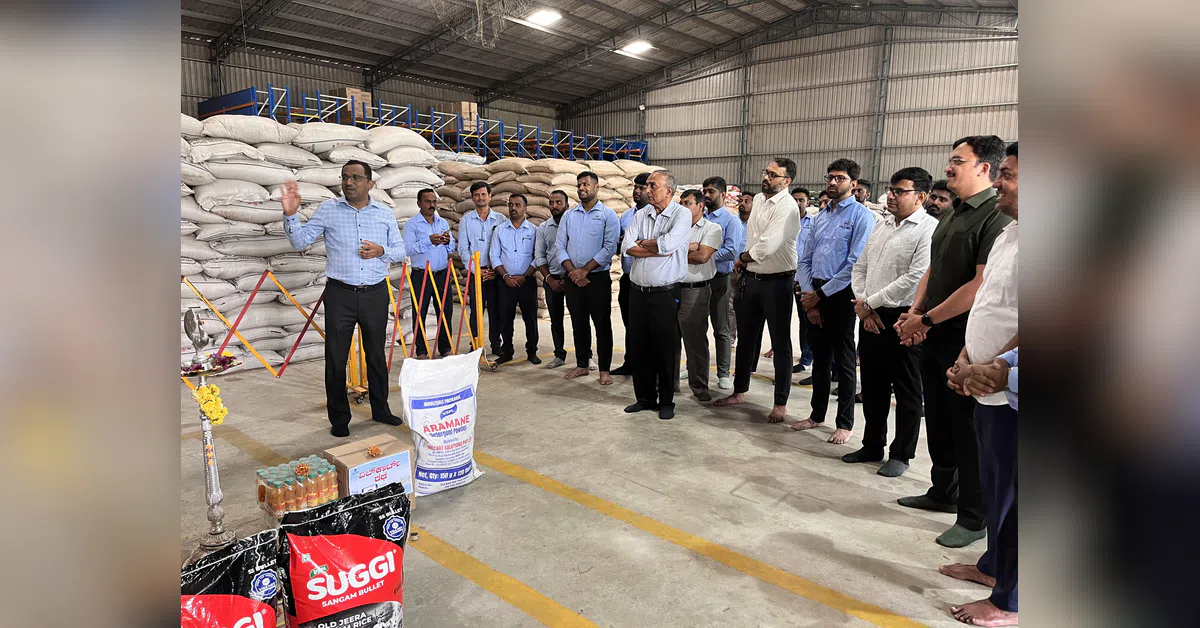
Wilkart connects manufacturers, farmer producer organizations (FPOs) and rural businesses with grocery stores in villages. Rural grocery stores traditionally travel three to four days a month for shopping, during which time they face fragmented supply chains, limited product access, and loss of business time. Wilkart addresses this with doorstep delivery through a mobile-first platform featuring inventory management, billing tools, credit access, and data-driven demand forecasting. It is supported by a workforce of over 1,600 driving hyperlocal execution.
Wilkart reported revenue of Rs 1,176 crore in FY26, up from Rs 1,120 crore in FY25. The company recorded a negative EBITDA margin of 6.8 per cent in FY25, which increased to around 4.5 per cent in FY26. The private label segment is set to grow from 5 per cent of revenue in April 2025 to 15-18 per cent in FY2026, with a stated target of reaching 22-25 per cent by FY27. But the market will ultimately ask: When will India commerce become a profitable business, and not just a socially significant one?
Citing his CA background, Kumar said the company kept EBITDA losses at around 7 per cent – which is much lower than the losses seen in most e-commerce – and built the business with a capital of around $25 million. Improvements in profitability are being driven by backward integration, direct sourcing from farmers and farmer producer organizations (FPOs), and growing private-label business. Kumar said the company aims to become monthly EBITDA positive within the current financial year.
That pressure is increasingly supported by data. Kumar said artificial intelligence (AI) is particularly useful in rural markets as demand is highly fragmented and hyperlocal, which enables the company to track crop cycles, harvest timings, festival spending, village-level purchasing behavior and economic profiles. Wilkart is deploying AI tools including voice-based ordering in local languages, conversational order placement, AI-enabled stock-keeping units (SKU) matching and store image recognition.
“If our executive takes a picture of a grocery store, the AI can identify which brands are in stock, the reach of local brands and regional demand patterns,” Kumar said.
Still, Kumar said, human trust remains central to the model. Rural consumers continue to value emotional connection and human interaction, and technology must pay attention to local accents, slang and cultural nuances. People in areas like South Karnataka use specific greetings and expressions that AI is still struggling to interpret effectively.
This faith-first approach also shapes how Wilkart has positioned itself in rural communities. The company’s telesales centers in Mandya, Bagalkot and Chikkaballapur employ about 200 rural women, many of whom are school dropouts or lack the qualifications for formal employment. The company offers flexible work arrangements, stable monthly income and a respectful work environment, as well as engaging owner-driver logistics partners and supporting micro-entrepreneurship models. Kumar said Wilkart aims to eventually hand over the entire warehouse and packing infrastructure to self-help groups.
Kumar said the high cost of diesel affects logistics, but the bigger risks are agricultural – weak rainfall, poor crop cycles and fertilizer shortages. Rural consumers cut discretionary FMCG spending as prices rise, while demand for essential goods remains more resilient. To maintain relationships in price-sensitive markets, Wilkart sometimes absorbs part of the burden of inflation and is decentralizing warehouses to reduce transportation costs.
The firm has raised over $30 million from investors including Asia Impact SA, NabVentures, Spark Capital and AI-X BV, as well as some angels including Prashant Prakash. Despite that capital, market penetration remains limited – Karnataka is around 50 percent and Tamil Nadu around 10 percent – leaving plenty of room for expansion.
The company’s next phase will focus on deepening its presence in Karnataka, Andhra Pradesh, Kerala and Tamil Nadu and pilot operations in Maharashtra, Madhya Pradesh and Uttar Pradesh. Kumar said Wilkart is currently raising a Series B round of Rs 200 crore to Rs 250 crore and exploring a possible IPO in FY28-FY29.
“We are not working like a traditional urban commerce company,” Kumar said. “We are building rural India with rural India.”