
Panic has started in gas supply
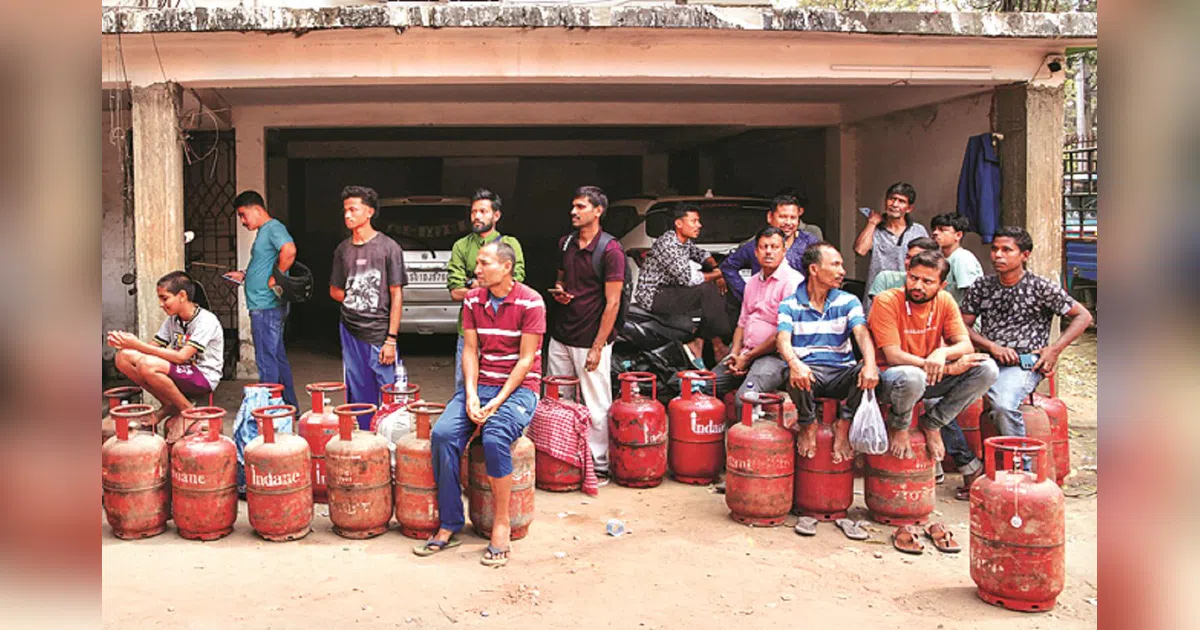
At least two major steel producers said the shortage had begun to affect some downstream processes, although the disruption was not yet severe. Natural gas or propane are commonly used in furnaces, meaning production may not be completely insulated from supply disruptions, an industry executive said.
“The furnace uses natural gas or propane, so there is an impact. Right now, it’s not that big,” the executive said.
However, smaller steel mills warn that the situation could worsen if the shortage persists. Vivek Adukiya, president of West Bengal-based Steel Re-Rolling Mills Association of India, said LPG may not be the primary raw material, but it is essential for some operational processes. “Induction furnace operators making billets require LPG for lancing. Without it, the production cycle cannot be completed,” Adukiya said.
According to him, most of the mills currently have enough stock to operate for the next few days. “If this situation continues, some mills may have to be closed,” he said.
Packaged food companies are also starting to feel the pressure.
Earlier this week, industry officials said business standard Due to gas supply disruption, some manufacturers have had to cut production at their plants in some states.
In contrast, the automotive sector has so far been largely unaffected.
Industry insiders said automakers are continuing to operate as normal while closely monitoring the evolving situation. Tata Motors, one of India’s largest passenger vehicle makers, has not experienced any disruption in production so far, sources said.
However, the company is closely monitoring developments in both its facilities and supplier ecosystem. Sources said that, if necessary, mitigation measures such as reprioritizing the use of available resources in operations can be activated.
Anurag Singh, consultant, Primus Partners, said, “As of now, there has been no disruption in the production of vehicles. Key raw materials required for manufacturing such as metals and polymers have not been affected. Polymers are largely derived from oil and refinery operations continue, so the basic supply chain for vehicle manufacturing remains intact.”
However, he said the impact may be felt more by consumers than manufacturers. If the availability of compressed natural gas (CNG) tightens, vehicle owners, especially taxi operators, may have to temporarily switch to petrol, increasing their operating costs.
Rohan Kanwar, vice president and sector head, corporate ratings at ICRA, echoed similar views, saying automotive original equipment manufacturers (OEMs) are not expecting any immediate disruption in vehicle production. However, he said companies remain cautious about possible indirect effects. Higher fuel prices could impact freight availability and logistics costs, while input costs associated with petrochemicals could also increase.
He said some of these pressures could be partially relieved through cost optimization measures.
Manoj Kumar Singh, director general of Digital Infrastructure Providers Association (DIPA), an industry body representing telecom infrastructure providers, said companies making tower masts or telecom towers, which primarily run on LPG, have switched to low-flame operations for galvanization after the LPG supply was shut down.
While steps have been taken to prevent damage to plants and maintain the zinc in molten form, the industry body warned that tower manufacturing units may have to shut down operations completely if the LPG disruption continues. This, in turn, will disrupt the ongoing and planned tower rollout activities by supply chain and telecom companies.
Keep track of corporate office status
LPG shortage may also affect catering services that support large corporate campuses, especially IT companies and companies that cater to multinationals.
Bengaluru-based food technology platform Hungerbox, which manages institutional cafeterias, said operations are currently running normally. The company serves 243 customers, manages 891 cafeterias and works with 886 food partners in 38 cities.
Hungerbox co-founder and CEO Sandipan Mitra said the LPG shortage has not affected its services so far.
“At present, the LPG shortage has had no impact on our services and operations at corporate and institutional premises are running normally,” Mitra said. “We are monitoring the situation closely, as most kitchens in India’s institutional food service sector are still dependent on commercial LPG.”
He said that the company has taken several contingency measures in case the situation worsens. These include maintaining priority cylinder inventory buffers, exploring alternative fuel sources, rationalizing menus to reduce cooking-intensive items, and adjusting service windows if necessary.
For critical facilities like hospitals, HungerBox is maintaining dedicated backup fuel arrangements to ensure uninterrupted food services.
Three big corporate houses based in Delhi and Mumbai said they have not felt any impact at their headquarters so far. A company official said hybrid work arrangements introduced during the pandemic, such as working from home two days per week, remain in place, but no additional changes have been made in response to LPG supply concerns.
IRCTC asks catering units to use microwave, induction
Amid concerns over possible LPG shortage, the Indian Railway Catering and Tourism Corporation has directed catering units at its western zone railway stations to shift to microwave and induction plates and maintain stock of ready-to-eat food items for passengers. In a communication issued on March 10, IRCTC asked operators of food plazas, refreshment rooms and ‘Jan Ahaar’ to switch to alternative arrangements to maintain uninterrupted catering services for traveling passengers.
Hot meals stopped in Delhi High Court canteen due to LPG shortage
Food services have been partially suspended at the lawyers’ canteen in the Delhi High Court after it ran out of LPG (Liquefied Petroleum Gas) cylinders used for cooking. Other courts in the city are largely unaffected.
In a notice issued on 11 March, the canteen management informed lawyers and court staff that the shortage had made it impossible to prepare hot meals, leading to a temporary halt to main course items.
“Due to the non-availability of LPG gas cylinders at present, we regret that we are unable to prepare and serve main course items in the lawyers’ canteen,” the notice said.
The management said there is no clarity on when supplies will resume. “Preparation for core course material will resume as soon as supplies become available,” it said.
Ready-to-serve items including sandwiches, salads and fruit chaats will continue to be offered.
Elsewhere, court canteens appear untouched. A Supreme Court source said its food services remained unaffected because the facility uses piped LPG. The National Green Tribunal (NGT) canteen is currently under construction, while other courts and tribunals in the city have not reported any disruption.