

Gemini-powered Siri arrives
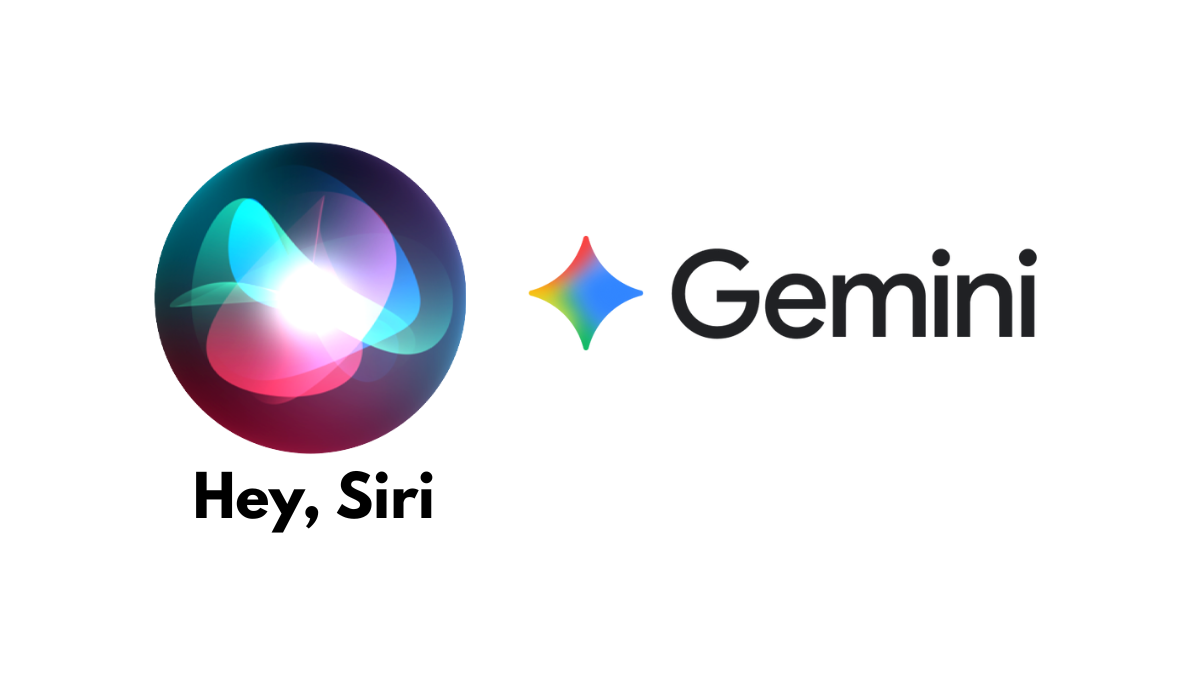
Apple is set to launch a new Siri powered by Google’s Gemini model later this year. The update, confirmed by Google Cloud CEO Thomas Kurian at Google Cloud Next 2026 on April 22, builds on Google and Apple’s prior joint announcement that Gemini will support Apple Intelligence features in the future.
Although the move signals a change in Apple’s AI strategy, the bigger question is: Can this new Siri help Apple catch up with Android in the AI race?
Over the years, Apple has focused on privacy, on-device processing, and tight ecosystem controls. That approach remains, but the inclusion of Google’s model marks a stronger push toward efficiency and competitiveness, especially in areas where rivals have grown rapidly.
What a Gemini-powered Siri is expected to bring
Apple first outlined its AI direction for Siri at the Worldwide Developers Conference (WWDC) 2024. Hopefully the upcoming version will build on that approach and provide a more integrated experience.
At the core is context awareness. Siri is expected to understand what’s on the screen, track activity across apps, and suggest relevant actions. This marks a shift from command-based interactions to a more situational model.
Cross-app functionality is another significant upgrade. Instead of manually switching between apps, users should be able to issue natural requests that span multiple applications, combining actions into a single workflow.
Voice interaction is also expected to become more interactive. Users may be able to interrupt, refine questions, and engage in more fluid exchange, similar to current AI systems on Android.
Apple is also expected to expand multimodal capabilities, allowing Siri to process text and voice as well as visual input.
Together, these upgrades point toward a system where AI acts as a continuous layer across the entire device, rather than as a set of discrete features.
What does Apple Intelligence offer today
Apple Intelligence already includes several AI-powered features:
- Writing Tools and Lesson Summary
- Notification Summary
- Contextual understanding within Apple apps
- Integration into services like Photos, Messages, and Notes
Apple’s approach remains privacy-first. Most of the processing happens on the device or in a controlled cloud environment, which differentiates it from more cloud-heavy models used by competitors.
There is also flexibility in some cases. Users can route some queries to an external model such as ChatGPT.
However, several advanced capabilities demonstrated by Apple remain:
- scope limited
- available inconsistently
- Part of phased rollout
This creates a gap between what Apple has shown and what users are currently experiencing.
where does android stand today
Android already offers a more mature, system-level AI experience, especially on Pixel devices.
Features like contextual understanding, real-time summaries, conversational voice interactions, and cross-app workflows are integrated into daily use rather than appearing as standalone tools.
Long-standing capabilities like call screening, spam filtering, live transcription, and structured summaries have evolved into standard expectations.
Besides Google, other Android brands are also expanding AI capabilities:
- Oppo and OnePlus offer AI Mind Space to capture and recall information
- Nothing provides the space needed to receive ideas
- Samsung supports multiple AI assistants including Bixby and Perplexity
These layers extend Android’s AI ecosystem beyond Google’s own implementation.
The deep difference: performance, not features
At a high level, both platforms are moving toward similar capabilities:
- context-aware assistant
- Cross-App Workflow
- Conversational AI
- multimodal understanding
However, the difference is in the execution.
On Android:
- Features already deployed
- They integrate into everyday workflow
- They appear continuously and actively
On Apple devices
- the foundation is in place
- The approach is more controlled and privacy-focused
- The full experience is still developing
There is also a philosophical divide. Android becomes more proactive, making suggestions even without user input. Apple remains more restrained, prioritizing control and predictability.
Reality in 2026
Android, led by Google’s Gemini integration and supported by many manufacturers, currently offers a more consistent AI experience.
Apple’s implementation is evolving, but it remains more measured and privacy-focused.
The partnership with Google marks a change. This signals that Apple is willing to rely on external models to strengthen its AI capabilities.
The AI race is no longer about feature counting. It’s about how seamlessly those features work in everyday use.
what happens next
A Gemini-powered Siri could bridge the gap. But matching Android will require more than better capabilities.
Apple must match:
- Consistency across apps and functions
- Frequency of AI Interaction in Daily Use
- depth of ecosystem integration
The challenge is not just Google’s. It’s the broader Android ecosystem that has already embedded AI deeply into the user experience.
Siri’s overhaul may bring Apple closer. But going forward will depend on how quickly those capabilities come into everyday use.

uzuupv
ozyaa3