Iranians reconsider price
After thousands of people were killed in a brutal crackdown on anti-regime protests in Iran in January, Mandana gave up hope of reform from within. She came to the conclusion that the leaders of the Islamic Republic had to go, even if it meant a US and Israeli-led regime change.
So when on February 28 the two countries attacked the compound of Supreme Leader Ayatollah Ali Khamenei, killing him and several of his family members, Mandanna – who like others used a pseudonym in the interview – believed the change she yearned for had finally arrived.
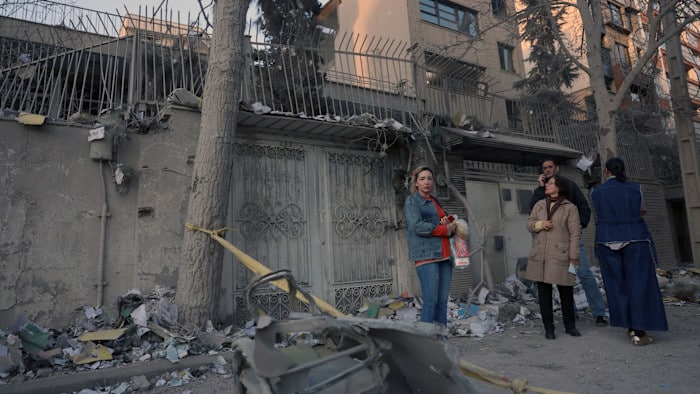
The experience of the scary days that followed has shattered that belief. Air strikes have not only targeted military sites and senior regime figures, but have also repeatedly targeted civilian infrastructure.
Over the weekend, Tehran was shrouded in toxic black smog after Israel bombed fuel depots around the city; The massive explosions on Tuesday caused widespread blackouts.
“We should not have been bombed,” Mandana said, her voice trembling after a massive explosion near her apartment near Vanak Square in central Tehran. “Our city, our country, this should not have happened. How is it that Venezuela … saw clean, bloodless regime change, but not here?”
The scale of the destruction and the apparent resilience of the Islamic regime, which appointed Khamenei’s son Mojtaba as the new supreme leader in an act of defiance, have led many Iranians to reconsider the hope that foreign intervention could bring an end to it.
Two weeks into the war, there is no sign of the kind of anti-regime unrest that erupted across the country in January before being crushed in a brutal crackdown that left thousands dead.
Instead many people, even those who hate the Islamic Republic, have been pushed back by the destruction and comments, including Donald Trump’s threat that power generation facilities would be targeted if the regime moves forward. The US president also said there would “probably not” be a map of Iran after the war, sparking fears the conflict could divide the country.
A sociologist in Tehran who is critical of the regime and the war said there was plenty of evidence of “a sense of nationalism emerging from the war”, as happened during Israel’s 12-day conflict against Iran last year, when people rallied around the flag.
“The fear of Iran’s destruction is increasingly uniting people because they fear the consequences of such a large-scale conflict,” said the sociologist, speaking on condition of anonymity.

Non-military sites have become collateral damage, as airstrikes target police stations, military facilities and officers living in residential neighborhoods. According to official figures, more than 1,000 civilians have been killed and more than 8,000 homes have been damaged or destroyed.
The scenes of destruction – destroying schools, a desalination plant, passenger planes and historic sites such as Tehran’s Grand Bazaar and Golestan Palace – have shocked many Iranians.
“If they wanted to assassinate the Supreme Leader, why are they waging a full-scale war?” asked a woman. Before the war, he – like many anti-regime Iranians inside and outside the country – had welcomed military intervention.
Expatriate communities held large rallies in Western capitals calling for the end of the Islamic Republic. Reza Pahlavi, the exiled son of the late deposed shah, also supported military action and promised to return to lead Iran after the fall of the regime.
“Maybe they should come now with their three daughters and see how it feels to be bombed,” said one woman, who opposes the current regime but also rejects the return of the monarchy. “Those who supported the war must now take responsibility. But I doubt they will.”

When many Iranians overcame their disillusionment with their leaders to adopt a patriotic gesture during the June War, the regime presented this as evidence of public support and ignored calls for reform after the conflict ended.
This time, Iranians hurt by the January crackdown are more hesitant, fearing that expressions of patriotism or anti-war sentiment will be reined in by authorities.
In northern Iran, a woman whose son was killed in the protests stopped wearing black on the day of Khamenei’s death, feeling that some revenge had been taken. In Tehran, another woman baked a cake for her neighbors to celebrate the death of the supreme leader. But she was so shocked by the scale of the subsequent attacks that she later left the city.
The Islamic Republic, for its part, is taking no risks. Authorities have filled squares with loyalists every evening, emboldening the vocal minority of regime supporters to show strength and support. They also patrol the streets on motorcycles carrying loudspeakers playing religious songs.
“These are our real supporters,” said a regime insider. “This is the real loyalty that lies in Shia Islam – which Americans can never understand. Even if the leader of the Islamic system is killed, the system will survive because Shiism survives.”

The regime’s apparent resilience in the face of the largest conflict since the Iran-Iraq war of the 1980s has led some to question whether a prolonged war would even spell its end.
On Monday, after Mojtaba Khamenei was elected as the new supreme leader, supporters across the country also took to the streets.
But Khamenei has not been seen since the war began and has yet to speak to Iranians about his plans. The US and Israel have threatened to assassinate whoever takes power and there are rumors that he was injured during the battle.
His selection has stunned many anti-regime Iranians, who fear a supreme leader who would continue his father’s radical agenda, resistance to reform and hostility toward the West.
“If things continue like this, we are in a worse situation now than before the war,” said Mahboubeh, a translator. “A country was destroyed; Khamenei was replaced by another Khamenei 30 years younger.”

Meanwhile, monarchists support Pahlavi and support US and Israeli intervention despite its losses. But analysts believe the exiled royal has lost the support of recent converts to his cause as the brutal reality of the war has emerged.
Most Iranians, who view the January killings as inexcusable, are at a loss about how to push for change. This includes Sarah, a teacher in her forties who once hoped to overthrow the regime but now admits that she has changed her mind.
“I have to face the bitter truth: the Islamic Republic is resilient,” he said. “I never thought I would say this, but if someone from within the regime becomes a real reformer, then why not? In the end, we just want peace and well-being.”
Marjan, a housewife, could not hide her emotions when the news of Khamenei’s death came. He believed that this would lead to the collapse of the regime. “Now I wonder, even if the Islamic Republic falls, what will we inherit: a land of ruins?”
Cartography by Steven Bernard