
Heat, humidity in India
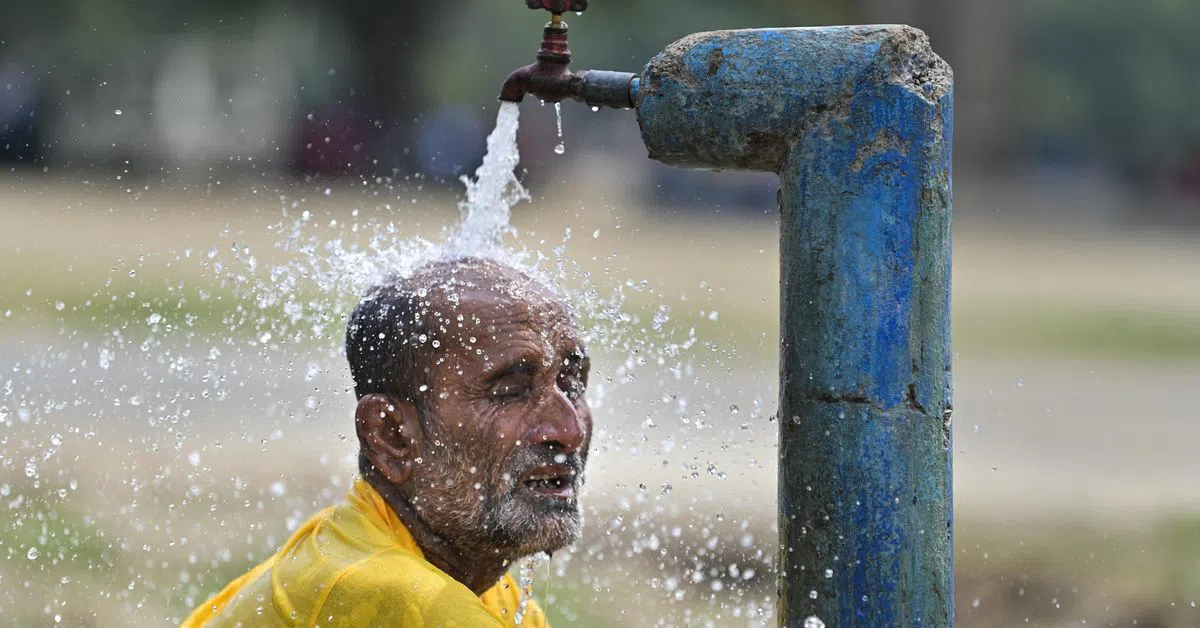
A study has found that the prevailing hot and humid conditions during India’s monsoon season could extend the duration of summer season to irreparable heat stress under a global warming of 2 °C.
The findings, published in the journal American Geophysical Union (AGU) Advances, highlight “increased UHS (unforgiving heat stress) due to climate warming during the monsoon season (July-October)”.
Long-term irreversible heat stress in both seasons – summer and monsoon – could pose serious challenges to public health, labor productivity and climate resilience in densely populated and vulnerable areas, said researchers from the Indian Institute of Technology (IIT) Gandhinagar and Stanford and Purdue universities in the US.
Irreversible heat stress occurs when one’s body is unable to cool down through sweat or other mechanisms due to excessive heat and humidity. Continued accumulation of heat can endanger human health, including heat-related illness, organ failure, and death.
The study shows that over the period 1979–2021, irreversible heat stress has become more frequent and is affecting significantly greater areas across India – from less than 0.01 million square kilometers during the 1980s to 0.04 million square kilometers by 2020.
Irreversible heat stress was found to be greater during the summer months of March–June, affecting eight percent of India, and was found to be even more strongly associated with annual heat-related mortality – only a one percent effect was found during the monsoon season.
“However, monsoon season (July–October) UHS, characterized primarily by hot-humid conditions, is projected to increase rapidly with climate warming and will affect approximately equivalent areas of the country as the summer season (60 percent in the summer and 53 percent in the monsoon season) with a 2°C increase relative to the pre-industrial period,” the authors wrote.
The team estimates that under different warming levels, the total population affected by irreparable heat stress could be between 0.8 and 1.2 billion, depending on the projected population.
Population and density data for the study period came from the Gridded Population of the World dataset, while heat-related mortality data for Indian states during 1980–2019 was obtained from the National Disaster Management Authority (NDMA) and the India Meteorological Department (IMD).
Spatially, irreparable heat stress during summer occurs primarily in the Gangetic plains and coastal regions of India, potentially due to high temperatures and transport of moisture inland by pre-monsoon winds from the Bay of Bengal, as well as other factors.
In contrast, the researchers found that the monsoon season experienced humid irreparable heat stress primarily within a narrow air temperature range between 35 °C and 38 °C.
The team said that the monsoon season in the state of Punjab in the north-western parts of the country has caused irreparable heat stress.
He said the presence of high humidity during the monsoon season, coupled with moderately high air temperatures, especially during monsoon breaks, creates favorable conditions for the occurrence of extreme heat stress.
The Gangetic plains, north-western India and eastern coastal areas were identified as hotspots, which experience irreparable heat stress mainly during the summer season.
“However, northwestern and Gangetic plains under warmer climates will experience higher incidence of UHS during monsoon than summer,” the authors said.