Center plans farmer outreach
With growing concerns over the possible impact of El Nino conditions in parts of the country during the upcoming Kharif season and forecast of one of the worst monsoons in the last 10 years, the Center has decided to launch crop-specific advisories for farmers under the nationwide “Save Farm” campaign starting from June 1.
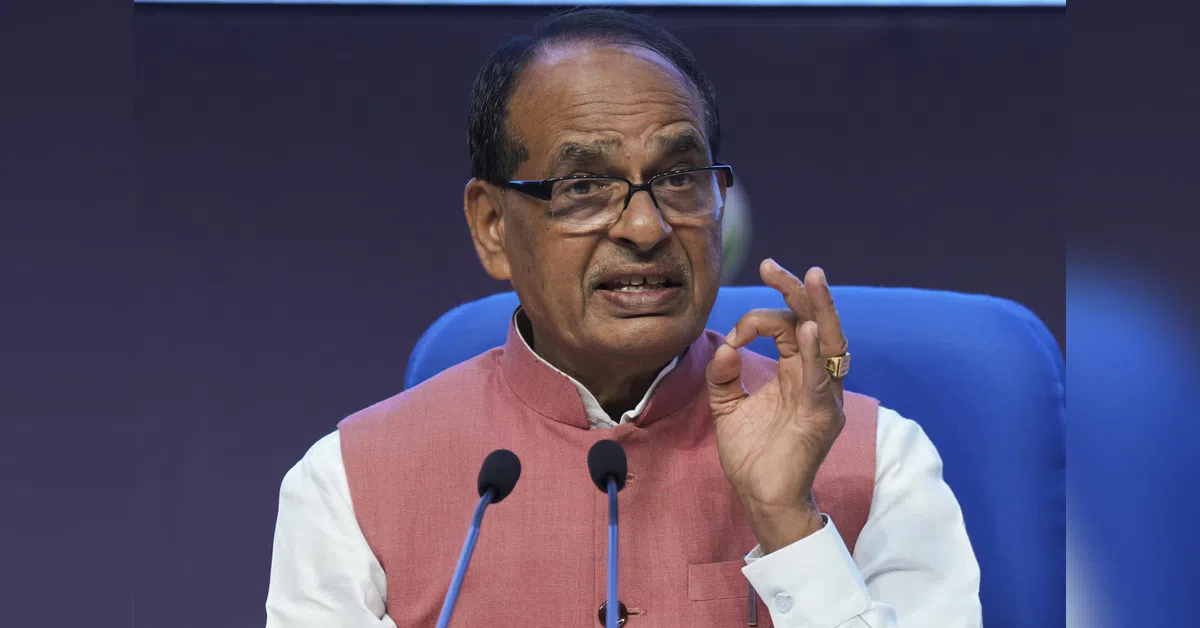
Union Agriculture and Farmers Welfare Minister Shivraj Singh Chouhan said the month-long campaign will focus on helping farmers take informed decisions on crop selection, diversification, fertilizer use and water management in response to increasing weather risks.
Addressing a high-level review meeting on preparations for the campaign, Chouhan said farmers will receive practical guidance tailored to local weather, soil and market conditions. “The aim is not just to disseminate information, but to ensure that farmers get field-level advice on what to plant, where to diversify and which options are better suited in areas facing rainfall deficit or high climate risks,” he said.
The campaign comes at a time when policymakers are closely monitoring weather developments ahead of the sowing season. Agricultural experts have warned that the El Nino phenomenon could affect rainfall distribution in many areas, with potential impacts on crop planning and farm incomes.
On Friday, the India Meteorological Department (IMD) reduced its 2026 southwest monsoon forecast to 90 per cent of the long period average (LPA) from the earlier estimated 92 per cent of the LPA, indicating that rainfall across the country is likely to be ‘below normal’.
The forecast has a model error of plus or minus 4 percent. If the forecast proves accurate, it would mean the driest monsoon in more than a decade.
The last time India received rainfall below the forecast for 2026 was in 2015, when rainfall was about 13 per cent below normal, 12.7 per cent below the LPA.
The IMD said rainfall is expected to be below normal during the monsoon season due to the development of El Nino, but the Indian Ocean Dipole (another factor influencing the Indian monsoon) is expected to remain neutral during the season.
Based on data from 1971 to 2020, the long period average (LPA) of seasonal rainfall over the entire country is 87 cm.
LPA refers to the rainfall recorded over a particular area during a certain interval, such as a month or season, which is averaged over a long period, usually 30 to 50 years.
In its second phase forecast, IMD said that except North-East India, no part of the country is expected to receive normal rainfall this year.
Meanwhile, agriculture ministry officials said the month-long ‘Save Farms’ campaign will focus on encouraging farmers to adopt climate-resilient farming practices and avoid decisions that could increase the risk of farming in water-stressed areas.
Special emphasis will be laid on promoting crop diversification, efficient input use and conservation-oriented agricultural practices.
Along with weather advisories, the government plans to make balanced fertilizer use a central theme of the campaign. Chouhan directed officials to intensify efforts to reduce excessive and unbalanced use of chemical fertilizers, especially urea, which has been identified as a major contributor to deteriorating soil health in many areas.
Farmers will be encouraged to adopt soil test-based nutrient application, use balanced amounts of fertilizers and increase the use of green manures, organic inputs and bio-fertilizers. Demonstrations on Integrated Nutrient Management (INM) will also be organized at the regional level.
“The focus should be on saving farmland, reducing the cost of farming and ensuring that the farmer gets the right advice at the right time,” Chouhan said.
The minister also emphasized that the campaign will be implemented through a collaborative framework involving panchayats, state governments, Krishi Vigyan Kendras (KVKs), Indian Council of Agricultural Research (ICAR) institutions and local agriculture departments.
To strengthen the outreach, more than 1,600 teams have been formed across the country. Of these, 500 teams will work in 100 districts identified for high fertilizer consumption. The teams will include scientists from KVKs, ICAR institutes and All India Coordinated Research Project (AICRP) centers along with officials from the Agriculture Department. Another 1,150 multidisciplinary teams of ICAR and KVKs will work together in other areas.
The campaign will also be used to increase the reach of government programs. Farmers will be assisted in availing benefits under schemes like Kisan Credit Card Program and PM-Kisan, while promotion of pulses and oilseeds, awareness campaigns on palm oil cultivation, cotton mission, soil health management and water conservation will be integrated into the initiative.
Chouhan said that the Center will seek participation of Chief Ministers, Ministers, Members of Parliament, MLAs and other public representatives to turn the campaign into a mass people’s movement.
In a related development, the India Meteorological Department (IMD) said the southwest monsoon has advanced into southwest and southeast Arabian Sea, Lakshadweep Islands, Comorin area, southwest, southeast, west-central and east-central Bay of Bengal and parts of northeast Bay of Bengal.
It further said that conditions are favorable for further advance of Southwest Monsoon into some more parts of Southwest and Southeast Arabian Sea, Lakshadweep Islands, parts of Kerala and Tamil Nadu, some more parts of Southwest, West-Central, East-Central and Northeast Bay of Bengal and remaining parts of Southeast Bay of Bengal during the next four to five days.
The IMD had earlier said the monsoon is expected to arrive on May 26, with a model error of plus or minus four days.