Best BS Opinion: Quad Relevant
Hello, and welcome to Best of BS Opinion, the finale of our opinion page for the day.
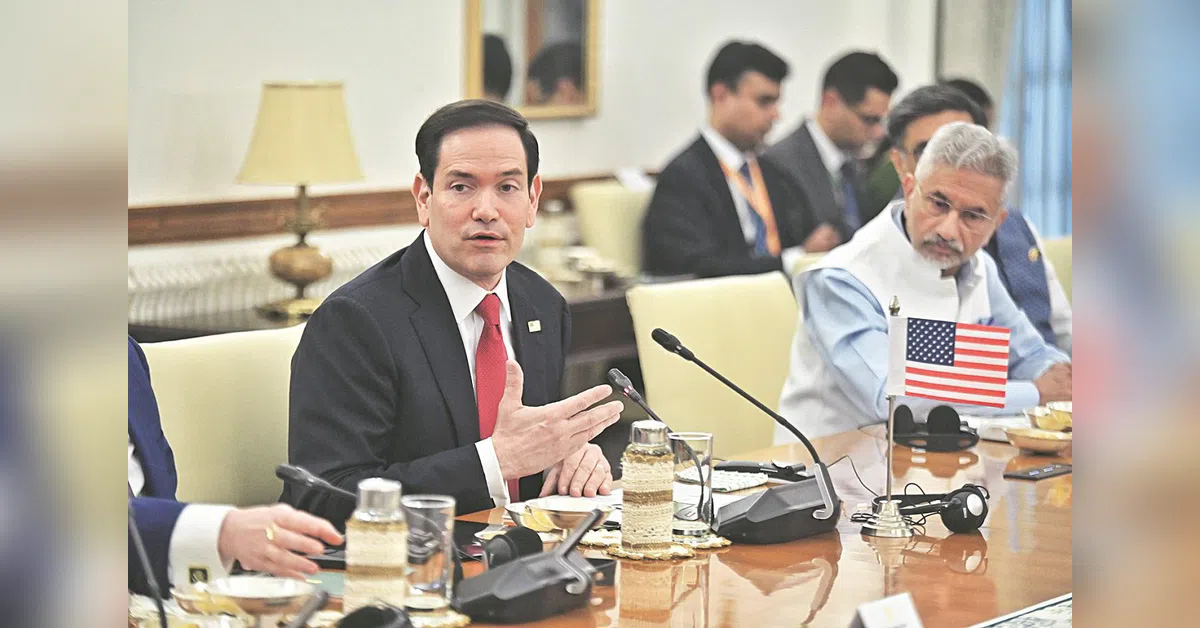
US Secretary of State Marco Rubio’s visit to India was a deliberate attempt to improve strained bilateral ties after months of tariff disputes, immigration restrictions and renewed US engagement with Pakistan. Shyam Saran writes. The meetings reaffirmed cooperation on defence, technology and counter-terrorism, while indicating that the Quad remains central to Washington’s Indo-Pacific stance. Yet there is deep concern over the warming of US-China relations following US President Donald Trump’s visit to Beijing and his emphasis on ‘strategic stability’ between the two powers. Even small changes in relations between them – what Mr Trump calls the ‘G-2’ – could result in big changes for other partners on both sides. It may also have inspired Russian President Putin’s visit to Beijing shortly after Trump. Saran warns that if Washington starts treating the Quad merely as leverage against Beijing rather than as a sustainable strategic framework, the group could gradually lose relevance. Given that the US has sidelined the Quad once before to placate Russia and China, India would do well to remain alert to a similar possibility.
The rapid, almost surreal, rise of the meme-filled ‘Cockroach Janata Party’ reflects the deep frustration among young Indians over unemployment, inflation, compromised exams and distrust of political institutions. Devangshu Dutta writes. What began as a satirical response to the ‘cockroach’ slur – from no less than the Chief Justice of India Surya Kant – rapidly evolved into a widespread digital protest movement, fueled by a generation willing to circumvent online restrictions and be skeptical of establishment narratives. Attempts to ban or suppress the movement may only increase its reach through the Streisand effect. More importantly, the CJP’s popularity reflects a broader disconnect between mainstream politics and young voters, whose concerns center on economic insecurity driven by a lack of jobs, and this has been worsened by the mismanagement of the NEET exams as well as the easy hacking of the CBSE website, both of which have seriously damaged institutional credibility.