Average IPL Franchise Valuation
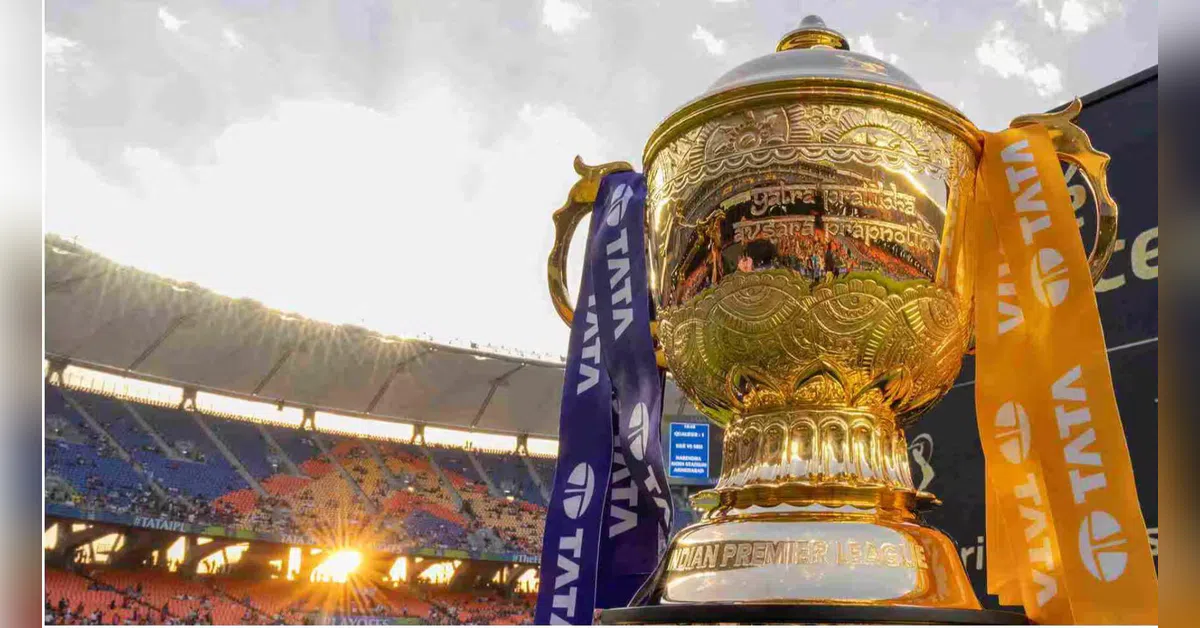
According to Fanatic Sports and Hurun India’s Most Valuable Sports Teams 2026 report, the average franchise valuation in the Indian Premier League (IPL) is projected to reach $15 billion by 2032, significantly higher than $1.8 billion in 2026.
The average IPL franchise valuation has been rising steadily since the league’s inception, rising from $0.1 billion in 2008, the report said. It added that IPL franchise values are expected to narrow the gap with the National Football League (NFL), which is currently the world’s most valuable sports league.
The average NFL franchise valuation was $1 billion in 2008 and is expected to increase to $7.1 billion in 2026. The report says that these are expected to reach $29.8 billion by 2032.
Among Indian sports leagues, Kolkata Knight Riders, owned by the Shahrukh Khan family and the Mehta Group, emerged as the most valuable franchise. The three-time IPL champion is worth between ₹19,200 crore and ₹22,500 crore in 2026, while he was initially valued at ₹300 crore.
Mumbai Indians, owned by Mukesh Ambani-led Reliance Industries, is in second place with a valuation of ₹18,400 crore-21,700 crore. The five-time IPL champion was initially priced at ₹448 crore.
N Srinivasan family-owned Chennai Super Kings (CSK) and Sun TV Group-owned Sunrisers Hyderabad (SRH) are at the third and fourth positions respectively. CSK is valued at ₹18,400-20,700 crore, while SRH is valued at ₹17,500-18,400 crore. Royal Challengers Bengaluru (RCB) is at the fifth position with a valuation of ₹16,700 crore.
The top individual earners in the IPL are Virat Kohli, who leads the all-time IPL earnings with ₹230.2 crore in 18 seasons, followed by Rohit Sharma with ₹227.2 crore and MS Dhoni with ₹200.3 crore. Each of the three players have earned more than $25 million in single-league careers.
Among women, Smriti Mandhana leads the Women’s Premier League (WPL) with cumulative earnings of ₹13.7 crore. The report states that in just four WPL seasons, the top 10 players have collectively earned over ₹90 crore.
The report also highlighted the growing scale of sports ownership portfolio in India. GMR Group leads with 10 teams across three sports and three continents, making it the largest sports portfolio among Indian owners.
JSW Group owns seven teams and is the sole owner present in four sports – cricket, football, kabaddi and hockey.
The Shah Rukh Khan family, along with Reliance Industries and Mehta Group, owns several cricket franchises in five countries.
RP-Sanjiv Goenka Group and Sun TV Group have expanded their IPL brands internationally through the SA20 in South Africa and The Hundred in England respectively. Meanwhile, the Adani family and Capri Sports have diversified into emerging domestic leagues including Kho-Kho and women’s cricket.
The report said that institutional investors have earned substantial returns through investments in Indian sports franchises. After the sale of Rajasthan Royals (RR), Lachlan Murdoch achieved returns of 92.1x, while Blenheim Chalcote co-founder Manoj Badale and Redbird Capital Partners got returns of 24.3x and 7.8x respectively. United Spirits (Diageo) achieved 37.2 times return through sale of RCB.
Earlier this month, RR was acquired by a consortium led by Lakshmi Mittal and Adar Poonawalla at a valuation of $1.65 billion. In March 2026, RCB was sold to a consortium led by Aditya Birla Group along with The Times Group, Bolt Ventures and Blackstone, valuing the franchise at $1.78 billion.
However, new franchises are in the early stages of value creation. CVC Capital Partners’ Gujarat Titans (GT) delivered a relatively modest 1.3x return multiple, reflecting the early growth stage of the franchise. Torrent Group had acquired majority stake in GT in February last year.
The report covers six professional leagues and tracked over 1,300 athletes across cricket, football, kabaddi, hockey, volleyball and women’s cricket.
Raghav Gupta, Founder and CEO, Fanatic Sports, said, “India is becoming a country embracing sports. Home to 17.8 percent of the world’s population, India will not only participate in the global sports economy – it will reshape it. The business of sports here is becoming its own asset class with its own audiences, its own economics and its own heroes.”
According to Anas Rehman Junaid, founder and chief researcher at Hurun India, there is keen interest from big business families in acquiring teams in the WPL, India’s second most valuable sports league, as they expect valuations to rise rapidly. Junaid said that when discretionary income doubles, spending on sports – including tickets, merchandise, over-the-top subscriptions, fantasy platforms, fan travel and youth academies – does not increase linearly; This is a compound. He said that democratization of Indian sports would create a “triple effect”.
India’s per capita income has crossed the inflection point of $2,500, which economists associate with a shift from essential to discretionary spending. This is projected to reach $5,000 by 2030, with an estimated 165 million Indians expected to earn more than $10,000 per year.
The combined valuation of all 10 IPL franchises is ₹1.63 trillion ($18 billion). Across the six leagues, 59 teams hold 763 brand sponsorship partnerships, with the IPL alone having 307, meaning an average of 13 brand partners per franchise.