

India’s casual gaming company
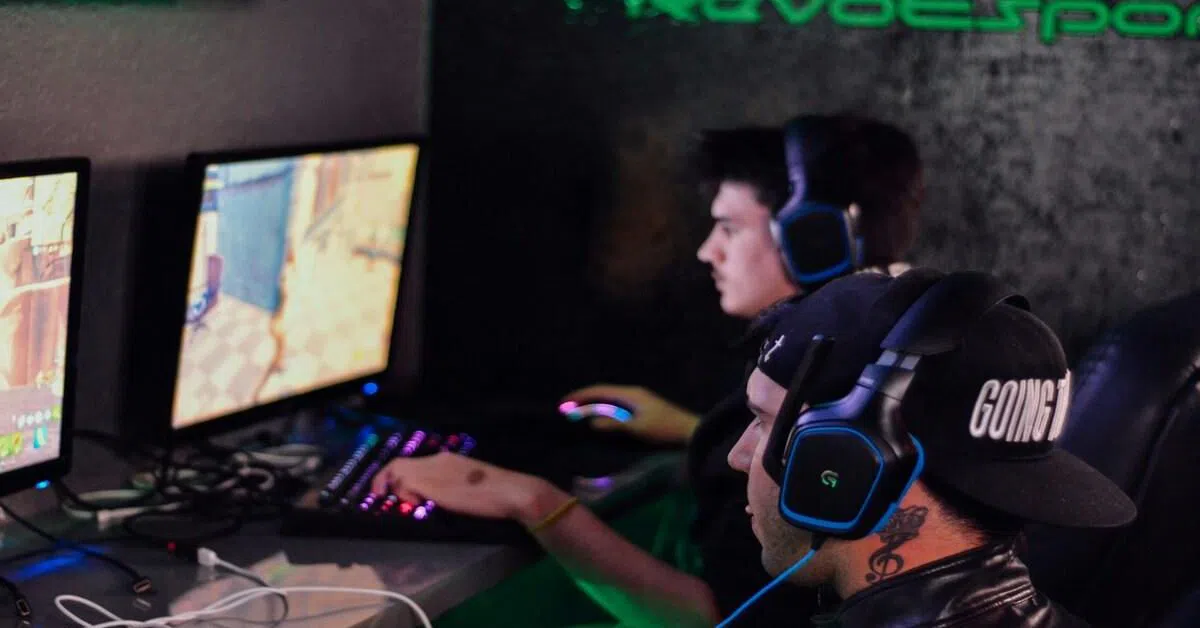
India has 591 million gamers, making it the world’s second-largest mobile gaming market by downloads. For years, that metric told a story: India consumes sports. What he is now beginning to show is the second – economically more important – one: India manufactures them, and increasingly exports them.
The casual gaming segment is at the center of this change. According to the India Gaming Report 2025, jointly released by WinZO Games and the Interactive Entertainment and Innovation Council (IEIC) at the Game Developers Conference in San Francisco in March 2025, India’s gaming industry was valued at US$3.7 billion in 2024 and is projected to reach US$9.1 billion by 2029. India’s estimated gaming revenue CAGR of 14.6% is almost double the global average of 8%.
Two models, one market
The most instructive way to understand how Indian casual gaming is going global is to look at two platforms solving the same problem from opposite directions.
Founded in New Delhi in 2015 by brothers Yashash and Gaurav Agarwal, GameZop took the B2B route. Instead of creating a destination for players to visit, GameZop embeds HTML5-based casual games directly into platforms users are already using – news apps, fintech portals, telecommunications services, entertainment platforms. Its network spans over 9,000 apps and websites in over 100 countries with partners including Samsung Internet, Tata Play, Paytm and Amazon. For partner platforms, time spent increases by 15 to 40 percent. For GameZop, it’s a B2B monetization model built entirely on advertising revenue; No in-app purchases or downloads.
“India is just not going to be a billion-player market,” said Yash Agarwal, CEO and co-founder of GameZop. “Web gaming is seeing explosive growth (…) No downloads, no wait times, just play instantly,”
While GameZop embeds games inside platforms that Indians already use, Poki – a browser gaming platform founded in Holland – created the destination itself. Operating on the same underlying technology (HTML5, no downloads, instant play), pokies serve over 100 million players monthly in over 100 countries, making it the largest open-web gaming platform. Platforms like Pokki demonstrate how browser-based HTML5 games can scale globally without relying on app-store distribution or install-driven search.
The paradox is not competition – they operate on different layers of the same market. It shows how instant-play HTML5 games can scale through completely different distribution philosophies: one embeds, one attracts.
studio behind the games
India’s only listed gaming company, Nazara Technologies has delivered consistent revenue growth through its diverse portfolio, which includes eSports (NODwin Gaming), edutainment (Kidopia), and casual titles across different geographies. “Indian companies are rewriting the rules, moving from local leaders to global powers,” said Nitish Mittersain, CEO and joint managing director of Nazara Technologies.
According to the India Gaming Report 2025, there are now more than 1,900 gaming companies in India, employing more than 130,000 people. Indian studios have moved from outsourced development to creating original IP for global distribution.
“India is not just becoming a billion-player market, it is also emerging as a powerhouse for innovation in mobile gaming,” said Anurag Chaudhary, Founder and CEO, Felicity Games. “We’re seeing the creation and expansion of global-quality titles from here on out.”
The distribution gap – and why the open web matters
For Indian studios making casual games, traditional distribution channels are structurally taxed. Apple’s App Store and Google Play both charge a 30 percent commission on every transaction. This isn’t just a cost – it effectively increases the barrier to global distribution, especially when combined with the need for paid user acquisition to drive installs. Discovery algorithms on both platforms systematically favor publishers with larger user acquisition budgets – a significant disadvantage for a ten-person studio operating out of Bengaluru or Hyderabad.
The open web offers an alternative. For smaller studios, the appeal is practical. A small team can build and distribute a browser game globally without having to navigate app-store approvals, localization pipelines, or paid acquisitions – reducing both time-to-market and upfront costs. HTML5 games run instantly in the browser, with no downloads or installs – and can be distributed through web platforms with no app store intermediaries, no commissions, and no UA budget. An estimated 15,000 games launched in 2025 used HTML5, a 2.7-fold increase from the previous year, according to data cited in a November 2025 report by Bloomberg. However, the trade-off is discovery. Unlike app stores, which algorithmically surface content, open-web distribution shifts the burden of audience aggregation to platforms like GameZop and Pokki – making distribution power, not just game quality, the key determinant of scale.
This is the economic logic behind both GameZop’s 9,000-partner B2B network and Pokki’s 100-million-player consumer platform. Both are, at their core, delivery infrastructures for browser-based HTML5 games – a format that bypasses app-store dependencies entirely.
What do the investment figures actually indicate?
US$2.8 billion has been invested in India’s gaming sector. With regulatory clarity, the India Gaming Report 2025 estimates that US$26 billion in investor value could be unlocked – potentially reaching US$63 billion by 2029.
For a country that built a US$200 billion IT services industry by mastering other people’s technology before creating its own, the parallels are not subtle. The casual gaming sector – low capital intensity, high scalability, universally appealing products, distribution channels that bypass app store economics – could be where India writes its first significant chapter as a gaming IP exporter rather than a gaming market.
Now the question is which Indian studio will the world act in next.
Disclaimer: No Business Standard journalist was involved in the production of this content
first published: 07 May 2026 | 6:06 pm First

ko2mwp