

US Senate approved funding
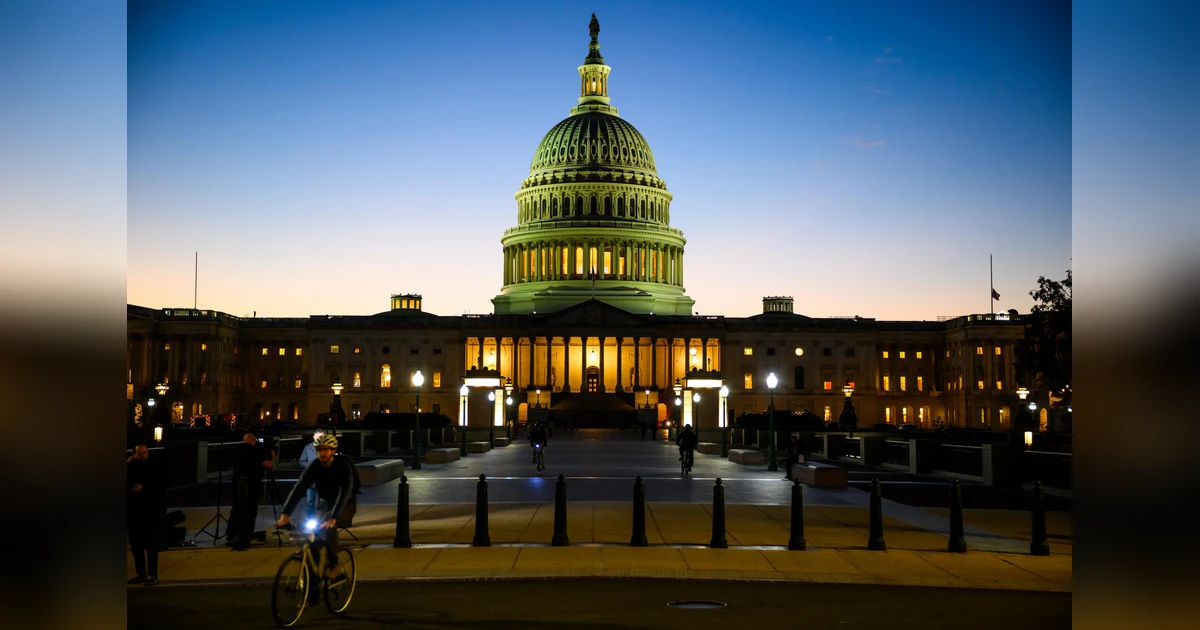
The Senate on Friday morning approved Homeland Security funds to pay Transportation Security Administration agents and most other agencies, but not the immigration enforcement operations at the center of the budget impasse that has jammed airports, disrupted travel and imposed financial hardship on workers.
The deal, which the Senate approved unanimously without a roll call, now heads to the House, where it is expected to be considered on Friday.
“We can at least reopen a lot of the government and then we’ll go from there,” said Senate Majority Leader John Thune, R-SD. “Obviously, we’ll still have some work left to do.” As pressure grows to resolve a 42-day impasse over funding for the Department of Homeland Security, the final game unfolds in the final hours before Transportation Security Administration (TSA) employees miss another pay check on Friday.
President Donald Trump said he would sign an order to immediately pay TSA agents, saying he wanted to immediately stop the “chaos at the airports.” The deal did not include all the sanctions that Democrats had sought as they sought to rein in Trump’s mass deportation agenda.
Senate Democratic leader Chuck Schumer said the outcome could have been reached weeks earlier, and vowed that his party would continue the fight to ensure Trump’s “rogue” immigration operation “doesn’t get more funding without serious reforms.”
What’s in and out of the funding package Senators worked overnight on a deal that would fund most of the rest of the department, including the Federal Emergency Management Agency, the Coast Guard and TSA, but without funding for Immigration and Customs Enforcement. Customs was funded, but border security was not.
The package does not impose any new limits on immigration enforcement, which has been largely uninterrupted by the shutdown. The massive GOP tax cut bill, which Trump signed into law last year, gave billions of dollars in additional funding to DHS, including $75 billion for ICE operations, ensuring that immigration officers were still being paid despite the defaults.
The next steps in the House, where Speaker Mike Johnson, R-La., holds a slim majority, are uncertain. Passage will almost certainly require bipartisan support, as lawmakers on the left and right rebel.
Conservative Republicans have condemned proposals from their own party calling for full funding for immigration actions. Many have vowed to ensure ICE has the resources it needs in the next budget package to carry out Trump’s agenda.
Sen. Eric Schmidt, R-Mo., tried to introduce legislation to defund the agency, saying, “We will fully fund ICE. That’s what this fight is about.” “The border is closing. The next thing to do is deportation.”
negotiations failed again and again Earlier Thursday, Thune announced he had made a “final and final” offer to Democrats. But as the day progressed, the action stopped.
Democrats argued the GOP proposals don’t go far enough in reining in officers from ICE, Customs and Border Protection and other federal agencies who have engaged in the immigration crackdown, especially after the deaths of two Americans protesting the crackdown in Minneapolis.
They want federal agents to wear identification cards, remove face masks and avoid conducting raids near schools, churches or other sensitive locations.
Democrats have also pushed to eliminate administrative warrants, and insist that judges sign off on warrants before agents can search people’s homes or private spaces — something new Homeland Security Secretary Markway Mullin has said he’s willing to consider.
Trump has largely left the issue up to Congress, but warned he is prepared to take action, threatening to send the National Guard to airports in addition to deploying ICE agents, who are now checking travelers’ IDs.
The White House took the extraordinary step of invoking a national emergency to pay TSA agents, a politically and legally dangerous approach. Instead, Trump’s order would pay TSA agents using money from his 2025 tax bill, according to a senior administration official who spoke on condition of anonymity because they were not authorized to discuss it publicly.
If the Senate package is approved by the House and signed into law, the actions announced by Trump to pay TSA agents could be temporary or unnecessary.
Airport lines grow as TSA workers face hardships The funding cutoff has led to travel delays and even threats of airport closures, as TSA employees have not been paid and have stopped showing up to work.
Many airports are seeing callout rates of more than 40 percent for TSA personnel and about 500 of the agency’s approximately 50,000 transportation security officers have walked off the job during the shutdown.
More than 11 percent of TSA employees nationwide did not show up to work as scheduled on Wednesday, according to DHS. That means more than 3,120 callouts.
American Federation of Government Employees President Everett Kelly said the union is grateful that TSA employees will be paid, but he said Congress must remain in session to pass an agreement “that funds DHS, pays all DHS employees, and keeps these critical agencies running.” At George Bush Intercontinental Airport in Houston, Melissa Gates said she would not board her flight to Baton Rouge, Louisiana, after waiting for more than 2 hours and still not reaching the security checkpoint. He said no other flights were available till Friday.
“I should have just driven, right?” Gates said. “Five hours beyond that would have been ridiculous.

6wprze