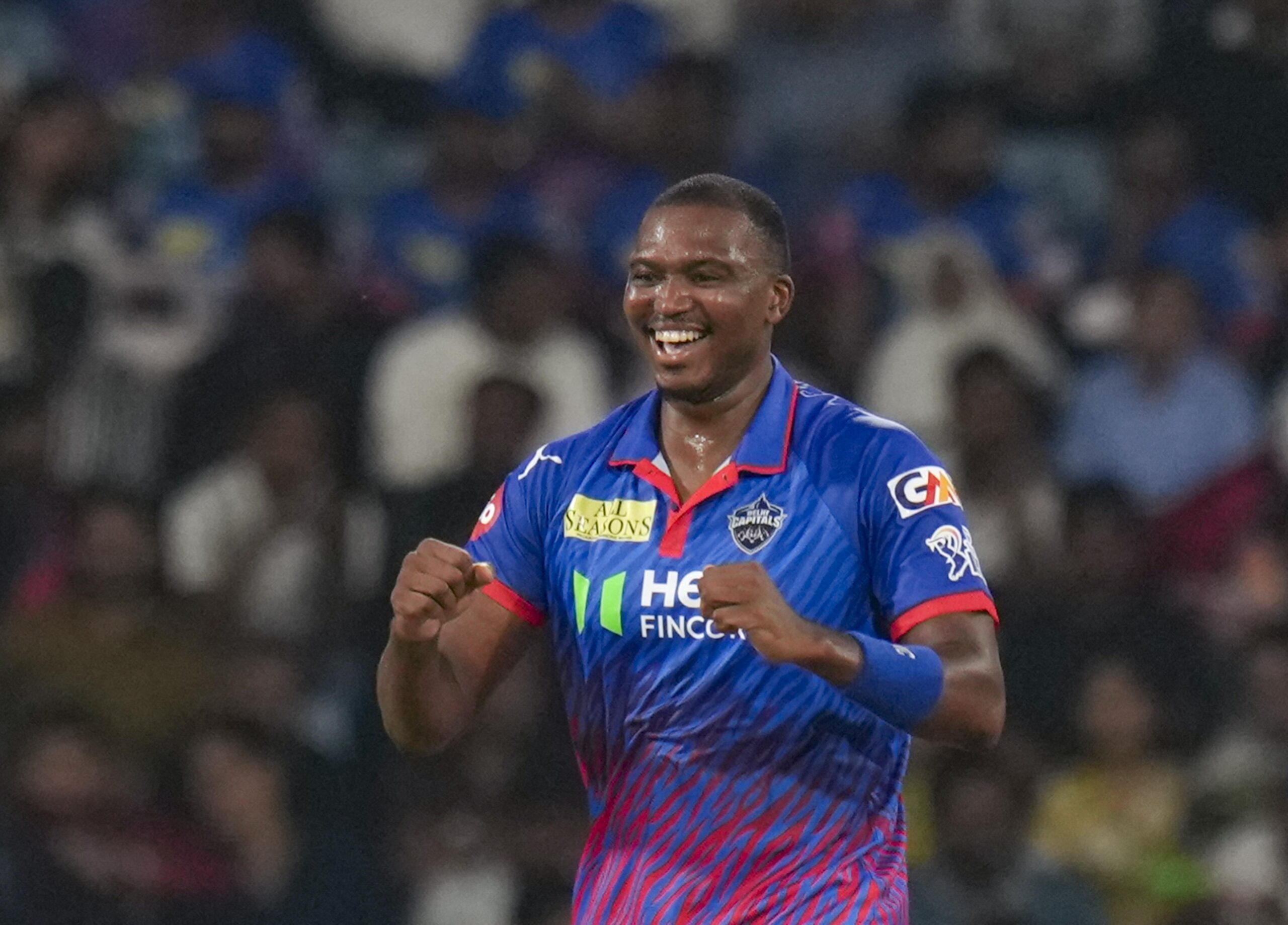
Lungi Ngidi’s slower ball, which troubled top batsmen in the T20 World Cup, remains equally lethal in the Indian Premier League.
Ngidi started working on his slower balls at the insistence of Dwayne Bravo at Chennai Super Kings in 2018 and it took him a while to master this vital skill of the game in the shortest format.
The South African and Delhi Capitals fast bowler is surprised that “everyone” is talking about his variations now even though they have been a part of the game for years.
In a select media interaction on Thursday, Ngidi recently talked about his most advantageous ball: a slower ball that falls on the batsman. It could be a slow yorker, length ball or a slow bouncer.
“So there are three different lengths on the same ball and the batsman has to guess which ball is going to come next,” the South African had said during the T20 World Cup.
On Thursday, many questions were asked about his variations and how he managed to stay ahead of the batsmen in the tough T20 format. Ngidi answered them all in a simple manner.
“It seems like everyone is surprised but I have been bowling slow for years. I am probably flying it more. I am watching the trends in the IPL. Everyone wants to bowl fast,” Ngidi said.
“On such batting-friendly wickets, you have to find something different, that’s the only way you stay relevant. A lot of people ask me (about the slower ball). They think it’s easy.
“It took me about a year to bowl this ball. It’s one of my main weapons. It takes a lot of confidence to develop it on the yorker length. When I get it right, it creates chances, which is what you want in T20 cricket,” he said.
In his first four matches for Delhi Capitals, Ngidi has an economy rate of 8.04 and more importantly, he has taken five wickets.
While some fast bowlers in the IPL are rewarded for staying put over the length of a Test match, Ngidi feels no one can bowl six balls at the same spot. He believes that this makes the bowler much more predictable in the batsman’s game.
“In the shorter format, we don’t rely too much on the stock ball. People are looking for 70 in the powerplay. If you keep bowling the same kind of bowling, he will catch you at some point.
“Hitting the top of the six balls, I would probably say two of them will go for boundaries. It’s good to have variety so that if the stock ball is not working you can fall back on it.
“If the wicket is not giving you anything, you ask yourself what will happen next and if you don’t have other skills then you are in trouble,” the all-format fast bowler elaborated.
Also, he believes that the length of a Test match will never leave the game as it is a basic requirement.
“Sometimes the conditions dictate how you bowl. A good length of a Test match will never take away from the game. All I am saying is that variations help under pressure. The basics of the game are the game itself. Test cricket has helped me in the shorter formats,” the 30-year-old said.
It’s one thing to practice slower balls in the nets and quite another to execute them under the extreme pressure of an IPL game. This is where mental toughness comes in for Ngidi.
“It (dipping ball) is a courageous ball to bowl. When you get it wrong it is a low full toss or a slog ball but the confidence I have in myself, the preparation I have done to bowl the ball helps.”
“It’s not just skill but also confidence. I’ve done it for many years. I always bowl under pressure in the powerplay and at the death. As the coach says someone is going to do the dirty work, it’s me. You find a way to do the dirty work,” Ngidi said before picking out the wide slow yorker as the toughest ball to execute.
Not getting emotional on the field also helps Ngidi execute his plans.
“You will see me having regular conversations with KL, Axar, Miller, Stubbs (all DC teammates). Just figuring out what they might be thinking as a batsman. That’s how I play the game of cricket. As long as I can execute my plans, I don’t care what the batsmen are expecting.
He further added, “Also, I don’t play cricket emotionally because it’s a bad place to be. If you want to call it a business then it totally is.”
Lastly, he gives due credit to MS Dhoni for his guidance in his young days as a cricketer.
“I was very young (21) so having a captain who was not emotional helped a lot to stay calm. He supported me, he played me. In my first season I was opening the bowling in the final.