Best BS Opinion: From the War
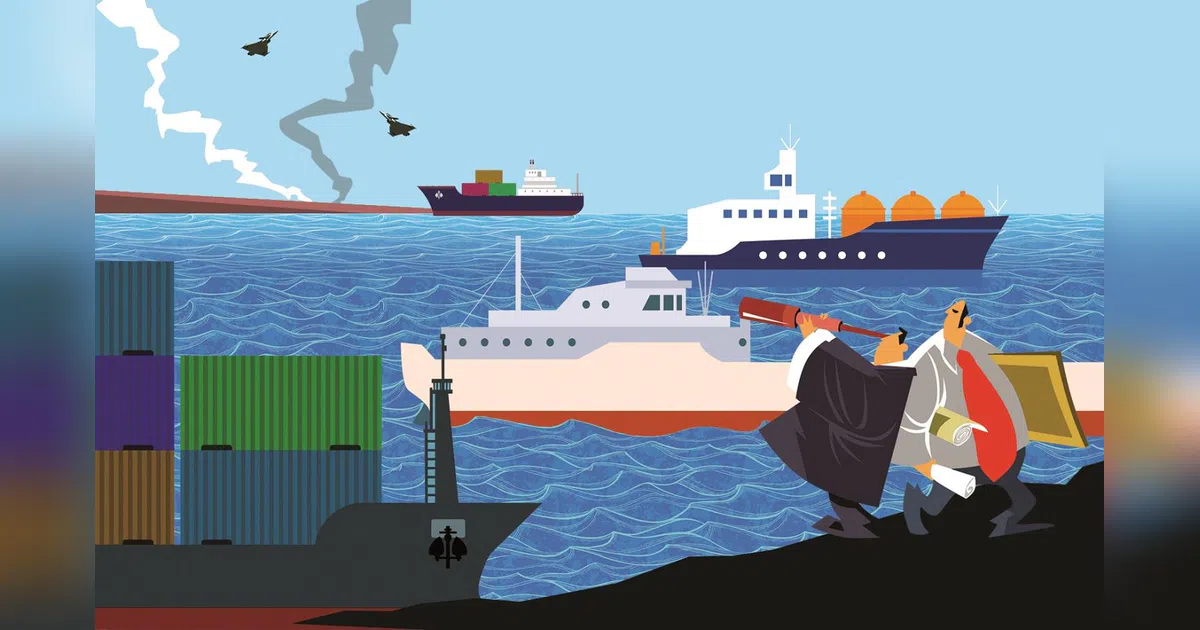
The US-Iran conflict has pushed global markets into a prolonged period of uncertainty, with Donald Trump offering an escalation without clarity on a solution. As our first editorial outline, The absence of a defined end game has kept oil prices high and trade routes unstable, which has had a direct consequence on India’s macroeconomic stability. The pressure has sharply extended to the rupee, which has seen sustained depreciation amid capital outflows and risk aversion. The RBI has intervened through tighter rules on dollar sales and currency positioning, but the stress remains structural, reflected in the widening balance of payments deficit. While a weaker rupee may ultimately help exports, the immediate concern is managing inflation and liquidity as oil prices rise.
A different set of pressures are building in the labor market as the adoption of artificial intelligence has been unevenly deep. Anthropic’s research shows that its use is concentrated in high-income countries and specialized tasks like coding, slowly expanding into everyday applications. Our second editorial notes While job losses are still not visible on a large scale, especially at the entry level, hiring in AI-exposed sectors has slowed. In India, adoption is limited but highly concentrated in software and design, thereby reinforcing productivity gains for skilled workers while exacerbating inequalities. The risk is not immediate displacement, but a gradual hollowing out of entry routes, making rapid skill upgrading necessary to maintain workforce competitiveness.
During this time, Ajay Kumar is located India’s corporate ambitions within the changing global template, arguing that scale alone will not create a trillion-dollar company. Companies like Apple and Microsoft achieved dominance by owning core technologies, not just by deploying them. In contrast, India’s corporate base remains anchored in asset-heavy and service-based sectors, which limits exponential value creation. Now the shift towards AI, semiconductor and platform-driven models offers an opportunity, but only for firms that create and control intellectual property with global relevance.
At the end, amritesh mukherjee review stories we wear Written by Shefali Vasudev, a book that highlights how appearance in India functions as a layered expression of identity, power and history. Clothing and consumption function as markers of class and aspiration, as well as a means of display in public life. The book draws attention to how even everyday spaces reflect these hierarchies, and how access to self-presentation remains unequal. For marginalized people, visibility itself becomes contested, making presence a space where dignity, identity, and social structure intersect.
Stay tuned!