Asia explodes as Detroit LP
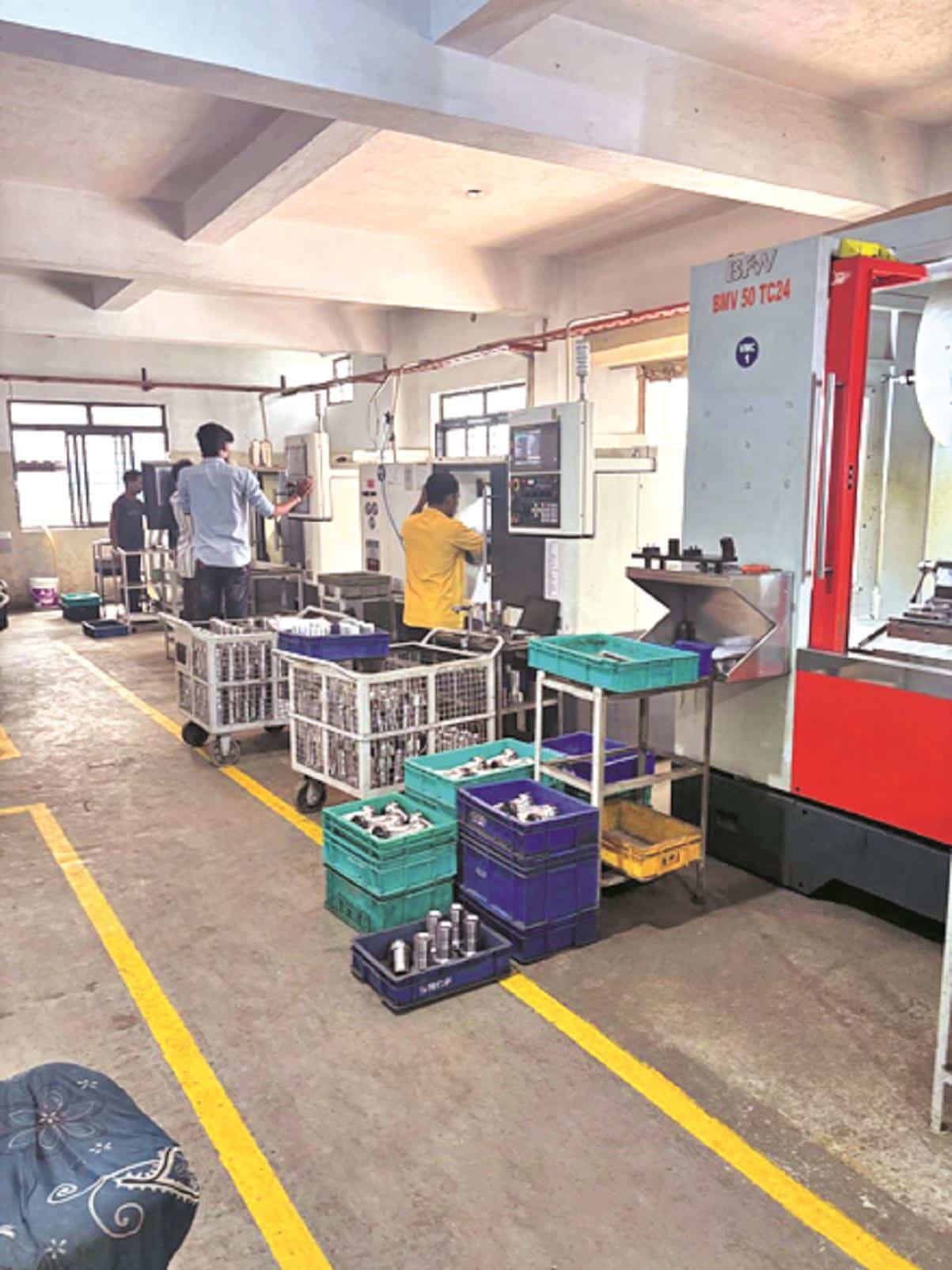
Most of the approximately 1,800 units are major suppliers that play a key role in maintaining Chennai’s fame as the Detroit of Asia, as the city accounts for over 30 percent of India’s automotive industry and 35 percent of the auto component industry. However, the region that bore the brunt of Covid-19, floods and even the Goods and Services Tax is now facing a crisis beyond its control – the war in West Asia.
When fuel becomes a fault line
When? business standard When Chennai Auto Heat Industries reached the heat treatment unit in Pattaravakkam, its director Ravila Sekhar was already discussing with his employees about the stock of commercial liquefied petroleum gas (LPG). A unit which used to run on 10 days’ stock of LPG is now in a “hand-to-mouth” situation.
Heat-treatment units are the most affected industry in the Ambattur region due to the crisis. Shekhar says, “Earlier, we used to consume around 150 cylinders a month. In March, it came down to 100. In April, we are just managing to run operations. This is an industry that needs LPG, and we have no other option.”
Chennai Auto Heat Industries is a Tier-III supplier to one of the largest car manufacturers in the country, with its manufacturing unit in Chennai, and also to an iconic two-wheeler brand with strong export numbers.
Shekhar’s company is trying every weapon to deal with the crisis, but there is no result.
From having one LPG dealer till March, the company is now getting gas from three dealers, apart from trying to get gas from private sector players. However, rising costs since March have hit their profits more than ever. “For a 19 kilogram (kg) cylinder, we used to buy it at around ₹1,500; now it is coming at around ₹3,000, doubling our expenses. The government is also giving priority to domestic LPG. We have asked some of our customers to extend the delivery time till the crisis is over,” he adds.
Although small in number, these heat treatment units play a vital role in the entire value chain.
The first domino has already fallen
For those who consider the Iran-US-Israel war to be merely an LPG crisis, Ambattur issues a warning. This is having a cascading effect on the entire value chain.
Ravichandran G, president, Ambattur Industrial Estate Manufacturers Association, says, “The prices of raw materials like steel, aluminum and copper have increased by 30-40 per cent since the war started. Some raw materials are not even in stock. If the crisis continues, it will hit the auto industry, as we are in Chennai and one of the major arteries of India’s auto ecosystem.”
On First Main Road is the office of Delcosis Manufacturing, a major supplier of parts for tractors and car engines. Delcosis chief executive Muttiah Balachandran highlights an even more worrying issue – the shortage of manpower. He further said, “Since 5 kg LPG cylinders are not available, we are not getting employees from North and East India, which are the major workforce. Most of the units are working at 50-60 per cent workforce.”
Although Delcossis also took an innovative step by providing an experimental diesel stove for cooking, it could not bring back the employees.
“Steel prices have increased; chemicals like nickel have also increased. More importantly, rates of plastic items have increased, affecting the survival of the industry,” says Balachandran.
When his company tried to buy high-quality plastic trays last week, it cost more than ₹350 per kilogram, down from about ₹250 earlier. More importantly, retail players have indicated that the same product may soon cross ₹400-450 if the crisis continues. He also believes that anything affecting Ambattur will gradually affect major original equipment manufacturers in the auto industry.
heart beat under the hood
Ambattur reportedly supplies precision, machined and forged parts to major automakers such as TVS Motor Company, Honda Motorcycle & Scooter India, Ola Electric Mobility, JSW MG Motor India, Hyundai Motor India, Tata Motors, Maruti Suzuki India, Nissan India, Mahindra & Mahindra and Yamaha Motor India. Based on rough estimates, the combined revenue of the companies in Ambattur is ₹3,000–3,500 crore.
AN Gireshan, managing director of Avon Seals, a tier-I supplier of leading water pump manufacturers including Kirloskar Brothers, Suguna Pumps, Sharp Hydro Products and CRI Pumps, is also in one place.
“The number of companies dependent on LPG in Ambattur could be as low as 5 per cent, especially those with furnaces. I have a unit that produces premium-quality sintered carbon, which is a high-strength, porous material. Due to LPG shortage, I had to shut down operations there and shift employees to my other units,” says Gireshan.
Sintered carbon is used in water pumps, and the company has now requested customers to accept a downgraded version of the same product. “My main factory has not been affected because I have reduced the quality of the product,” he says.
hormuz straitjacket
Ayyappan Kandasamy’s Hybrid Auto Cast is a leading precision manufacturer of aluminum and zinc pressure die-cast components. Kandasamy’s concern is the shortage of aluminium.
About 170 container ships carrying aluminum were reportedly stuck in the Strait of Hormuz. Adding pressure to rising costs, Bahrain’s Alba, one of the world’s largest aluminum smelters, has declared force majeure on deliveries and cut production by 19 percent, citing the inability to move ships through the Strait of Hormuz.
“After the crisis, prices increased from ₹240 per kg to around ₹365 per kg, which is more than 50 per cent. Even scrap is not available in the market. At the moment, there is a huge shortage of aluminum alloys,” he says.
Aluminum suppliers have also stopped giving loans to these units, which used to make payments a month in advance. “Now, we are sourcing it on a cash-and-carry model,” says Kandasamy.
He also says that even if they buy the product, workers from Bihar and Odisha have gone back due to the LPG crisis, which shows that the manpower crisis is an even bigger concern.
Machines become silent, resolution does not
As one exits the hub, the clang of metal and the hum of machines gradually subside. But Balachandran’s words continue to ring in the ears: “Be it a pandemic or a war, the show will go on. Ambattur will survive.”
……………………………….