Anxiety, anger, and hope increase.
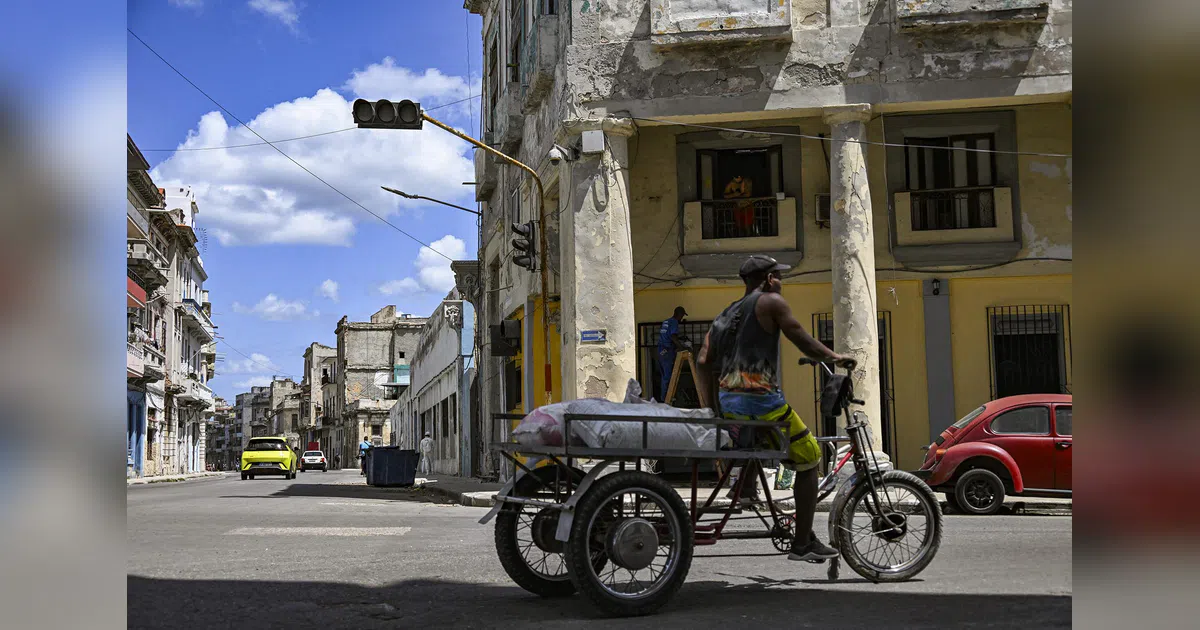
There was a mix of uncertainty, anger and hope in Cuba on Wednesday after US President Donald Trump’s comments this week that Washington could take “immediate action” against the island’s government.
Trump, whose government has come down more aggressively on its Caribbean rival than any US government in recent history, has effectively cut off Cuba from major oil shipments in an effort to force regime change. The blockade has had a devastating impact on citizens Trump and Secretary of State Marco Rubio say they want to help, leaving many desperate.
Island-wide blackouts have rattled Cubans already reeling from years of crisis, and shortages of gasoline and basic resources have crippled hospitals and crippled public transportation.
Matilde Visoso, a single mother caring for her sick daughter, said she is troubled by the island’s growing crisis and wants change in the Caribbean nation.
“Cuba is waiting for Trump and Marco Rubio, because we can’t wait any longer. It’s too much – there’s too much repression, too much hunger,” said the 64-year-old housewife. “Cuba is in tears.”
Political tension has increased between America and Cuba Trump has said he can do “whatever he wants” with Cuba. The administration is looking to step down President Miguel Diaz-Canel as the US continues talks with the Cuban government, according to a US official and a source with knowledge of talks between Washington and Havana. They spoke on condition of anonymity because they were not authorized to discuss sensitive negotiations.
No details have been given about who the administration would like to see in power.
US Secretary of State Marco Rubio also said that the Cuban government’s socialist economic model needed to “change dramatically”. While the Cuban government imposes heavy restrictions on the country’s private sector, decades of US sanctions have crippled Cuba’s economy.
The administration’s pressure on Cuba comes more than two months after his administration’s military strike that captured then-Venezuelan President Nicolas Maduro in January, and just weeks after he launched a joint US-Israeli military strike against Iran on February 28.
Diaz-Canel hit back at Trump’s comments late Tuesday, writing in a post on The Cuban government also sharply criticized Costa Rica’s decision to close its embassy in Cuba on Wednesday, saying in a statement that it was an “arbitrary decision” taken under US pressure in an effort to isolate the island.
no one knows what’s gonna happen Others, like Dr. Jesus Garcia, 62, who expressed skepticism that the Trump administration would remove Diaz-Canel from power or intervene in Cuba, turned a blind eye to Trump’s comments.
“The Americans can say whatever they want. The Cuban people are the ones who decide what to do in Cuba,” Garcia said.
What seemed to connect almost everyone in Cuba was a deep sense of uncertainty in the face of seismic shifts. Cubans have become accustomed to the crisis endemic on the island, and are adopting new ways to deal with the constantly changing challenges. But many say things have reached breaking point and are demanding answers from the government backed into a corner.
One small relief has been aid shipments from activist groups and allied governments such as Mexico. Overnight, five tons of medical equipment, solar panels and other aid arrived on the island. According to Cuban state television. But such shipments are only a fraction of the need and do not solve the country’s broader struggle to keep the lights on.
Maria del Carmen Companioni, 51, said that amid the political tug-of-war between the two governments, regular Cubans like her are struggling with rising prices and no clear path forward.
He said, “Really, because of all this, people are very worried and in a bad situation. No one knows what is going to happen.”