

Best BS Opinion: India-Nord
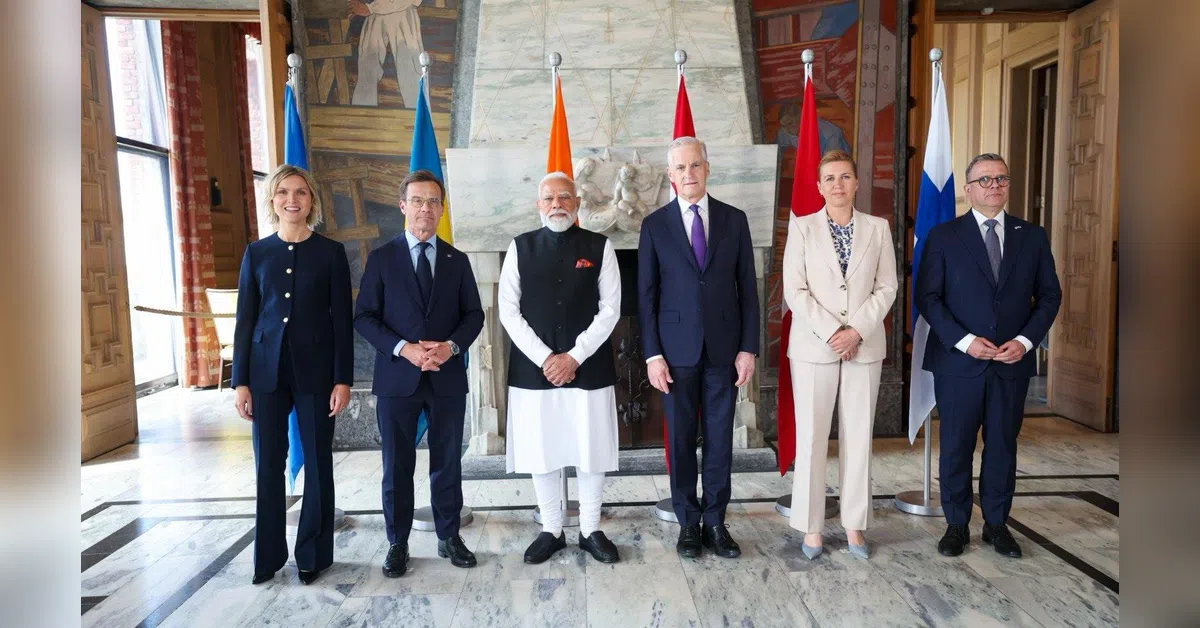
A few decades ago, there was one Indian advertisement that reached the masses like few others, introducing the product as a family member across the country with a simple tagline that reflected the country’s indigenous and self-reliant ambitions before it became a political punchline: Hamara Bajaj. In fact, the Bajaj name is widely recognized across the country as one of India’s favorite domestic industrial houses, a tradition that continues across generations as the group continues to do so today. It is one of the few Indian business families that has undergone creative destruction and diversification to emerge stronger. That the leading men of the group have remained more or less dominant in their respective areas speaks volumes about the capabilities of the third and fourth generations who have inherited this divided empire, Our first editorial notes. However, challenges remain: the descendants retain control over strategic decision-making, and the group has not managed to move beyond its original pre-liberalization product mix. The next generation of Bajaj has its work cut out for them. The India-Nordic Summit in Oslo marks a significant expansion of India’s engagement with the Nordic region from traditional diplomatic ties to a deep strategic partnership and reflects a broader shift in Indian foreign policy towards geo-economic and technology-driven partnerships. Our second editorial says. India’s green shift will benefit from technology sharing, while Norway’s sovereign wealth fund could play a key role in financing India’s infrastructure and energy transition. But given the strict regulatory regime under which Nordic investors operate, India will need to strengthen its regulatory predictability, institutional credibility and governance standards to attract long-term capital. Dharmakirti Joshi And Adheesh Verma The argument is that India’s oil trade deficit is becoming a structural weakness as its growing dependence on energy imports grapples with geopolitical shocks and slowing global demand for refined petroleum exports. Despite low crude oil prices in recent years, the deficit widened as domestic demand continued to grow while export earnings weakened. He warned that higher oil prices due to the Middle East conflict would put further pressure on India’s current account, rupee and foreign exchange reserves. India needs to adopt a multi-pronged strategy: diversifying crude oil supply, expanding strategic reserves, accelerating domestic exploration, increasing ethanol blending and electric vehicles, modernizing public transport and increasing investments in renewable energy, clean coal technologies and nuclear power. The appointment of Kevin Wersh as chairman of the US Federal Reserve is a significant test of the central bank’s independence under Donald Trump. Rajesh Kumar writesNoting how Jerome Powell faced political attacks and legal pressure for opposing demands for lower interest rates. Warsh, a former Fed governor and supporter of broad institutional reform, supports tighter monetary discipline, a smaller Fed balance sheet, and less central bank communication. However, increased inflation, rising US debt, geopolitical uncertainty and Trump’s penchant for lower borrowing costs could hamper them. Given the political and economic environment in which he operates, Warsh’s biggest challenge may come from politics rather than monetary policy. Sandeep Roy’s review Chapal Rani, the last queen of Bengal, Chittajit Mitra argues The book is a portrait of the renowned female impersonator Chapal Bhaduri and a comprehensive meditation on gender, performance and social exclusion in Indian folk theatre. The review traces the rise of Bhaduri in the Jatra tradition of Bengal, the eventual marginalization of women after their entry on the stage, and their rediscovery late in life. Mitra praised Roy for preserving Bhaduri’s voice and resisting the stigmatizing queer label, highlighting the economics and hierarchy of local performance traditions. The book ultimately emerges as a poignant account of artistic survival, self-expression, and India’s long, often ignored history of gender diversity.
zkg37x