Kuwait opens oil gates as probe
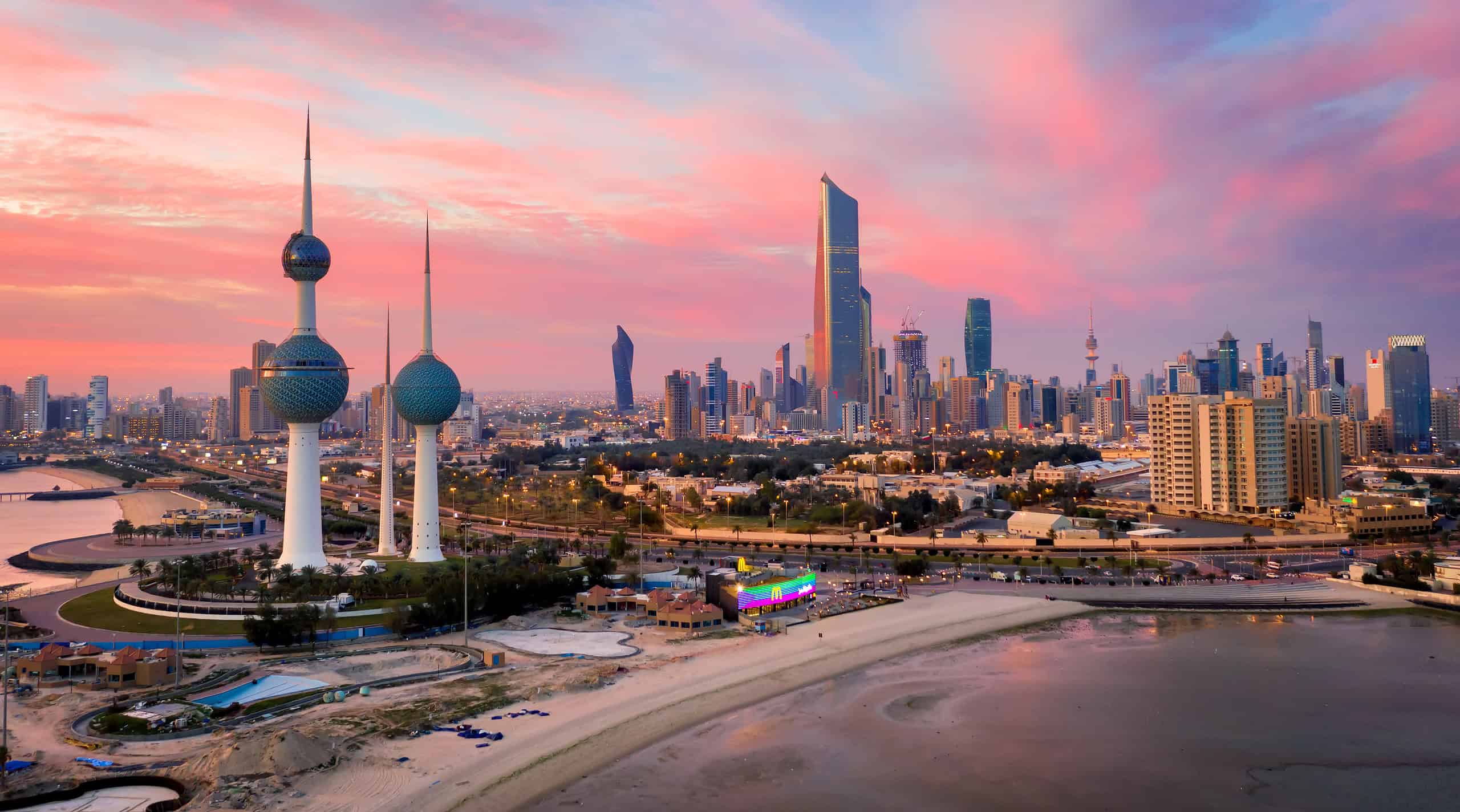
Kuwait’s economic outlook is increasingly being affected due to increasing tensions in the Gulf. In recent weeks, the broader conflict between Iran, the US and Israel has spread to the region, with drone strikes and other military incidents in Kuwait killing at least 10 people and tightening security around key infrastructure. Brent crude has also gone above $100 per barrel due to disruption in the Strait of Hormuz. Kuwait has strong buffers but if the conflict drags on it could have a negative impact on investment and development.
Last month, Kuwait’s Prime Minister Sheikh Ahmed al-Abdullah al-Sabah invited international oil companies to invest in new offshore oil fields in the emirate. This was an unusual move in a country where hydrocarbons have traditionally been a national privilege.
It appears that change is happening. Shortly before the prime minister’s announcement, Kuwait Oil Company awarded a $1.5 billion, five-year development contract to US oilfield services provider SBL and signed France’s TotalEnergies to an exploration deal. Kuwait is also considering selling a $7 billion stake in its oil pipeline network.
It is part of the emirate’s broader effort to open up the oil sector to foreign investors. After nearly a decade of slow growth and political stagnation, Kuwait’s economy is beginning to pick up again.
Last year alone, the government allocated more than $13 billion to projects, and reportedly $36 billion is in the pipeline. Some are new initiatives, others have re-tendered deals for delayed public-private partnerships.
Since January, Kuwait has signed several new contracts, including a $4.1 billion deal with Saudi Arabia’s ACWA Power to expand the Al-Zour North power and water plant. China State Construction Engineering Corporation won a $3.2 billion wastewater treatment contract and France’s Aegis won the port management deal.
“We are already seeing rapid implementation of large-scale infrastructure and development projects,” says Suleiman Al-Marzouq, deputy CEO of Kuwait at the National Bank of Kuwait (NBK), the country’s largest bank, “and this pace is expected to increase through 2026 and beyond, especially in energy, utilities, transportation and urban development.” NBK sees itself as a leading financier, arranger and structuring partner in these ventures, including syndicated loan and project finance transactions.
Kuwait Finance House, the emirate’s largest Islamic bank, also intends to capitalize on long-term opportunities.
“There is strong growth potential in sectors fundamental to global economic infrastructure and energy needs,” says Group CEO Khalid Youssef Al-Shamlan, “particularly oil and gas, large engineering procurement contracts, driven mega housing and infrastructure projects and services.”
After two years of recession, the economy is expected to grow 2.6% in 2025 and reach 3.8% in 2026. Investor sentiment is improving, prompting foreign firms to increase their presence; Goldman Sachs opened a new office in October, while French private equity firm Ardian plans to take a minority stake in Warfa, an investment company owned by the Kuwait Pension Fund.
Financial improvement
After nearly a decade of political gridlock that paralyzed economic reform, Emir Sheikh Mishaal al-Ahmad al-Jaber al-Sabah dissolved parliament and partially suspended the constitution in May 2024. Since then, Kuwait has introduced a series of new laws to support development.
The most anticipated was the Financing and Liquidity Law, which allowed the government to issue up to $98 billion of bonds and sukuks: a move that led S&P Global to upgrade Kuwait’s sovereign rating to AA-. Access to debt markets will be important to advance the country’s project pipeline.
“We see growing opportunities from upcoming regulatory reforms, including a visible pipeline of infrastructure and residential developments as well as housing finance. We are also seeing momentum in tourism and service-related projects as well as increasing interest from international investors,” says Abdullah Al-Tuwaijri, CEO of Boubyan Bank.
Early last year, authorities relaxed land ownership rules to allow foreign entities licensed by the Kuwait Direct Investment Promotion Authority, listed companies, real estate funds and investment firms to buy property previously restricted to Kuwaitis and Gulf Cooperation Council citizens. The government is in the final stages of adopting a new mortgage law that will allow banks to issue housing loans to meet the growing demand for homes.
“This should support consumer credit growth, improve affordability, and stimulate construction and real estate activity, leading to a structurally stable growth cycle for households and developers,” predicts NBK’s Al-Marzouq.
For banks, Kuwait’s reform agenda and expanded project pipeline are opening up new lending opportunities.
“Total financing is projected to increase by 8.5% in 2025, and the market expects mid-to-high single-digit growth in 2026,” says Al-Tuwaijri.

Kuwait’s banks have strong fundamentals, with capital and liquidity above Basel III requirements. “It also promotes innovation to enhance service quality, operational efficiency and customer engagement,” says Al-Shamlan.
Consolidation is another hot topic. In April, Shariah-compliant lender Waraba bought a 32.75% stake in Gulf Bank for $1.6 billion. Gulf Bank is set to convert to Islamic finance in the coming months, and the two are considering a merger that would create one of Kuwait’s largest Islamic lenders with around $40 billion in assets. In 2024, the acquisition of Ahli United Bank by Kuwait Finance House created the world’s second largest Islamic bank by assets.
Kuwait has also stepped up its fight against money laundering and terrorism financing, enhancing compliance measures in line with AML/CFT regulations and global standards.
In February 2026, the Central Bank of Kuwait reduced the daily limit on international cash transfers, while the Ministry of Commerce banned cash payments for the purchase of gold and precious stones. Last year, authorities also closed down more than 70,000 inactive or non-compliant companies.
“The reforms are strengthening the resilience and credibility of the financial sector,” says Al-Marzouq. “They strengthen our position as a trusted counterparty to regulators, global financial institutions and customers, while enhancing the overall competitiveness of Kuwait’s banking system.”
work still remains
Despite reforms over the past two years, Kuwait’s economy remains heavily dependent on hydrocarbons, accounting for about 90% of government revenues. The country’s equilibrium price is $90 per barrel, resulting in budget deficits almost every year for the past decade. With oil now trading around $70 a barrel, the draft budget for 2025-26 has projected a deficit of $20 billion.
To finance past shortfalls, Kuwait has drawn on money from the General Reserve Fund, one of its two sovereign wealth funds. Now, it can access the loan markets, but borrowing to cover every day expenses is not a long-term solution.
Despite the Vision 2035 development blueprint adopted in 2017, progress on economic diversification has been slow compared to neighboring Saudi Arabia or the United Arab Emirates. Kuwait continues to prioritize hydrocarbons, aiming to increase oil and gas production by a third to 4 million barrels per day by 2035 through offshore exploration and foreign investment. In February, Kuwait Foreign Petroleum Exploration Company acquired a 20% stake in an offshore site in Brazil from Shell.
In 2020, a group of Kuwait University scholars published a paper titled “Before It’s Too Late”, which sought to raise awareness among the public and decision makers about the need for economic diversification and fiscal reform. Yacoub Bakar Albadullah, assistant professor of finance, was among the authors.
“The current economic model is unsustainable in the long term,” he argues, “especially as almost 90% of government spending is classified as current expenditure. Structural reforms are necessary to enhance fiscal flexibility and support a more diversified, future-proof economic model.”
However, meaningful change will require deep changes in the fiscal system and fare culture of the emirate. Despite some private sector jobs, mainly in banks and family-owned businesses, 85% of Kuwaitis still work in the public sector. Freeing up government-owned land will be an important step as strong demand for housing, especially with upcoming mortgage legislation, will require new plots to build homes and support infrastructure such as schools, hospitals and mixed-use projects.
Whatever the future holds, Kuwait can count on one powerful advantage: the Kuwait Investment Authority (KIA), one of the world’s largest sovereign wealth funds. KIA’s portfolio grew by 18.4% from $846 billion in July 2024 to more than $1 trillion in just one year. While the fund’s revenues are not counted in the national budget, they provide substantial financial flexibility and protect Kuwait from external shocks. But they also reduce the immediate pressure for reform.