Stalin called Centre’s 3-language
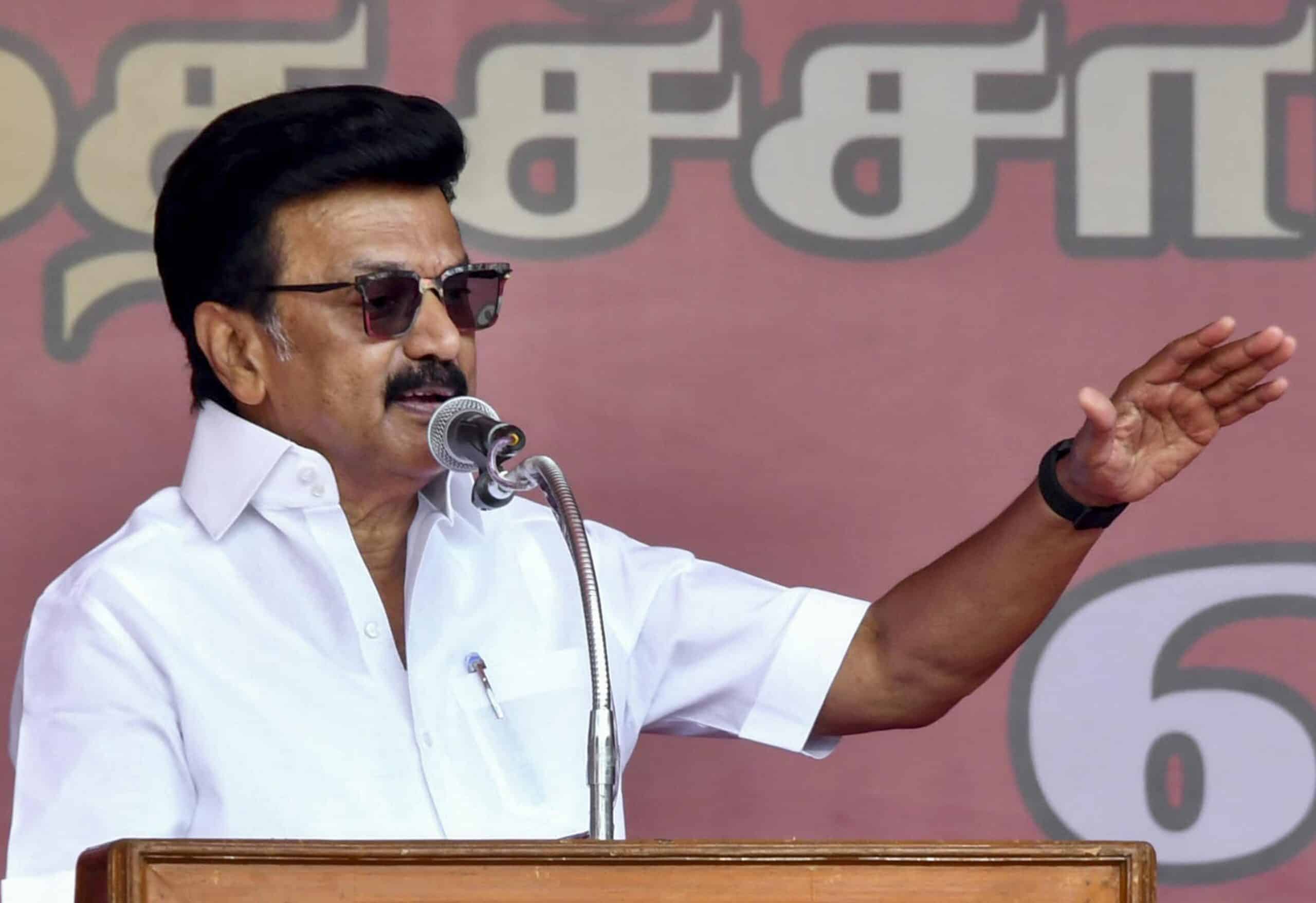
Tamil Nadu Chief Minister MK Stalin, referring to CBSE’s recently revealed curriculum framework, on Saturday alleged that the “so-called three-language formula” is actually a “secret” mechanism to expand Hindi in non-Hindi speaking areas.
Stalin, president of the ruling DMK, alleged that the curriculum framework by CBSE in line with the National Education Policy 2020 is not an innocent educational reform. This was a deliberate and deeply concerning attempt at linguistic imposition that confirmed our long-held fears.
The Chief Minister alleged that under the guise of promoting “Indian languages”, the BJP-led NDA government is aggressively pursuing a centralized agenda that privileges Hindi while systematically marginalizing India’s rich and diverse linguistic heritage.
“The so-called three-language formula is actually a secret mechanism to expand Hindi in non-Hindi speaking areas,” he alleged in a statement.
For students in the southern states, this framework effectively translates into “compulsory learning of Hindi”. He alleged, “Yet, where is the reciprocity? Will it be mandatory for students in Hindi-speaking states to learn languages like Tamil, Telugu, Kannada, Malayalam or even Bengali and Marathi? The complete lack of such clarity highlights the one-sided and discriminatory nature of this policy. The irony is that this is obvious and unacceptable.” The same central government that has “failed” to make Tamil a compulsory language in Kendriya Vidyalaya Sangathan schools – and has consistently failed to appoint enough Tamil teachers, now wants to lecture states on promoting Indian languages. “This is not commitment, this is rank hypocrisy.” Stalin wondered whether the central government had any understanding of ground realities; Availability of teachers, training capacity and infrastructure? He asked: “Where are the qualified teachers to implement this widespread practice. And importantly, where is the funding to support this enormous burden on the education system? So, this appears to be another ill-conceived policy announced without planning, resources or accountability. This was not just a question of language, it was a question of fairness, federalism and equal opportunity.” By structurally privileging Hindi-speaking students, this policy risks creating strong advantages in higher education and employment, thereby exacerbating regional disparities.
At a time when the world is moving forward at an unprecedented pace, our children must be future-ready. The priority should be to equip them with skills in emerging areas like artificial intelligence, AVGC (animation, visual effects, gaming and comics) and strengthening scientific temperament and critical thinking. Instead, the burden of this regressive and harsh language threatens to derail their progress, the CM claimed.
The Central Government appears to be determined to impose Hindi, ignoring the legitimate, coherent and democratic concerns raised by Tamil Nadu and many other states. This approach is a direct insult to the principles of cooperative federalism and an insult to the linguistic identity of millions of Indians. India’s strength lies in its diversity, not in “enforced uniformity”. Any attempt to disturb this delicate balance is not only misguided but also dangerous. “Such policies strike at the foundation of our pluralistic nation and will be strongly opposed.