Best BS Opinion: Iran Confl
Hello, and welcome to Best of BS Opinion, our daily look at the opinion page of the day.
With both the United States and Israel likely to pull out to save face after a month of conflict with Iran, the prospects for lasting peace in West Asia are looking increasingly distant, we say first editorial. The Iranian government, or what is left of it, has hamstrung the combined forces of the US and Israel, who have miscalculated Iran’s missile and drone capabilities. Meanwhile, both sides have proposed conditions that are almost impossible for either side to meet. Meanwhile, their mutual intransigence has wreaked havoc on the global economy, especially Asian countries, which are struggling to contain the inflationary effects of uncontrolled energy prices. India also faces the dire prospect of cutting its annual revenue by Rs 1.2 trillion to Rs 1.7 trillion after state oil marketing companies cut excise duty on petrol and diesel to cushion the impact of higher crude prices. With the Houthis now threatening to disrupt other sea channels, the situation may soon get worse.
Two court cases in the United States have once again highlighted how social media platforms design their products, and how they impact children in particular. A California jury found Meta and YouTube liable for harming young users, while a New Mexico jury found Meta misled users about the safety of its platform in a case involving child sexual exploitation. Both cases move the needle from user content — behind which social media giants have often hidden — to platform design and internal risk assessments by the companies themselves, our second editorial Tells. In view of the increasing apprehensions regarding these platforms, many countries including India are considering banning children. However, rather than a complete ban, regulation needs to focus not only on users, but how these platforms are designed to be used.
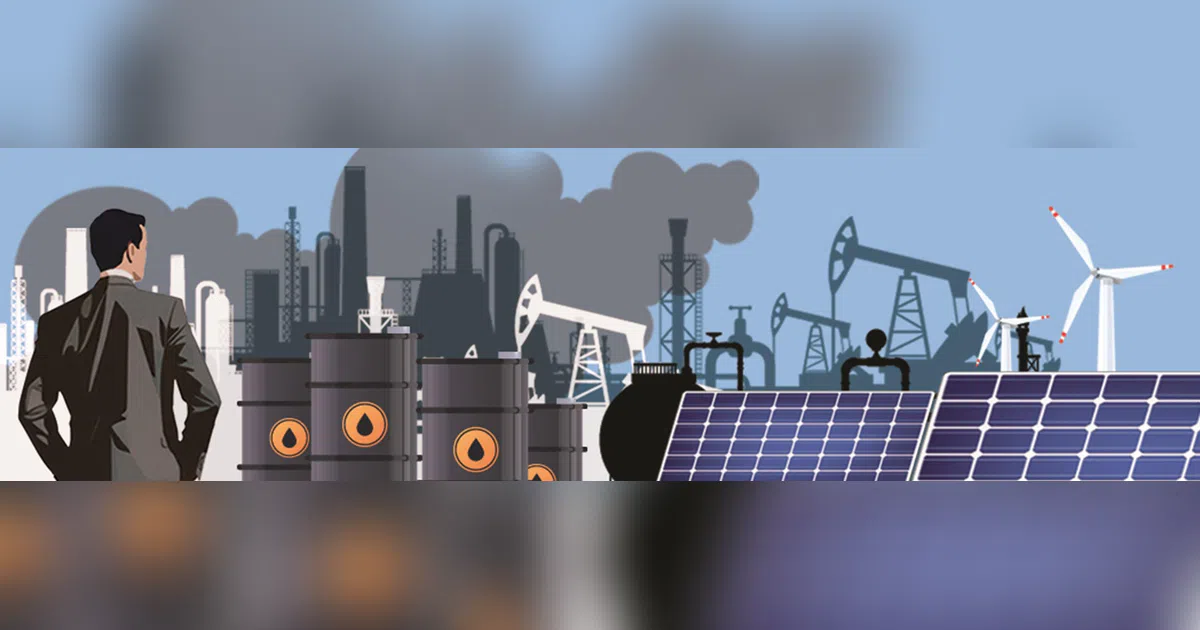
With a renewed focus on India’s energy security in light of the West Asia conflict, Ajay Shah Notes that despite the Indian landscape receiving abundant solar radiation and technology laying the foundation for energy independence, the share of modern renewable energy in the total energy supply is only 3.2 per cent. India’s energy supply requires massive expansion, which requires fundamental changes in energy policy. First, the power sector must shift to a price mechanism. Second, a carbon tax is the optimal intervention because it establishes a price for carbon emissions, which changes relative prices to dirty fuels. And third, Indian infrastructure needs should be linked to global capital markets as the feasibility of projects depends on access to low-cost equity and long-term debt.
Bharat Varadachari And Rajesh Modani The Corporate Laws (Amendment) Bill, 2026, is a welcome step in the evolution of the regulatory environment for several reasons. These include making compliance more proportionate to size, aligning corporate law with modern capital and talent realities and digital-first governance with checks and balances. It also rationalizes corporate social responsibility, while some proposals consider reducing procedural drag and improving predictability over corporate action and exit. The emphasis of the Bill is on practicality – removing friction from corporate action, making enforcement proportionate, modernizing internal governance workflows and focusing regulatory discipline where it matters most. It is simpler where the risk is less and more intense where the public interest is greater. Once last-mile refinement is in place, it can provide a more predictable and business-aligned corporate framework in practice.
in his book The Insatiable Machine: How Capitalism Conquered the WorldTrevor Jackson says that given the current economic system, if humans do not find a way to change course, the end of the world will not be something we have to imagine; It will really reach. book, writes jennifer szalaiOffers a concise and vivid account of several centuries of capitalist expansion, reaching back in history to show how it has now become almost self-sufficient in its growth and expansion. Whether intentional or not, Jackson’s overall message is that the system becomes so self-reinforcing that it renders individual humans unimportant.