Trump’s tariff strategy collapses
The White House’s influence has diminished due to legal defeats at home as trade talks begin in Beijing.
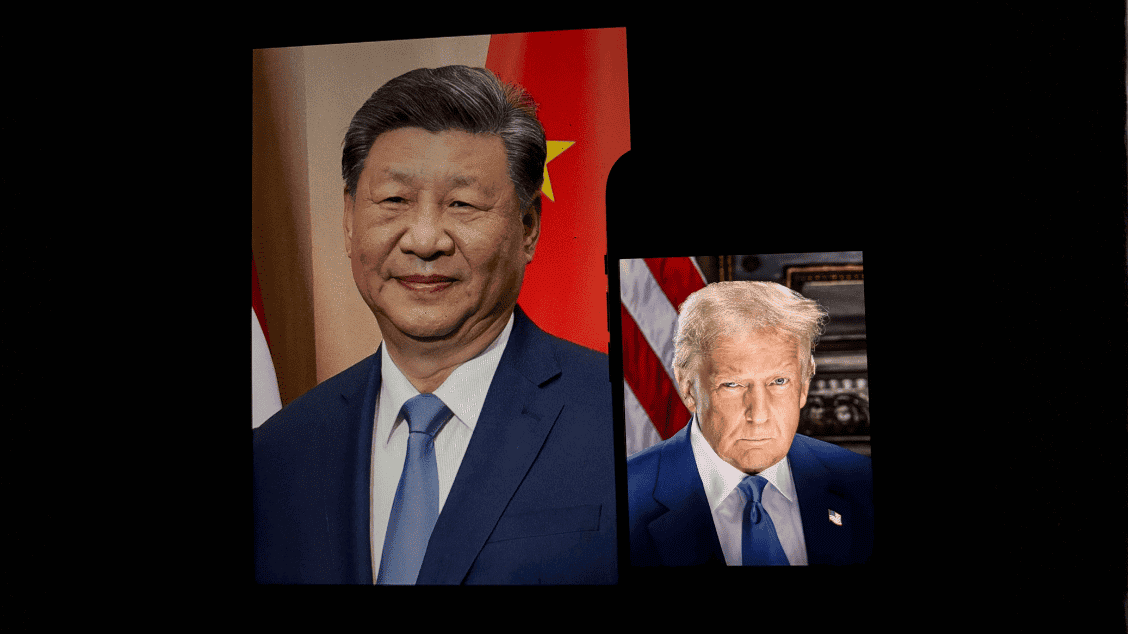
President Donald Trump heads into this week’s summit with Chinese President Xi Jinping with a major embarrassment at home: The legal foundation for his aggressive tariff strategy is rapidly eroding.
Trump is expected to meet Xi in Beijing from May 14 to 15 to discuss trade, the war in Iran and possibly Taiwan. But the meeting comes as federal courts rule against Trump’s sweeping tariff measures, including 10% global tariffs and three-digit levies on Chinese goods, which the White House once touted as a major source of leverage over Beijing.
The most recent of these decisions came on May 7, weakening one of Trump’s most aggressive economic weapons as Washington, DC tries to navigate an increasingly delicate geopolitical landscape.
Trump has refused to accept defeat. In March, he defended the tariffs on his social platform, Truth Social. He argued that section 122 of the Trade Act of 1974 “fully permits” and “legally tests” the levy. Trump is the first President to invoke Section 122.
Now, his administration is looking at Section 301 of the US trade law as a possible path to imposing tariffs with fewer legal vulnerabilities.
What is Section 301?
Section 301 is a provision of the Trade Act of 1974 that gives the US President the authority to impose tariffs or other penalties on countries accused of unfair trade practices.
But analysts warn the strategy could also face significant legal and procedural hurdles – worse than Section 122.
“Section 301 tariffs involve a more cumbersome vetting process before they can be implemented. That’s why Trump has prioritized other laws such as [The International Emergency Economic Powers Act] And Section 122, which they tried to impose by simple executive order,” said Philip Magness, senior fellow at the Independent Institute.
With Section 122 of the IEEPA, the Trump administration sought to revive the long-dormant statutory provision and reinterpret Congress’s definition of “balance of payments” to justify using it against the modern trade deficit. If Trump adopts Section 301 as his next option, his powers are more restricted and he would have to meet more onerous regulatory requirements.
Magness expects this to potentially trigger another wave of lawsuits.
“Trump will also attempt to expand the language of Section 301, in which case some of his weaker Section 301 findings will likely be challenged in court,” Magness said.
Since April last year, hundreds of companies have challenged the tariffs in court, including Costco Wholesale Corp, Prada Spa, Staples Inc and Bumble Bee Foods as well as foreign companies such as BYD Co, Kawasaki Motors and Yokohama Rubber Co.
Iran and Taiwan
The summit also unfolds against a dramatically changed geopolitical backdrop since the leaders last met in South Korea in October, when the two sides agreed to temporarily halt the escalating trade war after China threatened to ban rare earth exports.
Since then, Trump has become engaged in a conflict with Iran, one of China’s closest Middle Eastern allies – a war that has contributed to the global energy crisis and redirected US military resources away from Asia.
The conflict has also put a strain on US munitions stockpiles, The New York Times reports, prompting speculation among some Chinese analysts about Washington’s ability to defend Taiwan in a prolonged regional confrontation.