

JD Vance emerges as Trump’s IR
By Courtney Subramanian and Kate Sullivan
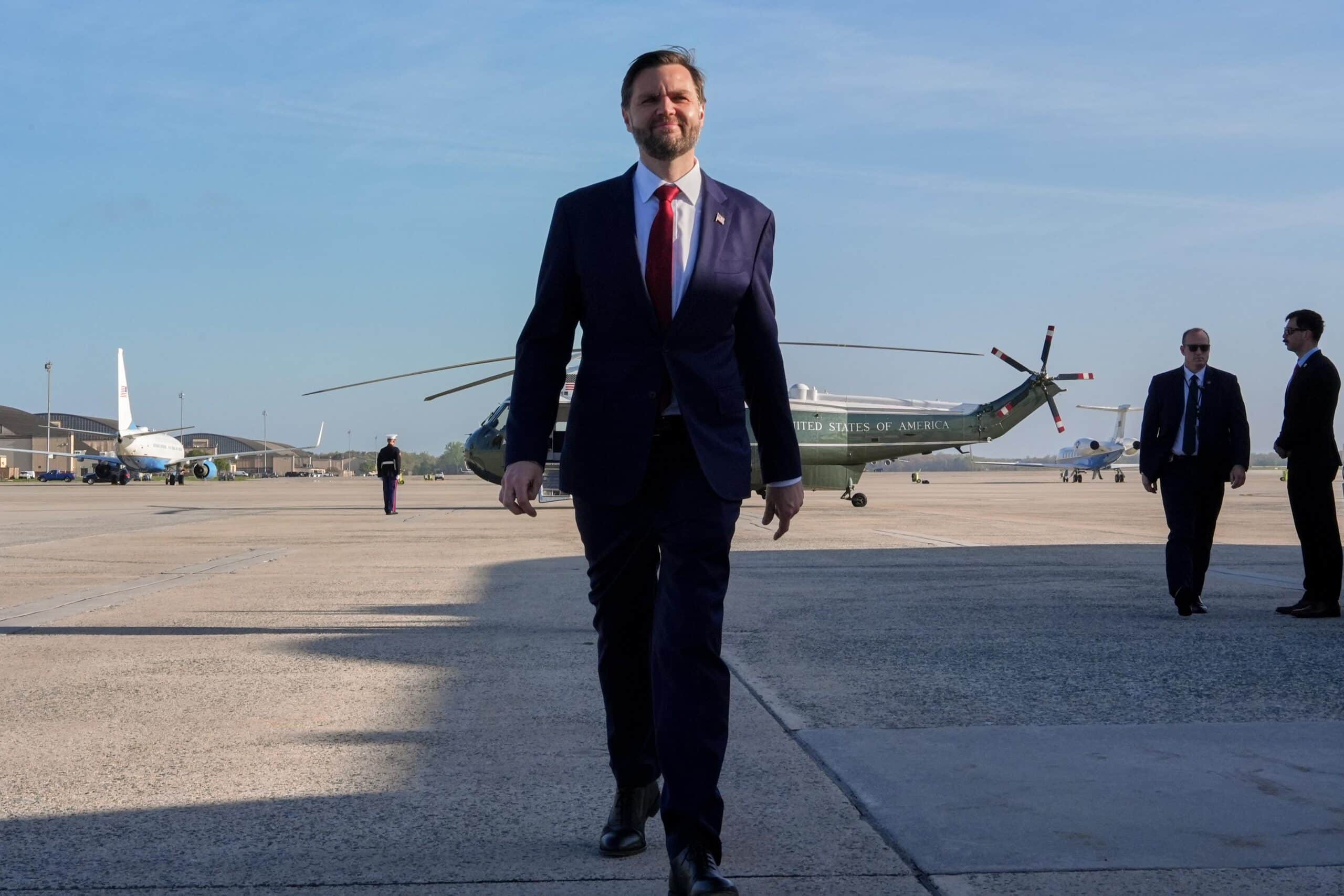
After staying away from key moments in the war against Iran, Vice President J.D. Vance is taking center stage.
Vance is leading a US delegation to Islamabad for the first face-to-face talks with Iranian officials since the beginning of the conflict, which has sparked a global energy crisis. The outcome could determine whether the tough two-week ceasefire turns into a lasting peace or ultimately unravels and push the region further into conflict.
The stakes are also high for Vance himself. Caught in the middle of a war he didn’t want, President Donald Trump is now counting on the Vice President to be his go-to guy. If he is successful, it could help him burnish his credibility on the world stage ahead of a potential White House run in 2028. Failure, however, can damage their reputation and burden them with blame.
Two people close to the White House said it was their understanding that Vance wanted to lead the negotiations with Iran. He will also be accompanied by special envoy Steve Witkoff and Trump’s son-in-law Jared Kushner. All three lack traditional diplomatic backgrounds.
“I wanted to get involved because I thought I could make a difference,” Vance told reporters earlier this week. “The people on the ground who are really interacting day-to-day are Steve and Jared.”
It is unclear whether the US and Iran will reach a permanent agreement during this weekend’s talks, and a final decision on Vance’s performance could take several weeks. A White House official said the president personally asked Vance to lead the negotiations.
Vance Witkoff, Kushner and Secretary of State Marco Rubio “have always been cooperative in these discussions,” White House spokeswoman Anna Kelly said, adding that Trump “looks forward to positive conversations if the Iranians are willing to work in good faith.”
‘Delicate moment’
According to a person familiar, who was granted anonymity to discuss private conversations, Vance voiced his opposition to a full-scale war with Iran directly to the president as they deliberated whether to attack. As Trump watched the US and Israeli bombing campaign from his Mar-a-Lago club on February 28, Vance called from the White House Situation Room. Vance was in Budapest when Trump initially announced the ceasefire agreement.
“This is a particularly delicate moment for Vance,” said Elliott Abrams, who served as Trump’s special envoy to Iran and Venezuela during his first term. “If the negotiation turns out poorly, now he is equally involved. It’s like rolling the dice.”
Some White House officials believe having an elected leader lead the talks rather than a Cabinet secretary or envoy would provide more value to the Iranians, said a person close to the White House, who spoke on condition of anonymity because of private discussions. According to another person close to the White House, Witkoff also suggested Vance because of his stature.
Robert O’Brien, one of Trump’s first-term national security advisers, said, “He comes with a legitimacy that no secretary of state, no national security adviser or no senator elected by the people of a state can match.”
O’Brien said, given Vance’s opposition to so-called forever wars, he has an incentive to find a solution. It gives Trump more political cover to “reset things up” if the vice president is unable to secure a deal, he said.
It’s this dynamic that makes Vance’s position full of challenges. This forces him to balance his loyalty to the President with his doubts about military intervention.
It also pushes him into an internal battle within the conservative movement between disillusioned Iran supporters and some in Trump’s America-first base who feel betrayed by the administration over the largely unpopular war. Trump recently took umbrage at some prominent anti-war podcasters, including commentator Tucker Carlson, by calling them “nut jobs.” Carlson’s son Buckley has served on Vance’s staff.
Tehran does not trust Witkoff and Kushner, who led a failed round of talks before the war began, so Vance’s presence could signal to the Iranians that the US is serious about negotiations, said Rosemary Kelanick, director of the Middle East program at Defense Priorities, a Washington think tank that favors a more restrained foreign policy.
“Just because Iran has a new face, a new face and the perceived confidence associated with restraint will allow the Iranians to take the negotiations more seriously,” Kelanik said.
But Republican interventionists are keeping a careful eye on the talks. Senator Lindsey Graham on Wednesday named Vance as the “architect” of an “alleged” negotiating document with Iran that he said contained “troubling aspects”, before expressing confidence in Trump’s ability to negotiate a lasting peace. Abrams warned that sending in Iran’s preferred negotiator also marks a “bad start.”
political gambling
Vance’s most memorable moment in international affairs to date became notorious for its outspokenness: his Oval Office insult to Ukrainian President Volodymyr Zelensky. He will now be tasked with handling delicate negotiations with representatives of a country whose civilization Trump vowed he would “kill” if they did not make a deal. Vance has said he “sat on the phone a lot” over the past few weeks as he worked the phones to help with the ceasefire.
The outcome of the war has profound implications for Trump’s political legacy. But it is Vance who is taking a high-stakes political gamble that could have lasting consequences on the voters he may need to win over if he runs for president in 2028. If the talks are ultimately successful, Vance could gain an edge over potential rivals — a group that could include Rubio — by being able to claim he is the one who helped end the conflict that divided Trump’s base.
The decision to keep Vance in a more public role is risky not only for the vice president, but also for Trump. Envoys or diplomats usually lay the groundwork for major negotiations before top officials get involved, so they can avoid blame if things go awry.
“If it doesn’t happen, I’m blaming J.D. Vance,” Trump joked during an Easter lunch on April 1, as Vance watched from the front row. “If it happens, I’m taking full credit.”
Regardless of his personal opinions, Vance has made it clear that he will support whatever path Trump chooses.
“Whatever your views are, when the President of the United States makes a decision, it’s your job to help make that decision as effective and successful as possible,” Vance said following the resignation of Joe Kent, director of Trump’s National Counterterrorism Center, who had criticized the war. “That’s how I do my job and I think that’s how everyone in the administration should do their job.”
9gnszc