‘Dhurandhar: The Revenge’: Raga
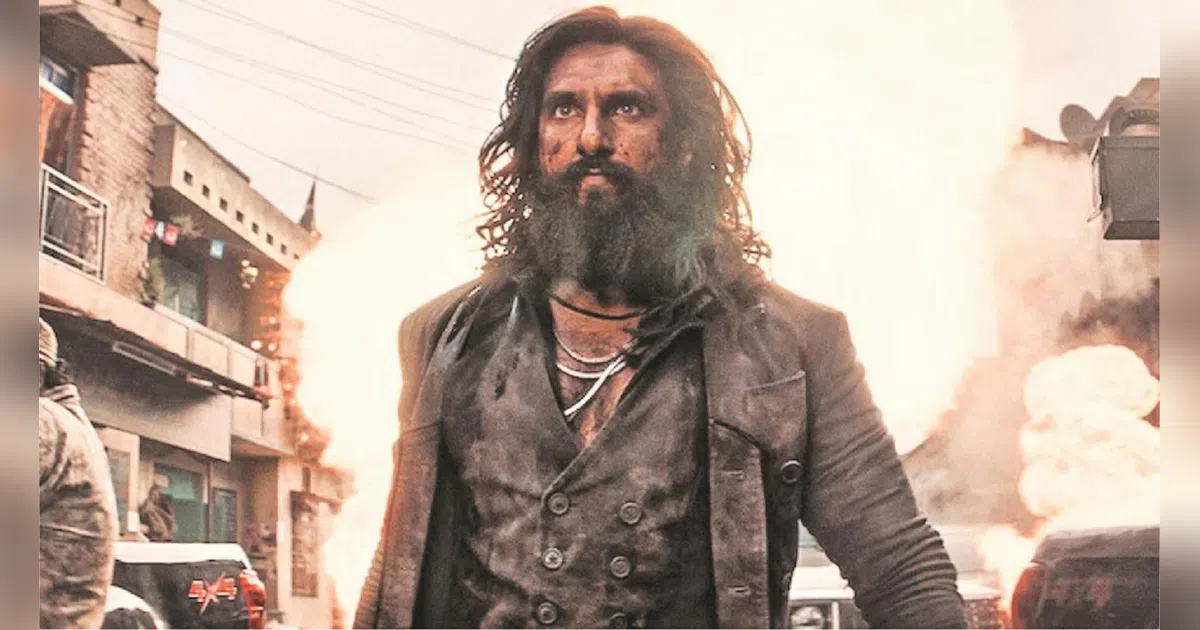
The opening chapter of ‘Dhurandhar: The Revenge’, the recently released sequel to last year’s blockbuster spy action thriller ‘Dhurandhar’, reveals the background of its protagonist, Indian super spy Jaskirat Singh Rangi alias Hamza Ali Madari (Ranveer Singh). In the year 2000, Jaskirat, a young man from Pathankot, joined the Indian Army for training. In her absence, her father, also an army officer, is murdered by a local criminal-turned-politician, and her sisters are gang-raped due to a land dispute; Jaskirat’s elder sister has also died. Armed with a machine gun, Jaskirat returns to his village and kills all the criminals to rescue his younger sister, whom they had held captive. He was arrested, tried, and sentenced to death.
Two years later, during a routine prison transfer, Jaskirat is kidnapped by the Indian Secret Service. He is trained and sent to Pakistan, under the alias Hamza, to infiltrate the nexus of criminals, terrorists, intelligence officers and politicians in Karachi and eliminate their anti-India terror operations. In one of these early scenes, India’s Intelligence Bureau director Ajay Sanyal (R Madhavan) – a character based on National Security Advisor Ajit Doval – convinces Jaskirat to take the mission, saying: “Ghayal ho, isse liye ghatak ho (You are lethal, because you are wounded).” As cinephiles will recognise, the dialogue references two popular Bollywood revenge dramas, ‘Ghayal’ (1990) and ‘Ghatak’ (1996), both directed by Rajkumar Santoshi and starring Sunny Deol as the vengeful male lead.
In the climactic action sequence of ‘Dhurandhar: The Revenge’, Hamza fights Major Iqbal (Arjun Rampal), an officer of Pakistan’s intelligence agency, Inter-Services Intelligence. Iqbal’s character is loosely based on Ilyas Kashmiri, a Pakistani military officer turned terrorist who was the frontrunner to lead al-Qaeda after the death of Osama bin Laden in 2011. As Hamza cuts off Iqbal’s legs, beneath his bloodied face, the words “Wrath of God” written in red font flash on the screen. This is an apparent reference to Operation Wrath of God, which was a covert operation by the Israeli secret service agency Mossad to track down and assassinate Palestinian Liberation Organization (PLO) leaders who had planned and carried out the massacre of Israeli athletes during the 1972 Munich Olympics. The operation also inspired the 2005 Hollywood film ‘Munich’, directed by Steven Spielberg.
Finally, as Hamza is about to blow Iqbal up by ramming him into a kerosene tanker, he declares: “This is the new India! It will break into your house and kill you too!” The dialogue references the film’s director, Aditya Dhar’s 2019 feature debut, ‘Uri: The Surgical Strike’. The film fictionalises the surgical strikes carried out by the Indian Army on alleged terrorist hideouts in Pakistan-occupied Kashmir on 29 September 2016. It was a response to the September 18 terrorist attacks on Indian Army camps in the city of Uri in the then Indian state of Jammu and Kashmir. In the film, the character of India’s National Security Advisor Govind Bhardwaj (Paresh Rawal) – who is based on Doval – utters the same dialogue (“This is the new India…”) while advising the government to conduct surgical strikes.
This dialogue is also a favorite of Indian Prime Minister Narendra Modi and senior leaders of his Bharatiya Janata Party. On 4 April 2024, the Guardian reported that the Indian government had allegedly ordered the killing of dissidents and terrorists hiding abroad, especially in Pakistan. According to unnamed Indian intelligence officials, they decided to carry out these killings after a terrorist attack on a convoy of Indian security personnel by a suicide bomber near Pulwama in the erstwhile state of Jammu and Kashmir on 14 February 2019. He also told the newspaper that he drew inspiration from the Mossad and the 2018 killing of journalist Jamal Khashoggi, allegedly by Saudi authorities.
Although the Indian Ministry of External Affairs categorically rejected the claims, Prime Minister Modi said at an election rally on 11 April 2024: “Today, the world also knows that Modi’s new India enters people’s homes and kills them.” At the same time, Defense Minister Rajnath Singh had told a news channel on April 4 the same year, “If any terrorist flees to Pakistan, we will enter their house and kill them.” A series of similar killings – of Pakistani, Islamist and Khalistani militants – is dramatized in ‘Dhurandhar: The Revenge’. These are all clear manifestations of the aggressive, hypermasculine, new India post-2014, a marked departure from the supposedly more docile nation of yore. “We are men, Jaskirat,” Sanyal declares in the film. “It is our duty to fight from birth to death.”
In the film’s framework of an aggressive new India, the national duty is revenge and retribution. Just as Jaskirat avenges the rape and murder of his family members at the beginning of the film, Hamza does the same for his motherland. In the historical essay, ‘The Great Indian Rape Trick’, novelist Arundhati Roy took on filmmaker Shekhar Kapur for his onscreen depiction of the gang rape of Dalit activist, dacoit and politician Phoolan Devi, without the consent of the protagonist, who was still alive, in his film ‘Bandit Queen’ (1994). Describing rape as “centrepiece” of the narrative, Roy compared the film to the revenge dramas regularly produced by the Hindi film industry. Aditya Dhar’s brilliant spy thriller, despite its notable success at the box office, also fails to rise above the typicality of its genre, particularly because its heroes have little skepticism or self-reflexivity.
Earlier in my column, I had mentioned Mossad’s Operation Wrath of God, which has reportedly been an inspiration for India’s intelligence community and of course the ‘Dhurandhar’ series. However, in ‘Munich’, which dramatizes a Mossad operation, Israeli agents are haunted by doubts about their actions and guilt. “To send our six targets, it would cost us about two million dollars, right?” says Mossad agent Hans (Hans Zischler) in a scene from the film. “Mrs. Mayor [former Israeli prime minister Golda Meir] ‘The world must see that killing Jews will now be an expensive proposition,’ he told the Knesset. But killing Palestinians is not cheap at all.” Obviously, their real concern is not the money they are spending, but the emotional cost of spying and killings.
The last image of ‘Munich’ is a view of the twin towers of the World Trade Center in New York on a grey, cloudy day from across the Hudson. The film was released in 2005, four years after the 9/11 terrorist attacks had obliterated them from the city’s skyline; Apparently evoked through special effects, the towers are a spectral reminder that each act of vengeance gives rise to another, binding individuals and nations in endless cycles of retribution. Jaskirat’s personal rage becomes a byword for state theory, but without reflection and restraint, revenge turns justice into a perpetual cycle of harm. The more one takes revenge, the more remains to be avenged, continuing the endless conflict and consuming all in its violent rituals.
Uttaran Das Gupta is a freelance writer and journalist