Divine Lifestyle
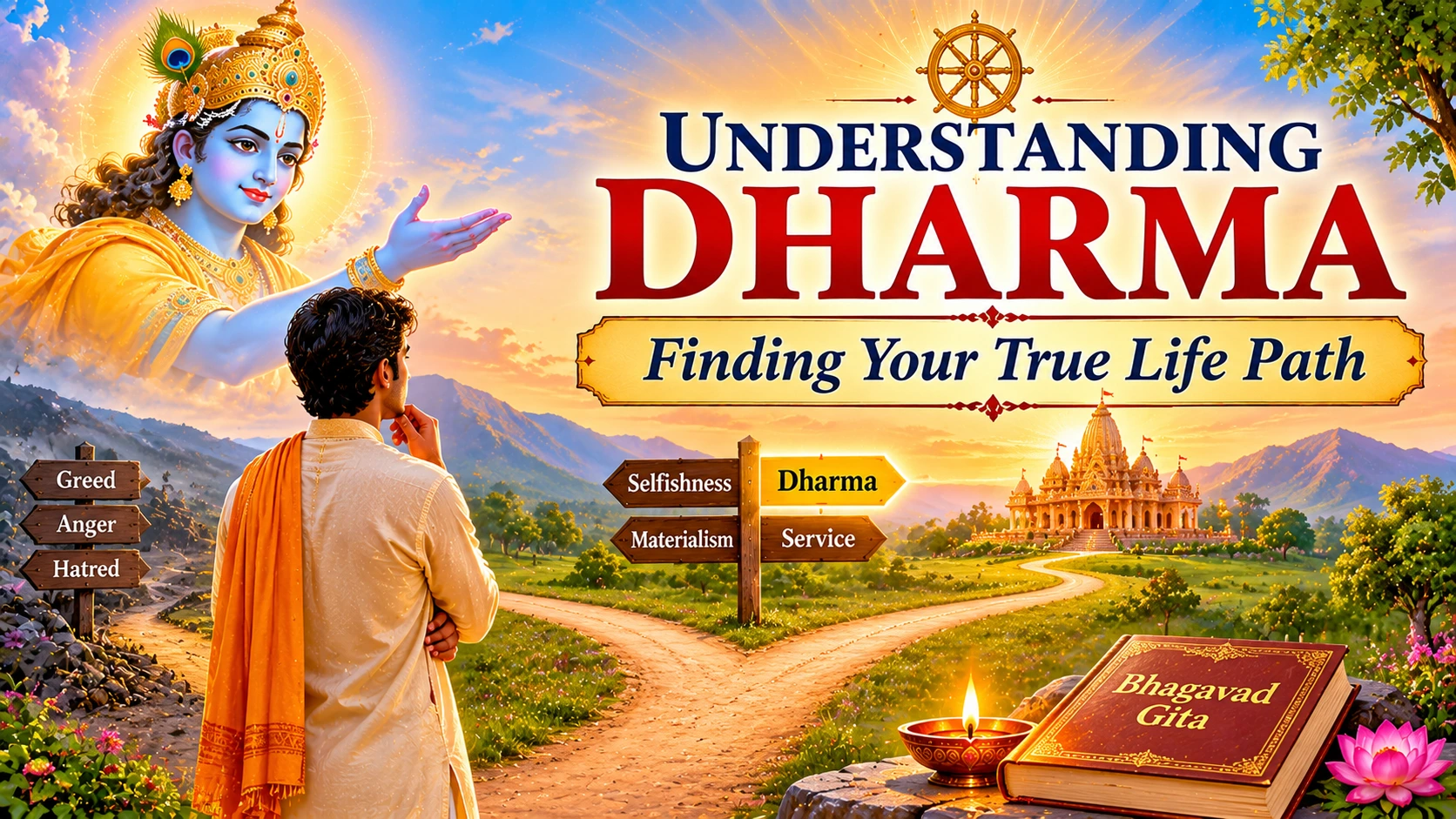
What Is Dharma and How to Find Your True Life Path?
Table of Contents
Every human being reaches a stage in life when important questions arise: What is the purpose of my life? Am I following the right path? What should I do to become a better person? How can I find peace, happiness and satisfaction?
Hindu philosophy offers a meaningful way to explore these questions through the concept of Dharma. Dharma is one of the most important principles of Sanatan Dharma. It guides human beings towards truth, righteousness, responsibility and a meaningful way of living.
Dharma is not simply about religious rituals or visiting temples. It is about understanding what is right, fulfilling our responsibilities and living in harmony with ourselves, society and the world around us.
In today’s busy world, where people often measure success through money, position and material possessions, understanding Dharma can help us discover a deeper purpose and direction in life.
What Is the Meaning of Dharma?
The Sanskrit word Dharma comes from the root Dhṛ, commonly understood as to hold, support or sustain. In Hindu philosophy, Dharma refers to the principles, duties and righteous conduct that sustain individuals and society.
Dharma has several meanings depending on the context. It can refer to moral values, duties, universal principles, social responsibilities and the right way of living.
For example, speaking the truth, treating others with respect, helping people in need, fulfilling responsibilities and avoiding unnecessary harm are examples of conduct associated with Dharma.
Dharma is also connected with the four Purusharthas, or important aims of human life:
- Dharma: Righteousness and responsible living.
- Artha: Earning wealth and achieving material stability.
- Kama: Fulfilling legitimate desires and experiencing happiness.
- Moksha: Spiritual liberation and freedom from ignorance.
These four aims remind us that human life should maintain a balance between material needs, personal happiness, moral responsibilities and spiritual growth.
Dharma and the Teachings of the Bhagavad Gita
One of the most important discussions about Dharma appears in the Bhagavad Gita.
On the battlefield of Kurukshetra, Arjuna becomes confused about his responsibilities. He does not want to fight against his relatives, teachers and friends. He feels emotionally disturbed and questions whether participating in the battle is the right thing to do.
Lord Krishna explains the importance of Dharma and encourages Arjuna to understand his responsibilities rather than escape from them because of fear or emotional confusion.
A famous teaching in the Bhagavad Gita, Chapter 3, Verse 35, discusses Svadharma, meaning one’s own Dharma or particular duty.
The teaching is commonly understood as saying that following one’s own Dharma, even imperfectly, is better than imitating another person’s path.
This message is extremely relevant today. Many people compare themselves with others and try to follow careers, lifestyles and ambitions that may not suit their nature or circumstances.
The Bhagavad Gita encourages us to understand our responsibilities, recognise our abilities and perform our duties sincerely.
What Is the Difference Between Dharma and Religion?
Dharma and religion are often used as if they mean exactly the same thing, but their meanings are not identical.
Religion generally refers to a system of beliefs, worship, traditions and spiritual practices. Dharma has a wider meaning in Indian philosophy. It includes moral conduct, responsibility, righteousness and the principles that sustain life and society.
For example, a person may visit a temple regularly, perform puja and recite religious texts. These practices can be meaningful expressions of faith. However, if that person behaves dishonestly, exploits others or refuses to fulfil their responsibilities, their actions do not reflect the ethical spirit of Dharma.
True Dharma should be visible in our behaviour, not only in our religious practices.
How to Find Your True Life Path Through Dharma
Finding your life path does not necessarily mean discovering one extraordinary mission. It can begin with understanding your nature, recognising your responsibilities and making choices that reflect your values.
Here are some practical ways to discover and follow your Dharma.
1. Understand Yourself
The first step towards discovering your Dharma is self-understanding.
Every person has different abilities, interests, strengths and limitations. Some people enjoy teaching, others are good at business, while some find satisfaction in caring for people, creating art, serving society or solving technical problems.
Take time to understand what you are naturally good at and what gives your life meaning.
Ask yourself:
- What activities make me feel useful and satisfied?
- What are my strongest abilities?
- What values do I never want to compromise?
- How can I use my skills to benefit others?
Honest answers can help you make better decisions about your future.
2. Follow Truth and Honesty
Truthfulness is an important part of righteous living.
In professional and personal life, people sometimes choose dishonesty because they believe it will provide quicker success. However, dishonest actions can damage trust and create long-term difficulties.
Following Dharma means choosing honesty even when doing so is challenging.
A person who earns money through sincere effort and treats others fairly builds a foundation of self-respect and trust.
3. Fulfil Your Responsibilities
Dharma is closely connected with responsibility.
As a child, we have responsibilities towards our parents and family. As students, we should study sincerely. As professionals, we should perform our duties honestly. As members of society, we should respect others and contribute positively.
Finding your Dharma does not mean abandoning your existing responsibilities to pursue personal ambitions. Instead, it means performing your responsibilities with awareness, sincerity and compassion.
4. Avoid Blindly Comparing Yourself with Others
One of the biggest obstacles to discovering our life path is constant comparison.
We see someone earning more money, owning a bigger house or enjoying a successful career and begin to believe that we are falling behind.
But every individual has different circumstances, abilities and responsibilities.
The concept of Svadharma teaches us to recognise our own path instead of blindly imitating another person’s life.
Learn from successful people, but do not lose your individuality while following their example.
5. Practise Compassion and Selfless Service
Dharma is not limited to personal success. It also involves our relationship with other living beings.
Helping someone in difficulty, respecting elderly people, caring for animals, supporting education and protecting the environment are meaningful ways to practise compassion.
Even small acts of kindness can make a difference.
When we use our abilities to improve someone else’s life, our own lives can gain a deeper sense of purpose.
6. Develop Self-Control and Discipline
Human desires are natural, but uncontrolled desires can sometimes lead us towards harmful decisions.
Anger, greed, jealousy and excessive attachment can affect our judgement.
Dharma encourages self-control, patience and thoughtful action. Regular prayer, meditation, reading spiritual literature and maintaining healthy habits can help us develop greater awareness.
Discipline also means doing what is right even when nobody is watching.
7. Learn from the Bhagavad Gita and Other Scriptures
Sacred texts provide guidance for understanding human nature, responsibilities and spiritual growth.
The Bhagavad Gita teaches us about Karma Yoga, Bhakti Yoga and Jnana Yoga. The Ramayana illustrates values such as duty, courage, loyalty and sacrifice. The Upanishads encourage deeper questions about the self and ultimate reality.
Reading these texts with an open mind can help us reflect on our choices and understand different dimensions of Dharma.
The purpose should not be merely to memorise verses, but to apply their wisdom in everyday life.
Can Dharma Change According to Different Situations?
Yes. Applying Dharma can require careful thought because responsibilities and circumstances differ.
For example, telling the truth is an important value, but we should also consider how our words affect others. A responsible decision may require balancing honesty, compassion, justice and safety.
Similarly, our responsibilities change as we move through different stages of life. The duties of a student may differ from those of a parent, professional or elderly person.
This is why Dharma should not be reduced to a simple list of fixed answers. It requires wisdom, understanding and the ability to distinguish between right and wrong in a particular situation.
Signs That You Are Moving Towards Your Dharma
You may be moving towards a more Dharmic life when:
- Your actions increasingly reflect honesty and integrity.
- You take responsibility instead of blaming others.
- You respect people regardless of their status or wealth.
- You use your abilities constructively.
- You make decisions with greater awareness.
- You find satisfaction in meaningful work and service.
- You become more patient, compassionate and self-disciplined.
These qualities do not develop overnight. Following Dharma is a continuous journey of learning and improvement.
Conclusion: Dharma Is the Foundation of a Meaningful Life
Dharma is not merely a religious concept. It is a guiding principle that encourages us to live with truth, responsibility, compassion and wisdom.
The teachings of Lord Krishna remind us that we should understand our own duties and perform them sincerely rather than spend our lives imitating others.
Finding your true life path does not require you to become someone different. It requires you to understand yourself, recognise your responsibilities and use your abilities for a meaningful purpose.
Let us make a commitment to follow the path of honesty, kindness and righteousness. Let our work reflect our values, our relationships reflect our compassion and our decisions reflect wisdom.
Remember: The true purpose of life is not simply to achieve more, but to live rightly and make a positive difference through our actions.
Follow your Dharma, perform your duties with sincerity and allow wisdom to guide your journey towards a meaningful and peaceful life.