
Divine Lifestyle
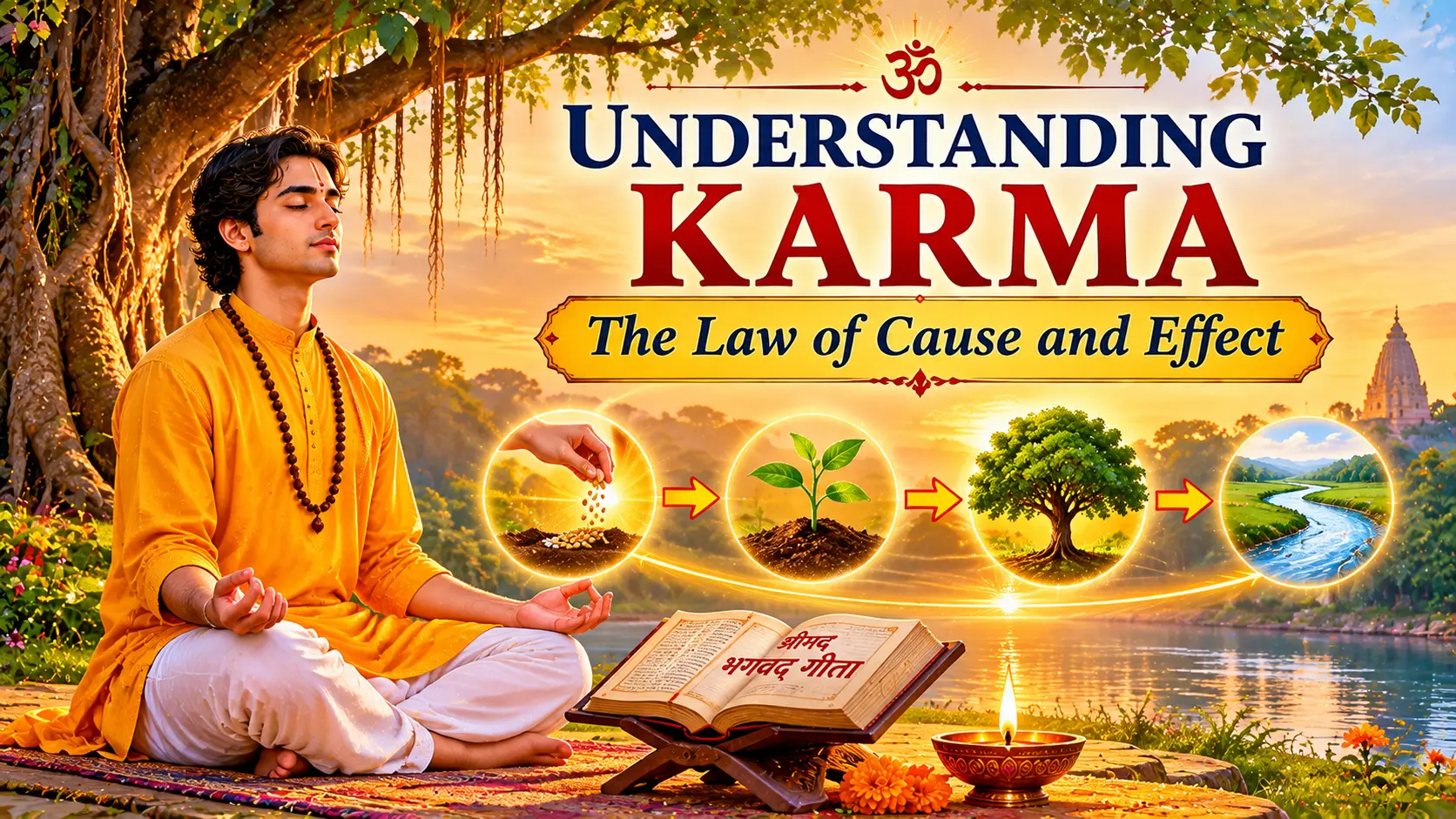
Understanding Karma: How the Law of Cause and Effect Operates ?
Table of Contents
Have you ever wondered why our actions sometimes bring happiness while, at other times, they create difficulties? Why does honesty build trust, kindness strengthen relationships and dishonesty eventually damage our reputation? Hindu philosophy offers a profound way to understand these questions through the principle of Karma, commonly explained as the law of cause and effect.
Karma is one of the central concepts of Sanatan Dharma. The Sanskrit word Karma means action or deed. It teaches that our actions, intentions and choices have consequences. These consequences may influence our present experiences, shape our character and, according to Hindu spiritual traditions, extend beyond this lifetime.
Karma is not merely an ancient religious idea. Its practical message remains relevant in modern life, where every decision we make can influence our future, our relationships and the world around us.
What Is the Meaning of Karma?
In simple language, Karma means that actions have consequences. Every time we think, speak or perform an action, we create an effect in some way.
For example, when a person regularly works with dedication, develops knowledge and maintains discipline, these actions can improve their skills and create opportunities. Similarly, when someone repeatedly lies, cheats or hurts others, that behaviour can damage relationships and destroy trust.
The principle of Karma encourages us to understand that our present actions matter. We cannot always control every situation in life, but we can make responsible choices about how we respond to it.
In Hindu philosophy, Karma also has a deeper spiritual meaning. It is connected with the cycle of birth, death and rebirth, known as Samsara. According to this understanding, actions performed during one lifetime may influence experiences in future lifetimes.
The Connection Between Karma and the Bhagavad Gita
The Bhagavad Gita provides one of the most important explanations of Karma through the conversation between Lord Krishna and Arjuna.
When Arjuna becomes confused about his duty on the battlefield of Kurukshetra, Lord Krishna explains the importance of performing one’s responsibilities with sincerity and wisdom.
One of the best-known teachings appears in Chapter 2, Verse 47:
“Karmanye vadhikaraste ma phaleshu kadachana.”
Its commonly understood meaning is that a person has the right to perform their prescribed actions but should not become attached to the fruits of those actions.
This teaching does not mean that we should stop caring about results or avoid planning for the future. Rather, it encourages us to focus on performing our duties honestly and giving our best effort without allowing excessive attachment to outcomes to control our minds.
For example, a student should study sincerely rather than remain constantly worried about examination results. A businessperson should provide quality products and honest service instead of focusing only on profit. An employee should perform responsibilities with dedication rather than depend entirely on praise or promotion.
This is the practical wisdom of Karma Yoga: performing actions with sincerity, responsibility and a balanced mind.
How Does the Law of Cause and Effect Operate Today?
The principle of Karma can be understood through many examples from everyday life.
1. Karma in Personal Relationships
Relationships are built through repeated actions. Love, trust, respect and understanding do not develop automatically. They grow when people consistently treat each other with care.
If we speak politely, listen patiently and support our family members, we create an environment of affection and trust. On the other hand, repeated dishonesty, anger and disrespect can create distance between people.
For example, a person who regularly supports a friend during difficult times is more likely to develop a strong and meaningful friendship. This is an everyday illustration of how our actions influence the quality of our relationships.
2. Karma in Professional Life
Success in professional life is also connected with our actions.
A person who develops skills, works honestly, respects colleagues and fulfils responsibilities gradually builds a strong professional reputation.
Similarly, cheating customers, avoiding responsibilities or taking credit for another person’s work can damage professional relationships.
Good Karma in the workplace means choosing honesty, dedication and fairness even when nobody is watching. The benefits may not appear immediately, but such qualities help build lasting trust and self-respect.
3. Karma in Financial Decisions
Our financial condition is influenced by many factors, including opportunities, circumstances, economic conditions and personal decisions.
Regular saving, thoughtful spending, financial planning and avoiding unnecessary debt can help create stability over time. Careless spending, dishonesty and irresponsible borrowing may lead to financial difficulties.
Karma reminds us that responsible decisions today can influence our future. It encourages us to use money wisely and honestly rather than allowing greed to control our actions.
4. Karma in Society
Every individual is connected with society. Our actions affect not only ourselves but also other people and the environment.
When we help someone in need, respect public property, protect nature and follow ethical practices, we contribute to a better community.
Similarly, spreading false information, polluting the environment or exploiting others can create harmful consequences.
The principle of Karma encourages social responsibility. It teaches us that we should not think only about personal benefits but also consider how our actions affect the lives of others.
Are Good and Bad Karma Always Returned Immediately?
One common misunderstanding about Karma is the belief that every good action immediately brings happiness and every bad action immediately brings punishment.
In Hindu philosophy, the relationship between Karma and its results can be much more complex. Some consequences are visible quickly, while others may take time. Traditional Hindu teachings also connect Karma with future births and spiritual development.
We should therefore avoid judging another person’s suffering or success by assuming that we know their past Karma. Difficulties can arise from many circumstances, including illness, accidents, injustice and events beyond an individual’s control.
The teaching of Karma should encourage personal responsibility and compassion, not blame or indifference towards people who are suffering.
Instead of asking why someone else is facing difficulties, we should ask ourselves how we can act with greater kindness and help those in need.
Can We Change Our Karma?
One of the most encouraging messages of Karma is that our present actions matter.
Even if we have made mistakes in the past, we can choose a better direction today. We can apologise to someone we have hurt, correct dishonest behaviour, fulfil neglected responsibilities and develop positive habits.
Hindu philosophical traditions discuss different aspects of Karma, including accumulated actions and actions that are currently bearing results. The terminology and explanations vary among schools of thought, but the practical lesson is that present choices remain important.
We can improve our lives by:
- Speaking the truth and avoiding unnecessary dishonesty.
- Helping others without always expecting something in return.
- Performing our duties with dedication.
- Respecting parents, teachers, elders and fellow human beings.
- Avoiding jealousy, greed, hatred and unnecessary anger.
- Learning from mistakes and correcting our behaviour.
- Practising gratitude, prayer and self-reflection.
Good Karma is not simply about performing religious rituals. It is also about living with good intentions and ethical conduct.
The Difference Between Karma and Fate
Karma and fate are often confused, but they are not necessarily the same.
Fate is commonly understood as circumstances that appear beyond our control. Karma, in its practical sense, emphasises our actions and their consequences.
We may not choose every situation that comes into our lives, but we can often choose our response. A person facing professional failure can either give up or learn from the experience and try again. Someone experiencing a disagreement can respond with anger or choose patience and understanding.
This does not mean that every difficulty can be overcome through positive thinking alone. External circumstances matter. However, responsible action can help us make better use of the choices and opportunities available to us.
Conclusion: Create a Better Future Through Better Actions
Karma teaches us an important lesson: our actions matter. Every day gives us opportunities to choose honesty over dishonesty, kindness over cruelty and responsibility over carelessness.
The Bhagavad Gita encourages us to perform our duties sincerely without becoming excessively attached to the results. This wisdom is especially relevant in today’s fast-moving world, where people often focus more on rewards than on the quality of their actions.
Let us remember that a meaningful life is not created only through wealth, position or achievements. It is also created through our behaviour, values, relationships and contributions to society.
We cannot change every event of the past, but we can make wiser choices in the present.
Do good, think good and act with honesty. Let your actions reflect the person you wish to become.
Because every meaningful change begins with a conscious action, and every better tomorrow begins with the choices we make today.
- Pingback: What Is Dharma? Meaning, Importance and How to Find Your Life Path