Divine Lifestyle
Narak Chaturdashi: The Festival That Celebrates the Victory of Good Over Evil
Table of Contents
Narak Chaturdashi is an important Hindu festival celebrated with devotion and enthusiasm as part of the five-day Deepavali celebrations. It comes next day after Dhanteras.Also known as Chhoti Diwali, Roop Chaudas and Kali Chaudas in different regions, this auspicious occasion carries a powerful message: evil, arrogance and injustice can never overcome truth and righteousness forever.
The festival is associated with the victory of Lord Krishna over the demon Narakasura. It is celebrated on the Chaturdashi, or fourteenth day of the dark fortnight, of the Hindu lunar month associated with Deepavali. People wake up early, take traditional oil baths, wear new clothes, light diyas and prepare their homes for the main festival of lights.
Narak Chaturdashi is not merely a religious celebration. It reminds us to remove negativity from our lives and welcome purity, courage, knowledge and goodness.
The Story of Narakasura and Lord Krishna
According to Hindu mythology, Narakasura was a powerful demon king who gradually became cruel and arrogant. He misused his strength, troubled innocent people, defeated celestial beings and spread fear throughout his kingdom.
One of the most widely known accounts describes how Narakasura imprisoned thousands of women and took away valuable possessions belonging to the gods. His actions created great suffering, and the gods approached Lord Krishna for help.
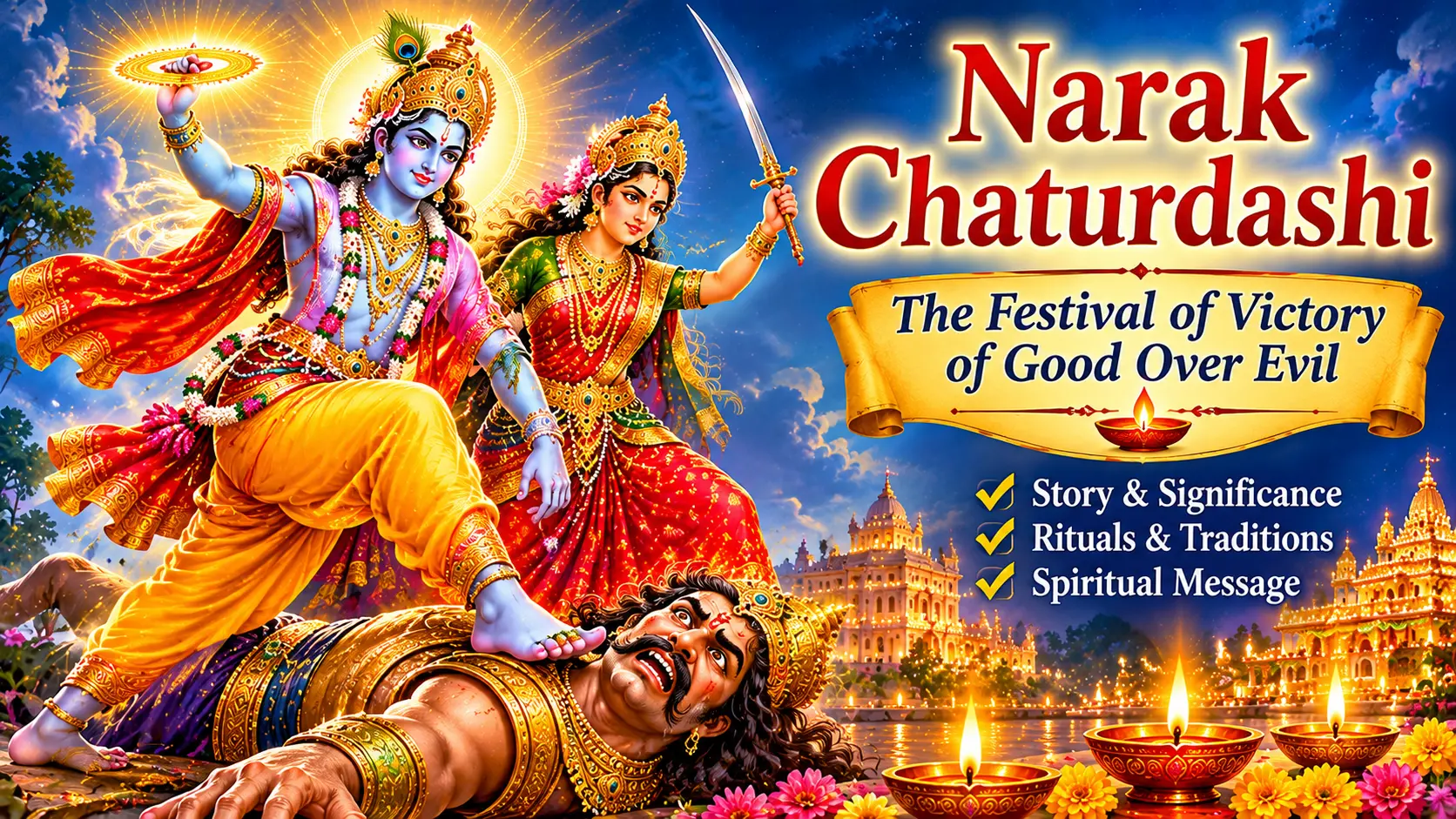
Lord Krishna decided to put an end to Narakasura’s tyranny. In a popular version of the story, Goddess Satyabhama accompanied him into battle. She is traditionally associated with Bhudevi, the divine Mother Earth, and her presence is significant in the story.
A fierce battle took place between Lord Krishna and Narakasura. With divine strength and courage, Narakasura was defeated. His captives were freed, and peace was restored.
The victory is remembered as Narakasura Vadha, meaning the destruction of Narakasura. It is celebrated as a symbol of the triumph of righteousness over evil. Different Puranic and regional traditions narrate certain details of this story differently, but its central message remains the same: power must protect people, not oppress them.
Why Is It Called Narak Chaturdashi?
The word Narak is associated with hell or a state of suffering, while Chaturdashi means the fourteenth lunar day. The festival is linked with the defeat of Narakasura and the end of the suffering caused by his cruel rule.
The name also carries a spiritual meaning. In our daily lives, anger, greed, jealousy, dishonesty and hatred can create a kind of inner darkness. These negative qualities disturb our peace and affect our relationships.
Narak Chaturdashi encourages us to defeat these inner enemies. It teaches that the real victory is not only the destruction of an external evil force but also the removal of harmful thoughts and actions from our own minds.
Why Is Narak Chaturdashi Also Called Chhoti Diwali?
Narak Chaturdashi is popularly known as Chhoti Diwali in many parts of North India because it is generally celebrated just before the main Diwali or Lakshmi Puja.
On this day, people begin their final preparations for Deepavali. Houses are cleaned and decorated, lamps are placed near doors and windows, and families prepare sweets and festive food.
In several South Indian traditions, this day is itself the principal day of Deepavali celebrations. The customs and importance given to particular days differ across regions. In Maharashtra, the traditional morning bath is especially associated with Abhyanga Snan, while in Gujarat the day is widely known as Kali Chaudas.
The Importance of Abhyanga Snan
One of the most important traditions of Narak Chaturdashi is Abhyanga Snan, a ceremonial oil bath taken before sunrise.
According to popular religious tradition, Lord Krishna took an oil bath after defeating Narakasura. This practice became associated with the festival and is considered an auspicious way to begin the day.
Traditionally, people apply oil to their bodies before bathing. Some families use sesame oil and herbal preparations or ubtan according to their customs. After the bath, they wear clean or new clothes and prepare for worship and celebration.
The ritual has a beautiful symbolic meaning. Just as bathing cleans the body, we should also try to cleanse our minds of negative thoughts and harmful habits. It reminds us to begin the festival with freshness, purity and positive intentions.
Lighting Diyas on Narak Chaturdashi
Lighting earthen lamps is another important part of the celebration. Families place diyas at entrances, in courtyards, near windows and in places of worship.
The diya represents the light of knowledge, hope and divine grace. Its small flame reminds us that even a little goodness can remove great darkness.
When we light lamps outside our homes, we should also try to light the lamp of wisdom within ourselves. We can do this by speaking the truth, helping others, respecting our elders and treating every person with kindness.
The lamps of Narak Chaturdashi prepare the atmosphere for the grand celebration of Deepavali and symbolise the arrival of happiness after suffering.
How Is Narak Chaturdashi Celebrated?
Although customs differ from one region to another, several practices are commonly associated with this festival.
People usually begin the day early with an oil bath and prayers. They wear clean clothes, decorate their homes with rangoli and flowers, and light traditional lamps. Some families worship Lord Krishna and offer prayers for protection, happiness and prosperity.
In certain regions, devotees also worship Goddess Kali or perform rituals associated with Lord Yama. These customs reflect the regional diversity of Hindu traditions.
Families prepare traditional sweets and special dishes, visit relatives, exchange greetings and enjoy the festive atmosphere. Children especially look forward to the lights, decorations and celebrations.
Whatever the regional custom, the central purpose is to remember the victory of good over evil and welcome the blessings of the divine.
The Spiritual Message of Narak Chaturdashi
The story of Narakasura has a deeper meaning that applies to every human being.
Narakasura represents arrogance, cruelty and the misuse of power. Lord Krishna represents divine wisdom, righteousness and the strength to protect the innocent. Goddess Satyabhama’s role in the popular account reminds us that courage and divine strength can work together to establish justice.
In our own lives, we may face difficulties created by anger, ego, greed and selfishness. These qualities can damage our relationships and take away our peace of mind. Narak Chaturdashi encourages us to recognise these weaknesses and work towards overcoming them.
The festival also reminds us that strength should never be used to frighten or exploit others. True strength lies in protecting the weak, standing against injustice and helping those who are suffering.
Celebrate Narak Chaturdashi with Responsibility
Festivals become more meaningful when they bring happiness to everyone. We should celebrate Narak Chaturdashi with devotion while taking care of our environment and the people around us.
We can light traditional earthen lamps, share sweets with neighbours, help people in need and spend quality time with family. It is also a good occasion to donate food, clothes or essential items to less fortunate people.
We should avoid excessive fireworks because smoke and loud noise can affect children, elderly people, animals and those with health concerns. A peaceful and environmentally responsible celebration reflects the true spirit of a festival.
Conclusion: Remove Darkness and Welcome the Light
Narak Chaturdashi is a festival of courage, purification and the victory of righteousness. The story of Lord Krishna’s victory over Narakasura teaches us that no amount of power can justify cruelty and injustice.
This auspicious occasion gives us an opportunity to examine our thoughts, improve our behaviour and remove negativity from our lives. Let us celebrate by lighting diyas, offering prayers, helping others and spreading happiness.
May Lord Krishna bless everyone with wisdom and courage. May Goddess Satyabhama inspire strength and righteousness, and may every home be filled with peace, happiness and divine blessings.
Wishing everyone a very Happy and Blessed Narak Chaturdashi!
May the darkness of ignorance disappear, may the light of knowledge shine within us, and may goodness always triumph in our lives.