Divine Lifestyle
Govardhan Puja: The Divine Story of Lord Krishna and the Importance of Nature
Table of Contents
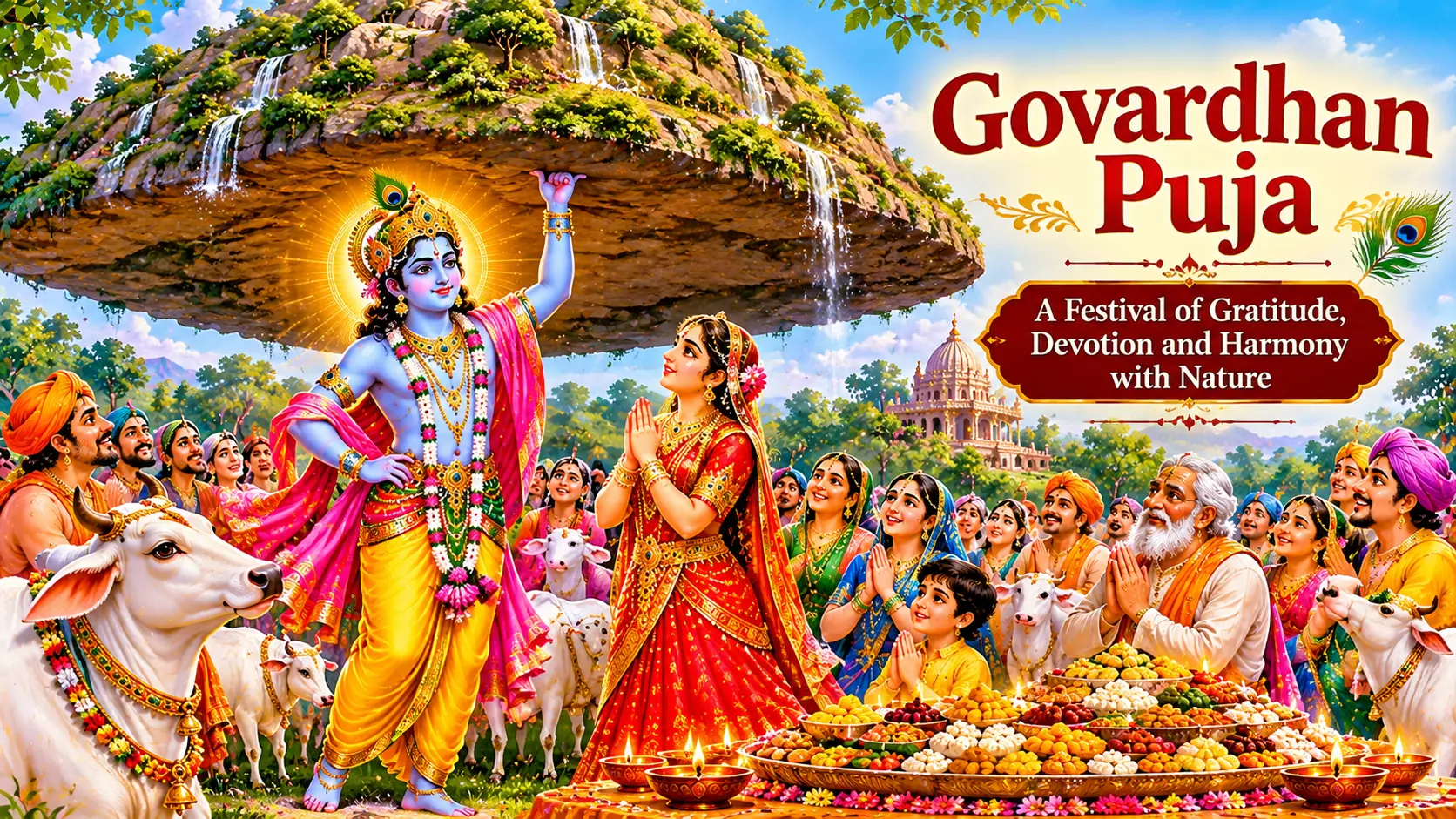
Govardhan Puja is one of the most beautiful and meaningful festivals in Hindu tradition. Celebrated on the Pratipada Tithi of Shukla Paksha in the month of Kartik, it generally follows the main Diwali celebration. Also known as Annakut Puja, this festival commemorates the divine pastime of Lord Krishna lifting Govardhan Hill to protect the people of Vrindavan from heavy rainfall and the anger of Lord Indra.
Govardhan Puja is not only a celebration of Lord Krishna’s divine power but also a reminder of our responsibility towards nature, animals and the environment. It teaches us gratitude, humility, devotion and the importance of sharing food with others.
The festival is celebrated with great enthusiasm in Mathura, Vrindavan, Govardhan and many other parts of India. Devotees prepare delicious food offerings, worship Lord Krishna, decorate cows and perform Govardhan Parikrama.
The Story of Govardhan Puja
The story of Govardhan Puja is associated with the childhood of Lord Krishna in the sacred land of Braj.
According to the Bhagavata Purana, the people of Vrindavan traditionally performed a special worship of Lord Indra, the king of the heavens, to seek his blessings for rainfall and good harvests. They believed that Indra was responsible for providing rain, which was essential for agriculture and the well-being of their cattle.
One day, young Krishna asked His father, Nanda Maharaj, why the villagers were preparing such a grand worship of Indra. Nanda Maharaj explained the importance of rainfall and the traditional worship.
Krishna then explained that the people of Vrindavan depended directly on Govardhan Hill, its forests, grasslands and water resources. The hill provided food for their cattle, natural resources for their livelihood and shelter for living beings. Therefore, Krishna suggested that they express their gratitude by worshipping Govardhan Hill, the cows and the natural surroundings that sustained their lives.
The villagers accepted Krishna’s advice and prepared a grand feast in honour of Govardhan Hill. They offered different varieties of food, sweets, fruits and other delicious preparations.
Lord Krishna Lifts Govardhan Hill
When Lord Indra learned that the people of Vrindavan had not performed his traditional worship, he became angry. In his pride, he ordered the clouds to release extremely heavy rainfall over Vrindavan.
Dark clouds covered the sky, strong winds began to blow and continuous rain threatened the homes, cattle and lives of the villagers.
Seeing the suffering of His people, Lord Krishna decided to protect them. He lifted the mighty Govardhan Hill on the little finger of His left hand and asked everyone to take shelter beneath it.
The people of Vrindavan, along with their cows and other animals, gathered under the mountain. Lord Krishna held Govardhan Hill for seven days and seven nights, protecting everyone from the terrible storm.
Eventually, Lord Indra realised that his pride had led him to commit a great mistake. He understood the divine nature of Krishna and stopped the rainfall. He approached Lord Krishna with humility and sought forgiveness.
This divine event became known as Govardhan Leela. It reminds us that divine protection is always greater than human arrogance and that pride should never overcome humility.
Why Is Govardhan Puja Celebrated?
Govardhan Puja celebrates the protection of the people of Vrindavan by Lord Krishna. It also recognises the importance of nature in sustaining human life.
The festival teaches us that mountains, rivers, forests, animals and fertile land are essential gifts. Human beings depend on nature for food, water, shelter and many other necessities.
In modern times, this message has become especially important. Environmental pollution, deforestation, water scarcity and climate change remind us that we must protect the natural world.
Govardhan Puja encourages us to respect the environment, conserve water, plant trees, protect animals and use natural resources responsibly.
It reminds us that nature should not be exploited for selfish purposes. Instead, we should live in harmony with the environment and remain grateful for everything it provides.
What Is Annakut?
Annakut is one of the most important traditions associated with Govardhan Puja.
The word Annakut means a mountain or heap of food. On this auspicious occasion, devotees prepare numerous varieties of vegetarian dishes and arrange them beautifully before Lord Krishna as an offering.
The food may include rice, dal, vegetables, sweets, fruits, puris, halwa and many other traditional preparations. In several temples, an elaborate arrangement known as Chhappan Bhog, or fifty-six food offerings, is prepared.
After the offering, the food is distributed among devotees as Prasad.
Annakut represents gratitude towards God for providing food and nourishment. It also teaches us that food is precious and should never be wasted.
Sharing food with family members, neighbours, the poor and those in need is one of the most beautiful ways to celebrate this festival.
Importance of Cows in Govardhan Puja
Cows hold a special place in Hindu culture and are closely associated with Lord Krishna, who is also known as Gopal and Govinda.
During His childhood in Vrindavan, Krishna spent much of His time among cows and cowherds. He cared for the cattle and developed a deep connection with the people who depended on them.
For this reason, cow worship, traditionally known as Gau Puja, is an important part of Govardhan Puja in many regions.
People decorate cows with flowers, colours and ornaments, offer them food and express gratitude for their contribution to rural life.
The tradition reminds us to treat animals with kindness and protect all living beings. It also highlights the importance of agriculture, dairy farming and the relationship between human beings and nature.
How Is Govardhan Puja Celebrated?
Govardhan Puja is celebrated differently across India, but devotion to Lord Krishna remains at its heart.
In many homes, devotees create a symbolic Govardhan Hill using cow dung, clay or other suitable natural materials. They decorate it with flowers, leaves, small plants and colourful designs. Prayers and traditional offerings are made to the symbolic hill.
Devotees also worship Lord Krishna, prepare Annakut offerings and perform aarti. In temples, large quantities of food are arranged before the deity, creating a beautiful mountain-like display.
In the Braj region, thousands of devotees undertake Govardhan Parikrama, a sacred circumambulation of the Govardhan Hill. They walk around the hill while chanting the names of Lord Krishna and offering prayers.
The atmosphere becomes filled with devotional songs, bhajans, kirtans and celebrations.
The Spiritual Message of Govardhan Puja
Govardhan Puja offers several valuable lessons for our everyday lives.
1. Humility is greater than pride: Lord Indra’s anger reminds us that arrogance can lead to mistakes. True greatness comes from humility and understanding.
2. Nature is a divine gift: Govardhan Hill symbolises the natural resources that sustain life. We should respect and protect the environment.
3. Faith gives strength: The people of Vrindavan trusted Lord Krishna during their greatest difficulty. Their faith represents the strength that devotion can bring into our lives.
4. Food should be respected: Annakut reminds us to be grateful for every meal and avoid wasting food.
5. Everyone deserves protection: Lord Krishna sheltered the entire community, including people and animals. This teaches us compassion and responsibility towards all living beings.
Conclusion: Learn to Live in Harmony with Nature
Govardhan Puja is much more than a religious celebration. It is a festival of devotion, gratitude, environmental awareness and the divine love of Lord Krishna.
The story of Krishna lifting Govardhan Hill teaches us that arrogance must be replaced by humility, selfishness by compassion and exploitation by respect for nature.
This festival also reminds us to value food, care for animals, help those in need and appreciate the natural resources that make life possible.
Let us celebrate Govardhan Puja with devotion and make a commitment to protect the environment and live responsibly.
May Lord Shri Krishna bless everyone with happiness, prosperity, good health and spiritual wisdom.
Jai Shri Krishna! Jai Giriraj Maharaj!
May the divine blessings of Lord Krishna protect every home and fill every heart with devotion, gratitude and love.