


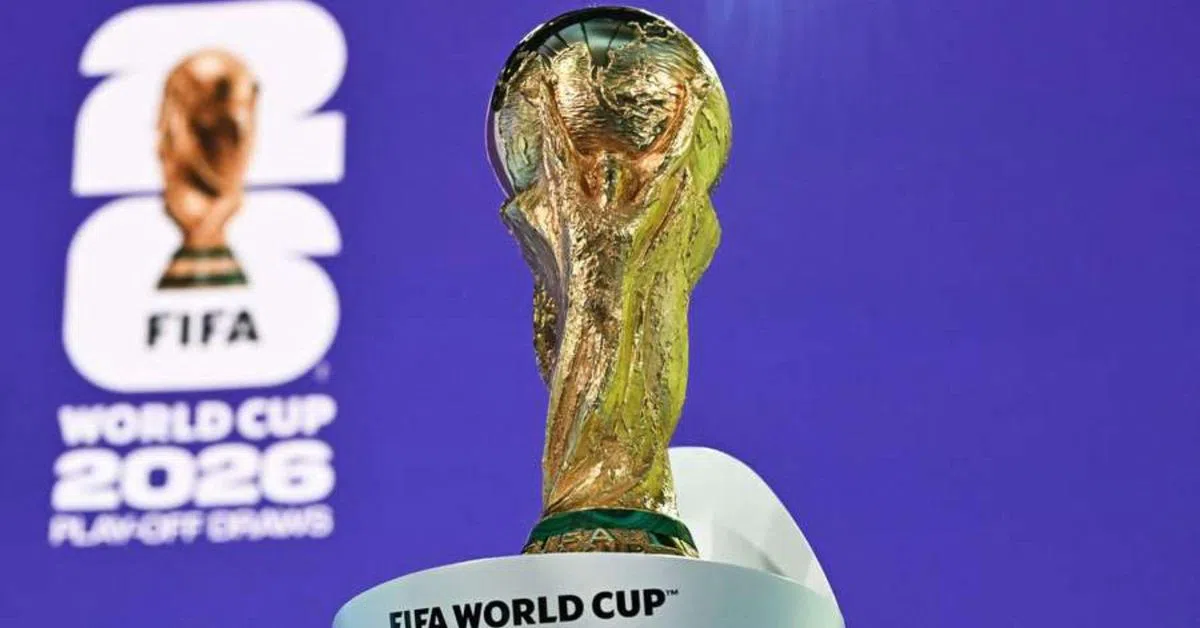
The expansion of the FIFA World Cup from 32 to 48 teams has changed more than just the number of countries competing. This has fundamentally changed the trajectory of the knockout rounds.
For the first time in three decades, teams finishing third in their groups have a real opportunity to advance in their tournament journey. Under the new format, 32 countries will advance from the group stage, meaning only 16 of the 48 participants will be eliminated after their opening three matches.
That change has created an entirely new subplot at the 2026 World Cup: a race between the third-place teams.
a format created on occasion
Between 1998 and 2022, qualification from the group stage was direct. Only the top two teams from each of the eight groups advanced to the round of 16.
The expanded tournament has rewritten those rules.
There are now 12 groups in operation, with the 12 group winners and 12 runners-up automatically qualifying for the knockout stage. They will be joined by the eight best third-place teams, forming a 32-team knockout bracket.
As a result, finishing third is no longer the end of the road. In many cases, this may be another path to the next round.
Are three points really enough?
Many teams will be asking this question as soon as the tournament starts. Although there is no direct historical comparison for the 48-team World Cup, past tournaments provide useful clues.
Had the current format existed during the 32-team era, roughly the five best third-place teams would have advanced. Looking at every World Cup since 1998, the fifth-best third-place team has always earned at least three points.
However, the numbers also show that just collecting three points is far from a guarantee.
In many tournaments, teams finished third with three points but still failed to rank among the best performing third-place teams. The lesson is simple: winning a match may keep hopes alive, but it rarely provides complete security.
Why might goal difference be important?
The extended format gives utmost importance to goal difference.
History shows that third-place teams with the same number of points are often separated by the smallest margin.
In 1998, Colombia advanced in the comparative rankings with three points and a goal difference of -2. Poland recorded similar numbers in 2006. Portugal achieved three points and a positive goal difference in 2002, while Ivory Coast achieved the same in 2010.
Four years ago, margins in Qatar became even tighter. Tunisia, Cameroon and Uruguay all finished tied with four points and the same goal difference, forcing additional tiebreakers.
In a tournament where the eight third-placed teams will advance, every goal scored and every goal conceded could be crucial.
Avoiding heavy defeats matters
The implications extend far beyond just winning matches.
Teams that suffer heavy defeats against group favorites could find themselves in trouble, even if they manage to pick up three points elsewhere.
A narrow defeat may prove far more valuable than an aggressive approach that ends in a damaging scoreline. Coaches are therefore likely to balance ambition with caution, especially in matches against strong opposition.
In a competition where qualification may ultimately be decided by goal difference, limiting damage may become a strategy in itself.
a new layer of drama
An expanded World Cup has been criticized in some circles for potentially reducing the importance of group-stage matches.
Yet a battle between the third-place teams could yield opposite results.
Instead of being eliminated after a poor start, teams now have extra incentive to keep fighting until the final match day. Nations that appear to be on the verge of elimination may still find themselves advancing due to a late goal, better goal difference or a favorable result elsewhere.
This creates more meaningful matches, more scoreboard viewing and more drama across all 12 groups.
every goal can matter
As the tournament progresses, fans should pay attention not only to who finished first and second, but also the race developing for third place.
With eight of the 12 third-placed teams progressing, the qualification scenario is likely to remain open until the final round of group matches.
A win can keep hopes alive. Four figures would provide a much stronger possibility. But if history is any indication, teams relying only on three points may be keenly watching the standings and calculating goal difference.
In a World Cup bigger than ever before, survival may come down to very narrow margins.