


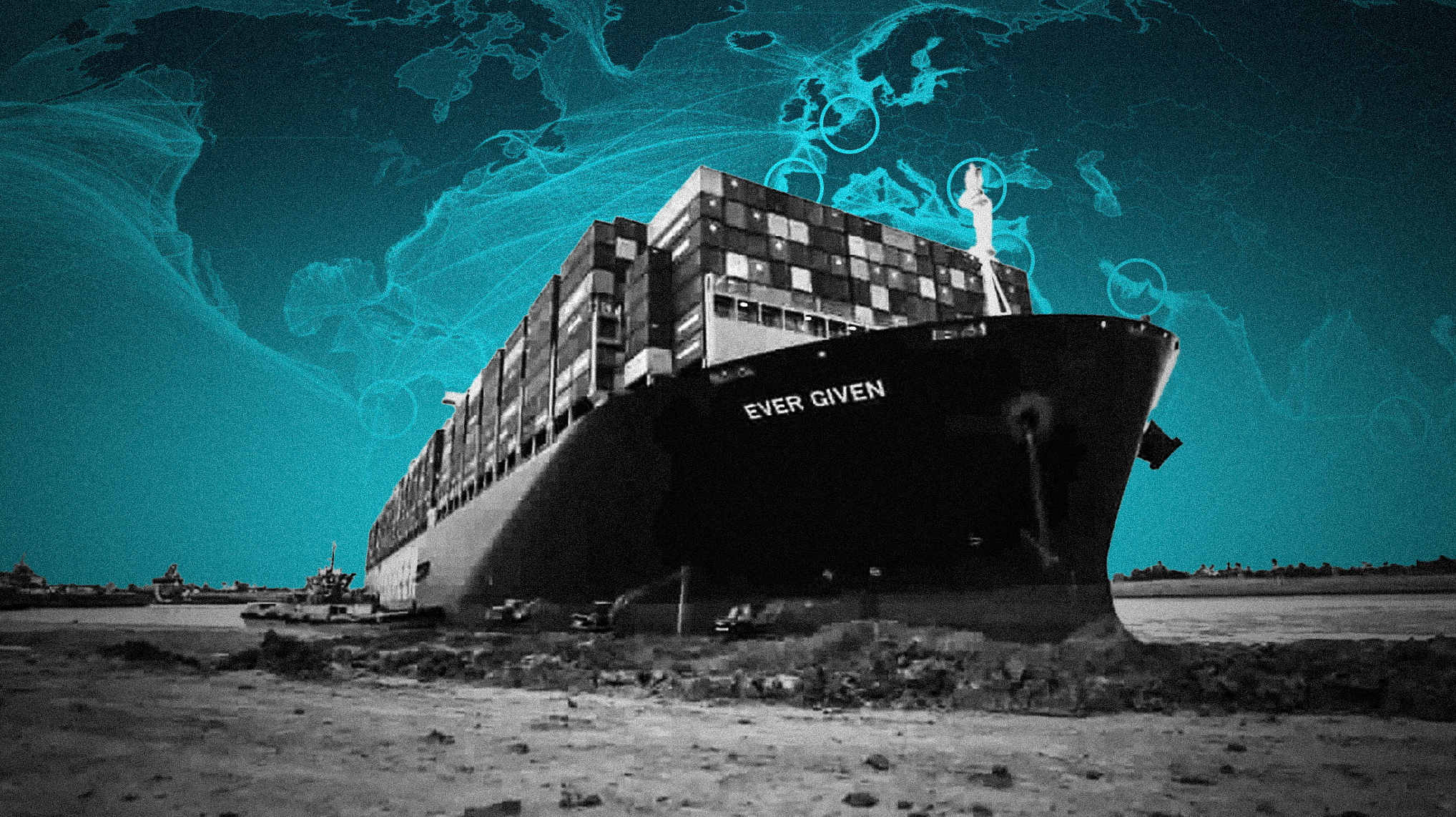
It has become very difficult to forget since the effective closure of the Strait Of Hormuz.
Since then hundreds of ships have passed through the strait instead of the usual thousands 5 March.
“This really looks like a global crisis, something like what happened with COVID-19,” says Rystad’s Abramov. Gasoline and diesel prices have soared, and jet fuel and fertilizer are already in short supply; Food prices are expected to rise, while the next phase of the crisis is likely to lead to fuel rationing and industrial shutdowns, experts Said.
Policymakers are debating when a recession might hit. “The word on everyone’s lips is stagflation,” says one senior European industrialist. “The longer this goes on, the more I worry about it.”
As the disruption has stretched on for months, companies have been forced to look for radical workarounds. Some are trying to transport goods by land – either through existing oil pipelines or Using trucks.
Danish logistics group DSV, the market leader in the Middle East, is moving goods through Saudi Arabia and Türkiye. “When everything is flowing, you don’t consider your job important. But if you can’t bring cargo, the people there can’t eat,” says the company’s Jens Lund.head of.
However, lorries can replace only a small part of the capacity provided by large container and cargo ships, while border crossings and challenging terrain can be even slower. Their transit.
fight for control
Western countries have traditionally been concerned about routes into the Middle East, fearing that any regional conflict could limit access to the Red Sea, Suez or the Bosphorus.
But Trump has placed the Panama Canal at the center of his vision of hemispheric defense – accusing China of trying to control the waterway, and threatening to take control of it himself. A Hong Kong-based group previously ran two ports on the canal until Panama canceled its contracts earlier this year. China has called the US President’s claims baseless and said that it wants to maintain Canal neutral.
Still, Trump’s move could encourage Beijing to “re-start construction of the Nicaragua Canal,” Jensen says, referring to a concession granted to a Chinese businessman in 2013 to develop a new rival waterway — though little happened. Its.
He further said, following Trump’s threats and cancellation of port contracts, China has increased inspections of Panama-flagged ships, leading to reports of ships being re-flagged. China’s Foreign Ministry said in March that its inspections were in accordance with laws and regulations.
A Chinese academic in Beijing, who spoke on condition of anonymity, said Panama’s move on the ports “will not be forgotten in Beijing, which will improve its projection of hard power to ensure this does not happen again in other important strategic chokepoints”.
“Right now, the cost is very limited [for countries like Panama]But I think this will not be tolerated in future. He says.