


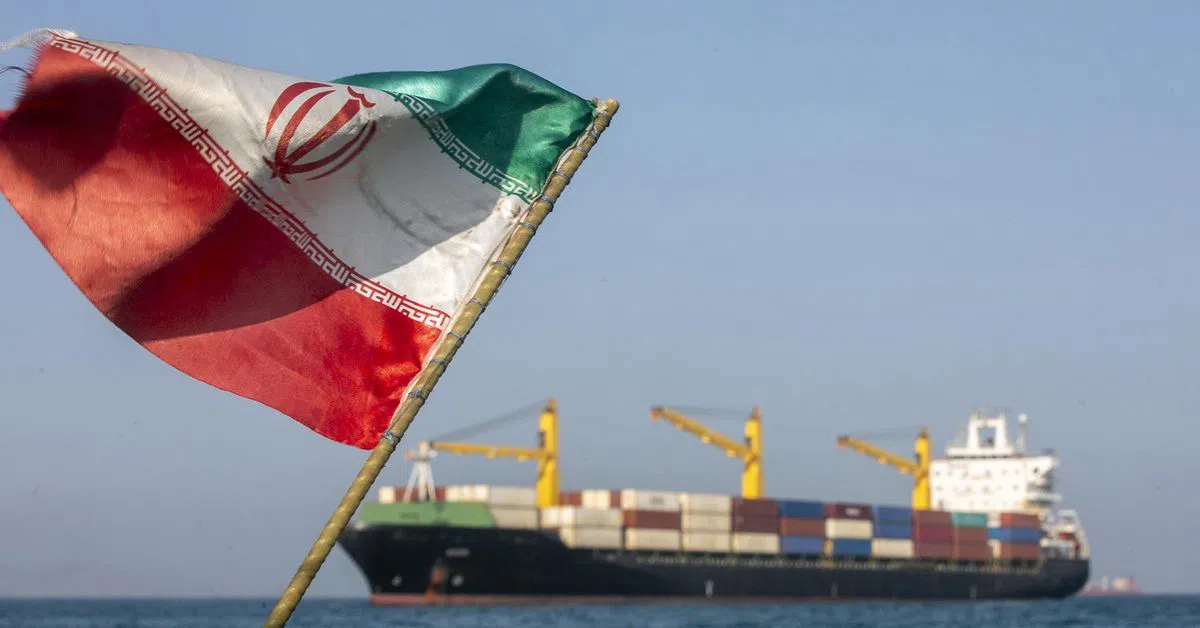
The United States struck Iranian coastal radar sites on Saturday after shooting down a drone launched by Iran toward the Strait of Hormuz, the US military said, in the latest escalation that complicates efforts to end the war between the two countries.
A US official told Reuters the US military believed four Iranian drones were targeting regional maritime traffic. The US then attacked Iranian observation sites at Goruk and Qeshm Islands on the Strait of Hormuz, US Central Command said on Friday.
Iran’s Foreign Ministry said the US actions violated the April 8 ceasefire, and said such repeated violations showed Washington had no intention of reducing tensions. It warned that the United States would be responsible for the consequences of its “illegal actions.”
Iran’s Revolutionary Guards said they had attacked US bases in Kuwait and Bahrain in response to the US attacks and fired on four tankers trying to cross the strait without permission.
Kuwait’s military said on Saturday it targeted seven ballistic missiles that passed over residential areas, resulting in material damage but no casualties. Sirens were sounded in Bahrain and residents were urged to seek shelter.
Pakistani minister reached Tehran
Kuwait and Bahrain condemned the attacks. Iran later said it had attacked US targets in both countries with ballistic missiles, but the US military said six missiles were intercepted and the seventh missed its target.
The US and Iran are engaged in largely indirect talks for an interim agreement to stop the three-month-old war, which would leave issues including Iran’s nuclear program up for further talks.
But no agreement could be reached as clashes continued between the two sides from time to time.
Tehran wants access to billions of dollars of oil revenues, relaxation of restrictions on crude oil exports, lifting of the US blockade on its ports and leverage over the Strait of Hormuz. Iran has effectively blocked the waterway through which about a fifth of global oil traffic transited before the war.
Iranian state media reported that Pakistan Interior Minister Mohsin Naqvi, who is mediating an end to the conflict, arrived in Tehran on Saturday for talks with Iranian officials including Foreign Minister Abbas Araqchi.
A Pakistani source said Naqvi would take a message from Pakistan to Iran’s Supreme Leader Ayatollah Mojtaba Khamenei.
US President Donald Trump faces growing domestic political pressure to end the unpopular war due to rising gas prices. He told NBC that while most of Iran’s drone and missile manufacturing facilities were destroyed, the Iranians still had access to about a fifth of their missiles.
“They have some missiles, they have some drones. I would say percentage wise, probably 21%-22% of their missiles. That’s a lot of missiles, but it’s not what we had when we first attacked,” Trump said on NBC News’ “Meet the Press,” according to excerpts released Friday by the network.
Asked why Iran’s leaders are unwilling to sign a deal if they are as desperate as he has portrayed them, Trump said:
“Because they’re strong. They’re proud. There are some things they never thought they’d do and they have to do, they have no choice, and it takes a while.”
After the US and Israel launched war against Iran on February 28, Tehran attacked Gulf countries hosting US bases and largely blocked shipping through the Strait of Hormuz.
The conflict has driven up oil prices and disrupted supply chains for other goods, including humanitarian aid.
Mohsen Rezaei, an adviser to Iran’s supreme leader, told CNN on Friday that the peace deal depends on the Trump administration freeing up $24 billion in Iranian assets, and warned that the US would be “entering a dark corridor” if it resumed attacks.
Fighting flames across region despite ceasefire
In a parallel conflict in Lebanon, an Israeli attack on a military vehicle in south Lebanon killed two Lebanese army officers and a soldier, the Lebanese army said. The Israeli military said it was investigating the incident.
Iran has made a ceasefire between Israel and Iran-aligned Hezbollah in Lebanon a prerequisite for any peace deal with Washington.
The Lebanese army said on Saturday that its commander, General Rudolf Heckel, left for Pakistan at the invitation of his Pakistani counterpart, without giving further details.
The surprise visit is noteworthy given the insistence by Washington and Lebanese leaders, including the President, that ceasefire talks for Lebanon remain separate from US-Iran talks brokered by Pakistan.
Hezbollah leader Naim Qassim this week rejected a US-brokered deal between Israel and the Lebanese government to end fighting in Lebanon. The agreement did not provide for Israeli withdrawal and Hezbollah was not a party to the negotiations.
Amidst the increasing tension with America, Israel has said that its forces will not retreat from the country or stop operations.