


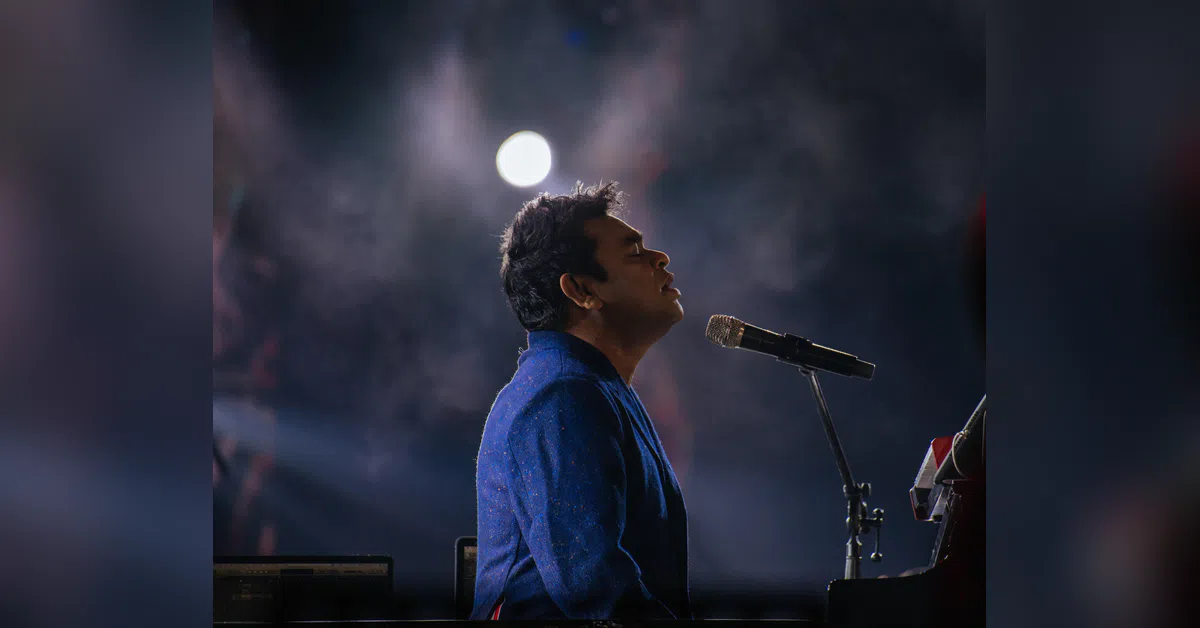
Five notes. A flute. A tune that has been played more than 1.5 billion times every day for 25 years. In 2026, AR Rahman’s Airtel signature tune has completed a quarter of a century, and it may still be the most listened to music of all time in India.
When Airtel launched in 1995, mobile phones were for the elite. By 2001 the market was opening up rapidly. Bharti Airtel wanted a brand idea that could cross language, literacy and income barriers. The brief for us at Rediffusion DY&R was simple: “Make India feel connected.”
The idea was entirely our national creative director Gullu Sen’s. He called Rahman. Short: 3-5 seconds, no words, globally proprietary. Rahman locked himself in his London studio, picked up a flute and recorded a few takes. One of them got stuck. Five notes. Ascending. optimistic. human being.
The genius Gullu transformed this tune into an unforgettable campaign. It was launched in media, caller tune and tone. And it worked immediately. Within days the tune was being whistled in trains, hummed in classrooms and copied on Nokia keypads.
The songs in Rahman’s films last for five to six minutes. The basic Airtel jingle lasts only four seconds and consists of five notes. Yet its reach is less than most soundtracks. Like I said, Gullu’s talent and Rahman’s magic. So what was the magic?
1. Simplicity is memorable: Neuroscience says that three to seven tones are the brain’s “earworm sweet spot.” Think of Intel’s four-note chime. Airtel’s five-note tune sits in the same league. A child from Kochi and a farmer from Kapurthala can sing it alike.
2. Ubiquity is parity: This tune plays when you recharge, when you call customer care, in Airtel stores, on billboards and in over 100 television commercials (TVCs). Kantar’s 2023 Brandz study estimated it to be the most remembered sound asset of all time in India, ahead of any other film song.
3. Emotion over information: There are no words to translate, no actor’s age, no trends to date. The tune signals “connection” – the core promise of telecommunications. In 2001, it meant sound. In 2026, this means data, 5G and UPI. The tune still fits.
Airtel Tune is 25 years old today, has 100 versions but has the same identity. A smart sonic logo never dies. It evolves. Airtel has re-orchestrated this tune without changing it in every decade.
2013: Rahman re-recorded it with 70 musicians from the Budapest Symphony Orchestra for Airtel’s 18th anniversary.
2017: A Carnatic version with flute, sitar and tabla was created for the South Indian market.
2021: Choir drops, EDM (electronic dance music), and regional folk versions were performed for the 20-year mark.
2026: For pure nostalgia, our team has suggested a “25-Year Remix” with Rahman (we are no longer his agency) that would bring together artists from across India to show how a tune can sound local everywhere. Airtel will decide.
Rahman himself has called the Airtel piece his “smallest, yet most universal creation”. In interviews, he said that he never thought that the four-second piece would outlive most of his films.
Airtel Tune is bigger than Airtel in many ways. This is a meme. This is a ringtone. This is a test for karaoke apps. This is the default “phone sound” in Bollywood films, when a director does not want to pay for a mobile tone. It also changed Indian advertising. Before 2001, jingles were verbose, regional, and disposable. After Airtel, brands chased the sonic logo but none could reach the scale of Airtel. More importantly, it gave Indian brands the confidence that world-class sound design could come from India. This allowed agencies to approach composers like Rahman, Shankar-Ehsaan-Loy and Amit Trivedi with a five-second brief.
Airtel Tune is actually the return on investment (ROI). Nielsen’s 2024 study on audio branding found that brands with consistent voice identity saw 46 percent higher ad recall. Airtel is a case study. You can mute a TVC. You can scroll past any post. You can’t scroll to a sound you’ve heard 10,000 times.
Airtel could have changed the tune in 2010 when 3G was launched, or in 2016 when Jio arrived. It did not happen. It refreshed the orchestration, not the notes. Consistency + evolution > reinvention, and it has helped.
Not everything should live for 25 years. If a brand keeps repeating the same tune, it runs the risk of sounding stale. Airtel’s gamble has been to keep notes, change the context. The 2001 version feels like a flute in a field. The 2021 edition feels like a stadium. Same DNA, new clothes.
That balance is difficult. Most brands either burn out or liquidate their equity. Airtel is the latter.
The author is Chairman of Rediffusion