


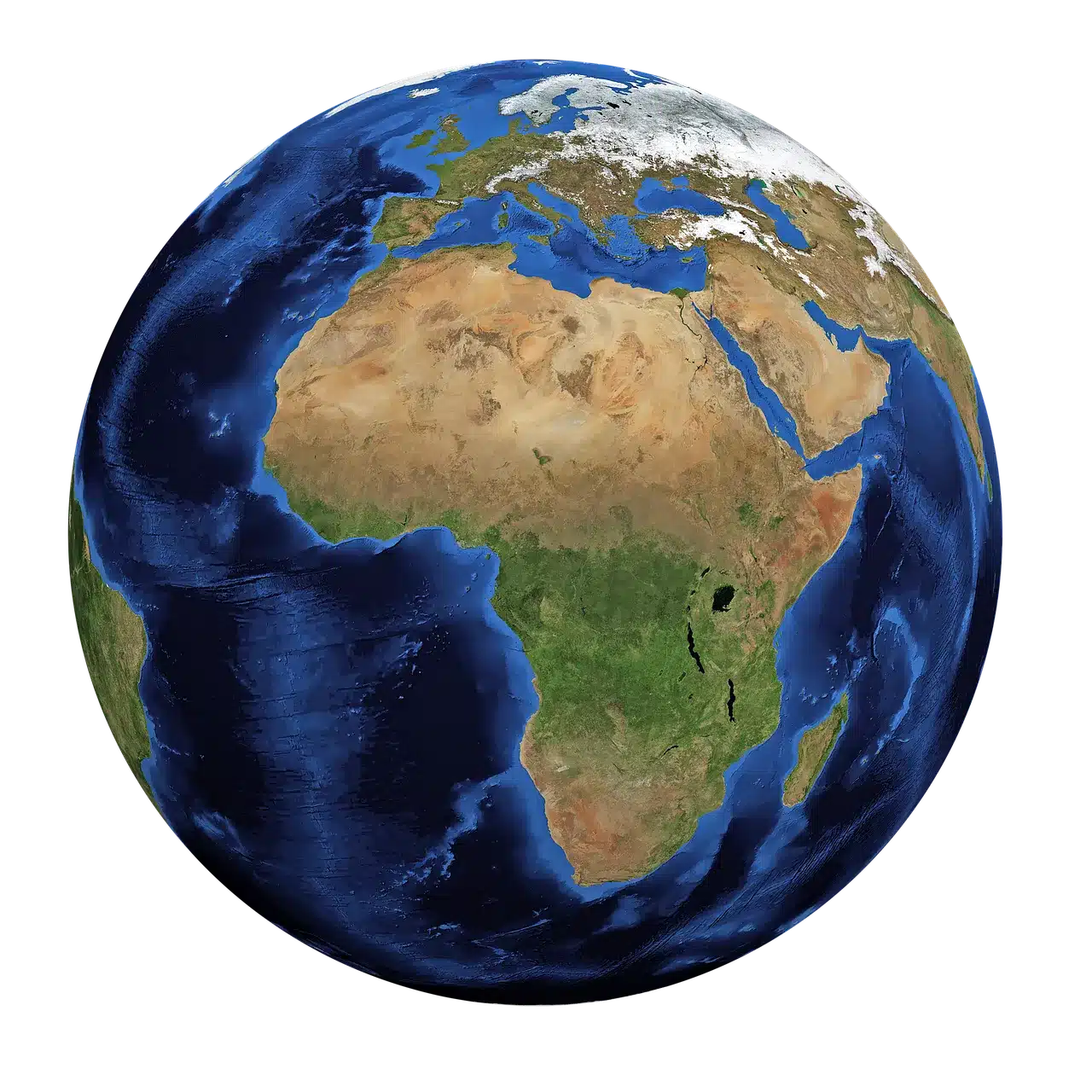
Proving Earth’s roundness doesn’t require fancy gear—just simple observations and experiments anyone can try. These methods, inspired by ancient Greeks and modern tests, use shadows, horizons, and stars to show curvature.
‘Eratosthenes’ Stick Shadow Test to Prove Earth’s Roundness
Place two sticks vertically in the ground about 800-1000 km apart (e.g., Hyderabad to Chennai), ideally north-south, at local noon on the equinox (March/September).
- On a flat Earth, shadows would match in length and angle.
- On a round Earth, the southern stick casts a shorter/no shadow due to the sun’s rays hitting at an angle over the curve.
Eratosthenes calculated Earth’s circumference (~40,000 km) this way in 250 BC—accurate within 10%. Measure shadow angles, distance, and use basic trig: circumference = (360° / angle difference) × distance.
Horizon and Boat Observation
Watch a ship sail away from shore (e.g., from Hyderabad’s Hussain Sagar or a beach).
- The hull vanishes first, then the mast—due to Earth’s curve dropping the bottom below your line of sight.
- Binoculars/zoom reveal the hull again, proving it’s hidden by curvature, not “perspective.” Flat Earth predicts uniform shrinking. Repeat with tall landmarks.
Star Patterns by Latitude
Look north from Hyderabad (17°N): Polaris sits low (~17° above horizon). Travel south to Kochi (~10°N)—Polaris drops lower; head to the equator, it vanishes.
- Flat Earth can’t explain this; round Earth shows stars circling a tilted globe. Southern stars like the Southern Cross appear only farther south.
Lunar Eclipse Shadow
During a lunar eclipse (next visible in India ~2026-2027), Earth’s shadow on the moon is always circular—only a sphere casts a consistent round shadow from any angle.
High-Altitude View
Climb a hill/mountain or fly (e.g., Hyderabad to Mumbai flight). The horizon drops away, revealing a curved edge. Weather balloons or kites with cameras (under ₹5,000 setup) show ~3-5 km up: clear circular horizon.
These backyard tests debunk flat Earth claims like the Bedford Level canal experiment, flawed by ignoring refraction.
For more such details keep browsing.