


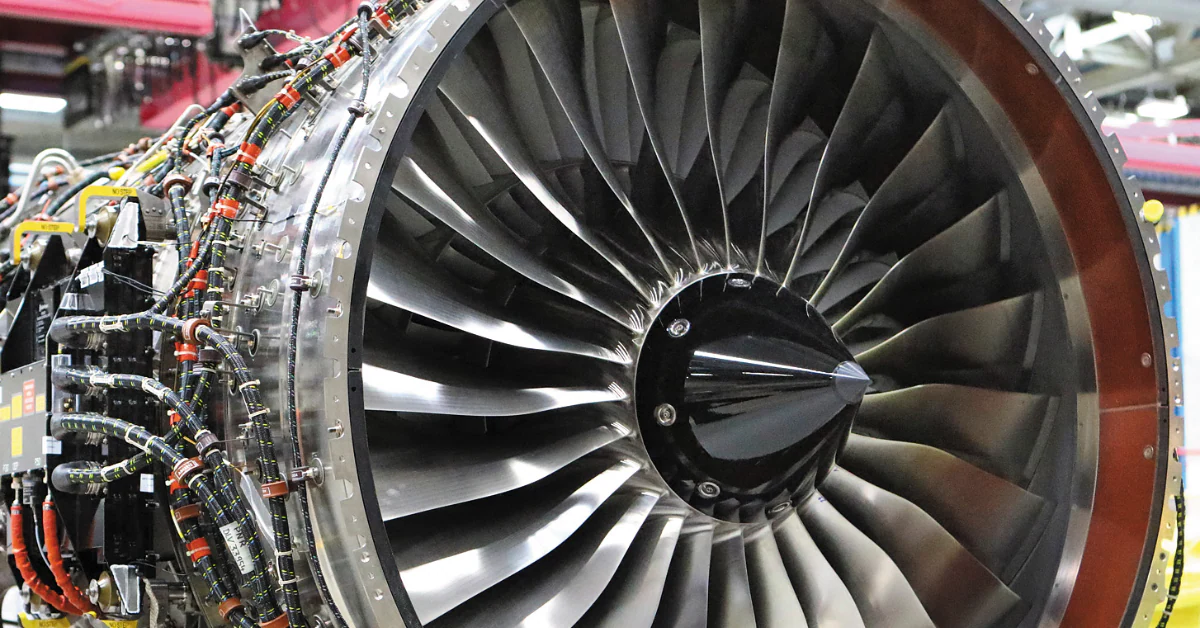
“We should build our own jet engines too. Our scientists and youth must take this up as a direct challenge,” Prime Minister Narendra Modi said in his Independence Day address last year.
In that remark, he identified one of the most critical gaps in India’s defence manufacturing capability: The country does not build the very heart of the combat aircraft it seeks to produce. The scale of the challenge is evident from the experience of China, the most recent entrant to a club that includes the United States (US), the United Kingdom (UK), France and Russia — countries that mastered jet engine technology decades ago.
In addition to committing enormous financial and human resources, the Chinese government also turned to less benign methods in its pursuit of reliable jet engines — a capability it achieved only in the latter part of the previous decade.
That effort was laid bare in November 2022, when Yanjun Xu, the first Chinese intelligence officer ever extradited to the US to stand trial, was sentenced to 20 years in prison. Xu had sought to steal advanced US aircraft engine technology from GE Aviation, one of the four companies that dominate the global aeroengine market, for the benefit of the Chinese state.
This was not an isolated case. In 2018, the US Department of Justice accused Chinese intelligence officers of conspiring to steal data related to a turbofan engine being jointly developed by a French aerospace manufacturer and a US-based company for commercial airliners. Such technology is often dual-use. China’s reasons for pursuing
it so relentlessly are reflected in several Chinese publications, which have described aeroengines as the “strategic guarantor” of national security and the “pearl in the crown” of an aviation industry.
“The engine is the most complex part of any aircraft. Aircraft are designed around the engine, which plays a major role in determining their basic attributes, from how fast and far they fly to how quickly they turn,” Air Marshal Narmdeshwar Tiwari (retired), who was vice chief of the air staff of the Indian Air Force (IAF) during Operation Sindoor, said.
The four-day conflict between India and Pakistan in May last year once again underscored the need to develop indigenous aeroengines. During a background briefing on the operation, one of the key lessons identified was that IAF aircraft must be able to seamlessly share a common picture of the battlespace. In the long run, that objective can be fully realised only with platforms that use Indian communications equipment, which imported aircraft cannot easily accommodate.
India’s decades-long experience with aerospace programmes has also shown that fielding a substantial number of indigenous aircraft is not possible without indigenous engines. Yet the country remains entirely dependent on foreign sources — the US, Russia and France — for engines that power both its imported and homegrown aircraft.
The gap, long recognised within India’s defence establishment, has now been thrust into the national spotlight by Modi himself. The challenge has acquired renewed urgency as the country pursues its most ambitious combat aircraft programme so far — the stealthy fifth-generation advanced medium combat aircraft (Amca).
This is not the first time India has attempted to develop its own aeroengine. An earlier effort under the Kaveri programme fell short of its targets, leaving the Tejas Light Combat Aircraft — India’s only indigenous fighter currently in service — dependent on power plants from an increasingly unpredictable US.
Leaving the aeroengine self-sufficiency mission unfinished has cost India time and money. The allocation for aircraft and aeroengines remained above 30 per cent of the defence services’ capital outlay between 2024-25 (FY25) and FY27.
Given that engines account for 20-25 per cent of an aircraft’s cost, their share is likely to be substantial.
To address this deficiency, the government is officially considering the development of a next-generation engine, in collaboration with a foreign partner, to power the Amca. India, therefore, stands at an inflexion point, where the lessons of the past and the constraints of the present converge. The question is whether it can make the right decisions at the right time, address the critical gaps that stifled the Kaveri programme, and apply the lessons from another ambitious military development programme of previous decades.
The right time
“The time is ripe to pursue the co-development of an advanced aeroengine for Amca with a trusted foreign partner. Success would enable India to develop an entire family of power plants for a wide range of applications,” Samir V Kamat, who retired at the end of May as secretary, Department of Defence Research and Development (DDR&D), Ministry of Defence (MoD), and chairman of the Defence Research and Development Organisation (DRDO), told the Blueprint.
He was referring to the DRDO’s proposed programme to jointly develop a 120-kilonewton (kN) advanced military aeroengine with an original equipment manufacturer (OEM) from a friendly foreign country.
France’s Safran is understood to be the OEM with which the Gas Turbine Research Establishment (GTRE), the DRDO laboratory responsible for designing and developing military aircraft engines, would partner on the programme.
The proposal is already before the Cabinet Committee on Security, chaired by the Prime Minister, for final approval, with the programme’s formal commencement now hinging on it.
Email queries sent to the office of the defence secretary, who also holds additional charge as DDR&D secretary and DRDO chairman, on the current status of the programme had not elicited a response at the time of publication. Queries sent to Safran on the status of its participation in the programme also remained unanswered.
Another similar path is also understood to be under examination. Sashi Mukundan, executive vice-president — Transformation at Rolls-Royce India, responding to emailed queries, said the company, with the full backing of the UK Government, has made an offer to the Government of India to develop an engine for the Amca. “The intent is to fast-track the development of a fifth-generation aeroengine, ready for ground testing by 2032 and first flight by 2034, subject to the programme being finalised by the end of this year,” he said, adding that, as part of the offer, the company’s vision is to establish an aerospace gas turbine complex with an Indian partner, with the Amca engine as the anchor programme.
Rolls-Royce’s offer “includes full transfer of technology and ownership of foreground IP [intellectual property] developed in India, with access to decades of background IP for engineering and design activities,” Mukundan said. He added that, overall, the core capabilities, once developed, could also support naval and autonomous platform propulsion.
“Once formally cleared, the programme will take at least 10-12 years to complete development, which is the global norm, with production beginning after that,” a former senior defence official familiar with the proposed engine programme told the Blueprint. Time is of the essence, with Amca series production expected to begin in or after 2035.
He said the projected timeline envisaged the first engine prototype being produced about five years after the programme is launched, followed by six or seven more prototypes before testing is completed. “The engine is improved after each round of testing. That explains the projected number of prototypes and the associated timeline.”
The new engine will be central to the Amca’s success and is intended to power the aircraft’s second tranche. The first batch will be equipped with an advanced 98-kN variant of the US-made GE F414 engine. The new 120-kN engine will generate greater thrust. This will allow the aircraft to fly faster than the speed of sound using normal engine power, without injecting additional fuel into the hot exhaust stream through a system known as an afterburner.
This capability, known as supercruise, avoids the main drawback of afterburners, which can consume a fighter’s fuel in a matter of minutes. Aircraft capable of supercruise also produce a much smaller thermal signature than those relying on afterburners, making them significantly harder for adversary sensors to detect. Together, these advantages make supercruise a defining capability of stealthy fifth-generation aircraft — the world’s most advanced combat jets.
Such capabilities do not come cheap. In January 2025, when he was still DRDO chairman, Samir V Kamat had said developing an engine capable of powering a fifth-generation fighter would require investments of up to Rs 50,000 crore (about $5.18 billion) spread over several years.
By comparison, the government has estimated the overall cost of building India’s first indigenous aircraft carrier, INS Vikrant, at close to Rs 20,000 crore (about $2.07 billion).
The more than two-fold difference might appear striking, given that an aircraft carrier — a highly visible symbol of national power — dwarfs any aero engine ever built. Vikrant, for instance, is about 260 metres long and has a displacement of nearly 45,000 tonnes. Fighter aircraft engines, by contrast, typically weigh 0.9-1.8 tonnes and measure 4-6 metres in length.
The projected cost of the new engine is, however, broadly in line with global norms. It is comparable with the estimated $7.3 billion development cost of the Pratt & Whitney F135 engine that powers the US F-35 stealth fighter.
A model of Pratt & Whitney’s F135 Engine, more than 1,300 of which currently power all three variants of the global F-35 Lightning II fighter aircraft fleet. (Photo: Pratt & Whitney)
There are indications that mastering aeroengine technology could cost much more. According to an expert opinion published by the New Delhi-based Observer Research Foundation (ORF), China invested $23.7 billion in developing advanced jet engines between 2010 and 2015. By the end of 2020, total investment in China’s “Two Engines” project had risen to nearly $42 billion, against an original budget of about $15 billion. The project, officially launched in August 2016, is aimed at mastering aeroengine and broader gas-turbine technology.
Despite the cost escalation, China appears to have gained from the investment. The ORF piece noted that the country’s “mastery” of jet-engine technology, after decades of failure, is “now fuelling the PLA’s air combat capabilities”.
While the Chinese programme has already produced a number of military engines across different thrust classes and helped narrow the capability gap with Western counterparts, foreign assessments continue to indicate that reliability issues remain.
“Above all else, a military aeroengine must be reliable. That is the principal challenge, apart from achieving the required thrust at a given engine weight — what we call the thrust-to-weight ratio. A pilot can still fly an aircraft that has lost its sensors or navigation systems, but the engine is what keeps both the pilot and the aircraft in the air,” Air Marshal Tiwari (retired) said.
These attributes are broadly determined by four factors: The technology of the engine core — its heart — comprising the compressor, combustor and turbine, which together generate power; the high-grade materials and alloys used to build it; the design and quality of critical components like turbine blades; and the broader design and manufacturing processes.
“Success across all these aspects is crucial to any engine-development programme, but they become even more important — and more challenging — for the 120-kN engine. It represents a generational leap in terms of engine core, design and materials compared with India’s previous efforts, and will be on a par with engines powering today’s fifth-generation aircraft in terms of thrust-to-weight ratio,” the former defence official said.
He said the new engine would need to achieve a thrust-to-weight ratio of more than 10:1, with 11:1 likely to be the target for optimal performance. By comparison, the GE F414 variants that will power the initial Amca aircraft are in the 9:1 thrust-to-weight ratio class.
Against this backdrop, the former official said partnering with a foreign OEM was intended to reduce the risks inherent in the new engine programme. “India does possess the technologies that will go into the new engine, such as single-crystal blades — components made from superalloys that can withstand extremely high temperatures and are manufactured by only a handful of countries, including the US, the UK, France and Russia. But these technologies exist largely at the laboratory level. The selected OEM will bring the manufacturing expertise.”
“One of the most challenging aspects of engine development is the testing regime, and the selected OEM will come with substantial testing data. Moreover, its software tools will already have been trained on thousands of hours of such data,” he said.
The programme, however, is designed to ensure that the engine emerges from genuine joint development, with India acquiring the intellectual property (IP) rights as well as both “knowhow” (the practical manufacturing capability) and “know-why” (the underlying scientific and design principles) of engine development.
India’s fighter engine budget turns realistic
The Kaveri programme, meanwhile, has already given India first-hand experience of the design and engineering challenges involved in developing an aeroengine. Equally well understood is how the delays that plagued the programme ultimately affected the Tejas.
“A speedy launch of the Amca engine project is the need of the hour,” the former official quoted before said. The urgency, however, extends well beyond the stealth fighter itself. “The Tejas Mk-1 and Mk-1A aircraft are powered by the US-made GE F404 engine, while the future Mk-2 and the first tranche of the Amca will be powered by the GE F414, also from the US. This has left our military aerospace projects exposed to concentration risks, which have materialised in the form of engine delivery delays and protracted negotiations, in turn delaying the larger aircraft programmes,” Group Captain Rajiv Kumar Narang (retired), senior fellow at the Manohar Parrikar Institute for Defence Studies and Analyses, a New Delhi-based autonomous think tank funded by the MoD, told the Blueprint.
Narang pointed out that GE delivered only six of the 11 F404 engines it had committed to supply to Hindustan Aeronautics Ltd (HAL) in FY26. Even these deliveries were made under a revised schedule. The first of the 99 engines, contracted in 2021 under a $716 million deal, arrived only in March 2025, although deliveries were originally slated to begin in 2023.
These engines are meant to power the first tranche of 83 Tejas Mk-1A jets, with a total of 180 on order. Deliveries of the Mk-1A aircraft to the IAF were originally scheduled to begin in March 2024. Instead, the first inductions are now expected only later this year, after a delay of more than two years, with delayed engine deliveries among the principal reasons.
Narang said negotiations for producing the GE F414 engine in India were also yet to be concluded and could be facing challenges, raising the possibility of delays to the Tejas Mk-2 programme, which requires the higher-thrust engine.
“Engines have been our Achilles’ heel since the days of the HAL Marut,” Narang said, referring to the HF-24 Marut, India’s first indigenously developed jet fighter.
The Marut was developed and manufactured by HAL through the late 1950s and early 1960s, and the first production aircraft was handed over to the IAF in 1967. Fewer than 150 aircraft were built before the type was gradually phased out in the late 1980s.
Aircraft and aeroengines stay above 30% of capital outlay
Kaveri’s second act
“We did not possess any of the technological building blocks when we started the Kaveri programme. Today, we are in good shape on that front,” said the former official quoted earlier. He pointed out that the programme’s spinoffs could yet help shape a crucial element of
India’s future air-power capabilities: A stealth combat drone resembling the US B-2 bomber, though substantially smaller and less capable.
The Kaveri engine programme was sanctioned by the government in 1989 with two objectives: To power the Tejas, which was then under development, and to make India self-sufficient in one of the most critical technologies in military aviation. GTRE was tasked with developing the engine. Although the programme produced a working engine, it ultimately failed to deliver the thrust required for the Tejas, achieving 72 kN against the required 83-85 kN.
The Kaveri engine was delinked from the Tejas programme in 2008. After that, India pursued foreign collaboration for several years to improve its performance, but without success. Despite the setback, development of the Kaveri derivative engine (KDE), a 49-kN variant without an afterburner, has continued. Godrej Enterprises Group’s aerospace division, which is manufacturing the KDE under a transfer-of-technology agreement with GTRE, had delivered all modules for the first engine by February 2025.
Although the contract was for six engines, demand is expected to grow. In March, the Defence Acquisition Council, the apex decision-making body of the MoD, granted Acceptance of Necessity — the first step in the acquisition process — for the procurement of 60 Ghatak remotely piloted strike aircraft, which the KDE is intended to power.
Being developed by the DRDO, the Ghatak is designed as a stealthy unmanned aircraft based on a flying-wing configuration.
In that sense, the KDE shows that the Kaveri programme was not without success. Even so, the afterburning version of the engine appears unlikely, as things stand, to power a manned fighter.
To begin with, funding for the original Kaveri programme appears not to have matched the scale of its ambition. As of November 2021, the government had allocated Rs 2,105 crore (about $0.22 billion) to the programme over its lifetime.
That is less than one-eighth of the roughly $1.71 billion, in today’s dollars, allocated in the US during the 1970s to develop GE F404, the engine that now powers the Tejas. The projected development cost of the Amca engine suggests that this is one lesson India has learnt.
A much bigger obstacle, however, plagued the Kaveri programme. “The crucial testing infrastructure simply did not exist in the country at the time, nor was it set up as the programme progressed,” the former official said.
Among the critical capabilities he identified were a flying testbed — a modified multi-engine transport aircraft in which one engine could be replaced with the developmental power plant and safely evaluated in flight while specialised instrumentation captured performance data; a high-altitude engine test facility, which could simulate altitude, speed, pressure and temperature on the ground; ground-based component test rigs for systems like the fan, compressor and turbine; and a propulsion wind tunnel, where engines and their associated airframes could be tested under simulated high-speed flight conditions.
“Personnel from the IAF’s Aircraft and Systems Testing Establishment (ASTE) went to Russia in the past for the Kaveri flight-test programme conducted there by GTRE,” said Tiwari, who served as chief test pilot at ASTE between 2010 and 2013.
“The Indian teams would go for one or two months and achieve limited objectives. The flying testbed aircraft were sometimes booked for tests two years in advance,” he said.
The importance of such testing platforms and infrastructure remains undiminished. The gap they represent still needs to be bridged urgently.
To understand how critical this deficiency was to the Kaveri programme — and would be to any future effort — it is worth noting that Safran, whose engines power the Rafale combat aircraft operated by the IAF, describes testing as “the last and indispensable step in the development process for any new aircraft engine”.
It is, therefore, unsurprising that a March 2020 study by the China Aerospace Studies Institute (CASI), a US Air Force think tank that examines Chinese air and space power, identified the creation of new research institutes and test platforms as one of three major initiatives pursued by the Chinese government to promote aeroengine development during the preceding decade.
The other two were accelerating state plans for aeroengine research and development and consolidating China’s aeroengine industry.
This was the other lesson the Kaveri programme imparted. It, too, appears to have been absorbed, albeit belatedly, with indications that almost one-fifth of the projected development cost of the new engine could be spent on creating the development, testing and manufacturing infrastructure needed to support it.
A model of Safran’s CMF LEAP (leading edge aviation propulsion) aircraft engine. (Photo: Safran)
On the manufacturing side, he identified a 50,000-tonne forge press — a massive industrial machine used to compress and shape heated metals — as another essential investment.
Narang, however, said the Kaveri programme should not be allowed to fade into history. “It is an unfinished mission, just like India’s pursuit of engine technology.”
Tiwari, too, stressed that global best practice demands continuity, not sporadic programmes that begin and end in fits and starts. “One project must logically feed into another. The same core can evolve into progressively more powerful engines. Once the performance of that core is exhausted, you pursue a generational leap with a new one.
But this cannot be done without continuity, or if talented manpower is lost between projects.”
“GTRE should launch a ‘Kaveri 2.0’, pursuing a five-to-six-year 80-kN engine project through a consortium of private firms, alongside a six-to-eight-year 100-kN engine project, which could perhaps benefit from two competing consortia working in parallel,” Narang said.
He added that HAL, which has licence-manufactured Soviet and Russian military aero engines since the 1960s and has long dominated the field in India, could also be brought into the effort.
Narang identified companies like Godrej, Larsen & Toubro and Bharat Forge as likely private-sector candidates. He added that GTRE’s scientist strength, depleted by retirements and recruitment challenges, must be increased urgently.
Azad Engineering is another player. In July, it manufactured and delivered the first indigenous 3.4 kN-class expendable turbojet engine, designed by GTRE.
Bharat Forge has already established a Gas Turbine Technology Development Centre in Bengaluru, where it has validated its indigenously designed and developed 0.40-0.45 kN engine. It is also developing engines of up to 4 kN. “We own the IP rights for the engines and their control system. They will power high-speed, long-range kamikaze and loitering munitions that we are building, and we are looking to position ourselves as an OEM,” said Guru Biswal, chief executive of Bharat Forge’s aerospace division.
“Private firms can contribute to national missions and will benefit from public-sector laboratories opening up their labs and testing and special process facilities, much as the Indian Space Research Organisation (Isro) opened its doors to private players,” he added.
Done before
These islands of capability and parallel efforts raise the central question: Can India bring them together to answer the challenge laid down from the Red Fort?
“Aeroengines must become a national mission, with vision and policy driven from the highest political level, and with laboratories, public- and private-sector firms, and research organisations aligned behind it,” Tiwari said.
Narang agreed, saying such an effort would require sustained, high-level direction. “Vision statements and policies must be backed by defined timelines, accountability and, above all, ownership. We have often lacked these in our programmes.”
China, for its part, appears to have adopted just such an approach. The CASI study noted: “The level of official support, both politically and in terms of funding, when combined with
across-the-board policy support, make the ‘Two Engines’ project analogous to ‘Made in China 2025’ in terms of its authority, scale, and impact.”
Made in China 2025 was issued in 2015 by China’s State Council, the country’s highest administrative authority, as a national plan to transform China into a leading technology innovator and producer.
Moreover, the study noted that “a number of high-level government and military bodies appear to provide direction for and oversight over the ‘Two Engines’ project and aeroengine development in general”. It said the State Council exercises “administrative authority through a directly subordinate leading small group ” over the project. Several other bodies, including an expert advisory committee, also help steer the programme.
Without similar oversight, Tiwari and Narang argued separately, onerous rules governing public-sector entities, competing interests, and the inability to take difficult decisions at the right time could ground India’s engine-development plans. Narang added that fragmented development efforts should be brought under a single oversight mechanism.
The structure of India’s space programme could offer a template. The Prime Minister holds the space portfolio, usually assisted by a minister of state.
The Space Commission, the apex policy-making body, formulates national policy and approves major programmes and expenditure. The Department of Space, which sits outside any ministry and reports directly to the Prime Minister, implements those policies and administers the programme, with Isro serving as its principal research, development and execution arm.
In the meantime, Tiwari said, the Amca engine programme should also draw lessons from India’s success in building nuclear submarines. “The ballistic missile submarine programme had a full project team under the navy. Continuity was ensured, with its members continuing to serve even into retirement. The engine programme, too, needs a professional body that can run it across decades,” he said.
In April, India commissioned its third nuclear-powered ballistic missile submarine, INS Aridhaman. These vessels are the product of the Advanced Technology Vessel programme, which began in the 1980s and reached a major milestone in August 2016 with the commissioning of India’s first indigenous ballistic missile submarine, INS Arihant.
INS Arihant earned India a place in one of the world’s most exclusive technological clubs. Its members — the US, the UK, France, Russia and China, the five permanent members of the UN Security Council — are, not coincidentally, the same countries that have mastered military aeroengine technology. India has crossed one frontier before. To cross the next, it must finally complete its unfinished mission.